
Quick answer: Stirrups are closed loops of thin rebar wrapped around the main bars of a beam or column. They resist shear, hold the main bars in place while concrete is poured, and confine the concrete inside. The common types are single-legged, two-legged, four-legged and six-legged stirrups for beams, and circular and helical stirrups for round columns. The structural drawing decides the type.
What is a stirrup in construction?
A stirrup is a loop of rebar that goes around the main (longitudinal) reinforcement bars. In beams and lintels the loop is called a stirrup. In columns the same part is usually called a tie or lateral tie, and the idea is the same.
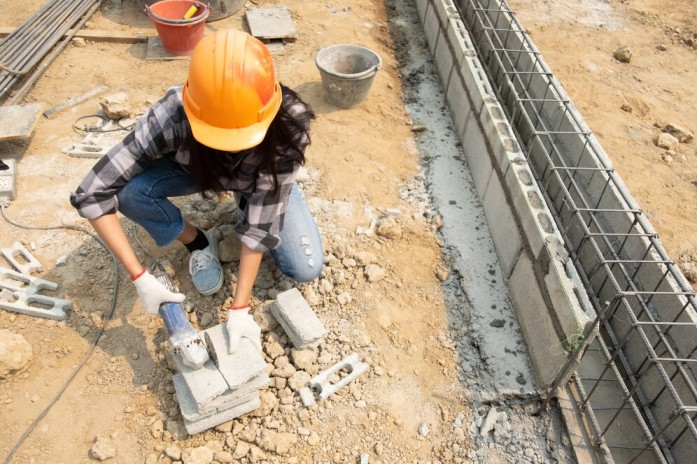
What does a stirrup do in a beam or column?
- Resists shear. A beam under load tends to crack diagonally, mostly near the supports. The main bars do not stop that crack. The stirrups cross it and hold the two sides together.
- Holds the main bars in position. Stirrups keep the bars at the right spacing and cover while the concrete is poured and vibrated.
- Confines the concrete. A tied core of concrete is tougher and fails less suddenly, which matters in columns and in earthquake zones.
- Stops column bars from buckling. Under compression the long bars try to bow outwards. Ties around them prevent it.
What are the types of stirrups?
Stirrups are named by the number of vertical legs they put across the section.
Single-legged stirrup
A single bar with a hook at each end. It does not enclose the section, so it works as a supplementary tie and is seldom used on its own. It is found only in small spots where little reinforcement is needed.
Two-legged stirrup (closed)
A closed rectangular loop with two vertical legs. This is the stirrup you see in most ordinary beams, lintels and plinth beams. It is the usual choice where the main bars sit at the corners of a small section.
Four-legged stirrup (closed)
Two overlapping loops, or a loop with an inner link, giving four legs. It suits wider beams and sections with more bars, because it grips the middle bars as well as the corner bars and cuts down the risk of slippage.
Six-legged stirrup (closed)
Three overlapping loops giving six legs. It is used in wide, heavily loaded beams carrying many bars, for example a beam with eight bars, as on bridges. Every bar is held, and the beam resists shear better.
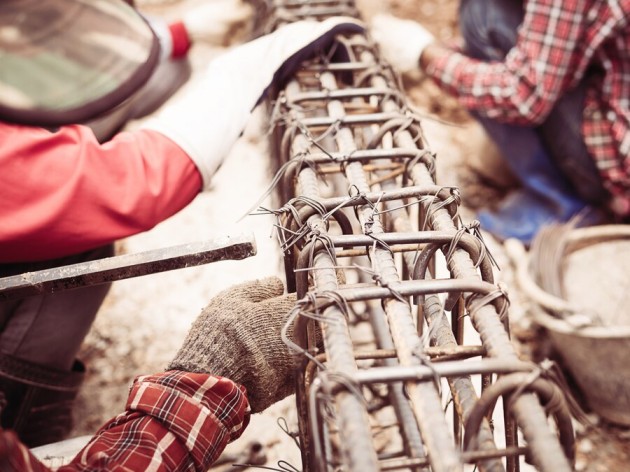
Circular stirrup (ring)
A closed circular ring for round columns. It follows the shape of the column and holds the vertical bars in a circle.
Helical stirrup (spiral)
One continuous bar coiled around the vertical bars of a round column. It confines the concrete core along the full height and is used where a column needs extra strength and toughness.
What is the difference between open and closed stirrups?
A closed stirrup is a complete loop, with its ends hooked back into the concrete core. It confines the concrete and resists twisting, so it is standard in beams and columns. An open, U-shaped stirrup is not closed at the top. It is used only where the drawing specifies it. Do not swap a closed stirrup for an open one on site.
Where are stirrups placed closer together?
In a beam, shear is highest near the supports, so the drawing normally shows stirrups closer together there and wider apart at midspan. In a column, ties are usually closer at the ends, near the beam joints. Spacing, bar size and type all come from the structural design. They are not a site decision. Our guide on structural design from soil to roof shows where this fits in the design process.
What mistakes should you avoid with stirrups?
- Wider spacing than the drawing. Fewer stirrups to save steel weakens the member where it matters most.
- Loose or missing stirrups at joints. The beam-column joint is a heavily stressed spot. Check that stirrups are tied in there.
- Badly bent hooks. The hooks must turn back into the core of the member, not stick out towards the cover.
- No cover blocks. Without cover, the stirrups touch the shuttering and rust early.
- Cutting corners with bar size. A thinner bar in place of the specified one is a structural change.
- Not checking before the pour. Have the engineer or site supervisor inspect the cage before concrete goes in. Nothing can be fixed afterwards.
Where to read next
Stirrups sit inside members such as beams, plinth beams and pillars. For the bars themselves, see steel bars and rebars. If you want the reinforcement in your house checked and built properly, see our construction company page.
FAQs
What is a stirrup in construction?
A stirrup is a closed loop of thin rebar placed around the main bars of a beam or lintel. It resists shear, keeps the main bars in position during concreting and confines the concrete. In columns the same part is called a tie.
What is the most common type of stirrup?
The two-legged closed stirrup. It is a rectangular loop used in most ordinary beams, lintels and plinth beams. Wider beams with more bars use four-legged or six-legged stirrups.
What is the difference between a stirrup and a tie?
They are the same kind of loop. In beams it is called a stirrup and it mainly resists shear. In columns it is called a tie and it mainly stops the vertical bars buckling and confines the concrete.
Why are stirrups closer together near the supports of a beam?
Shear force is highest near the supports, so the beam needs more stirrups there to stop diagonal cracks. At midspan the shear is lower and the spacing can open up. The structural drawing gives the exact spacing.
Which stirrups are used for round columns?
Circular stirrups, which are closed rings, and helical stirrups, which are a continuous spiral. Both follow the round shape of the column and hold the vertical bars in a circle.
Can I change the stirrup spacing on site?
No. Spacing, bar size and type come from the structural design. Changing them on site, even to save steel, weakens the member. Ask the structural engineer if a change seems necessary.