
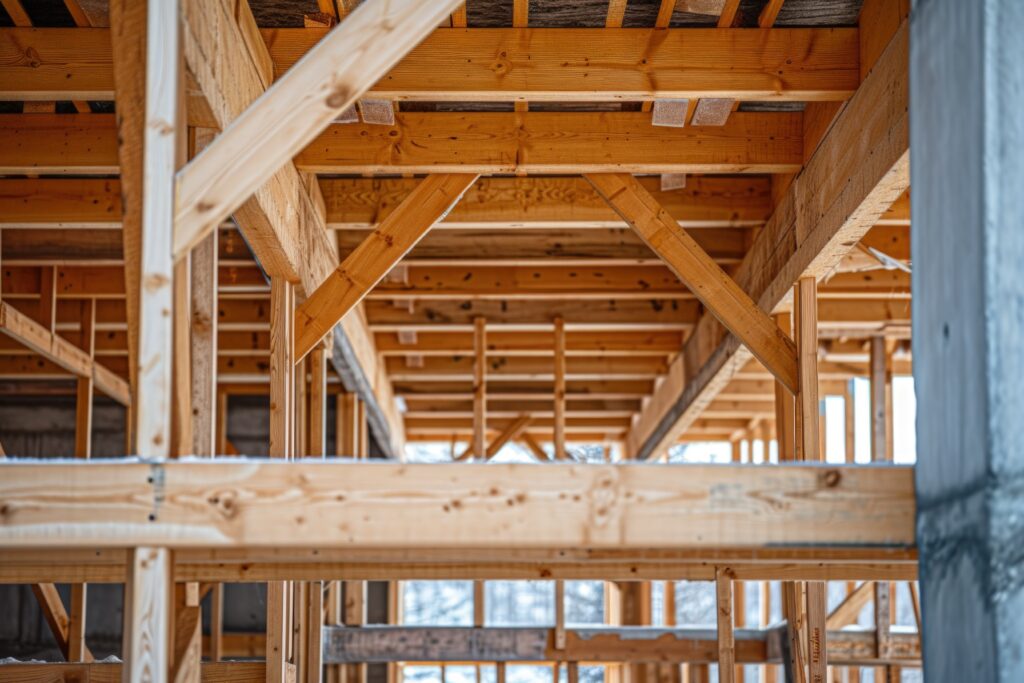
Structural safety and architectural flexibility must be considered together in construction of modern homes. Beam is one of the most significant components that guarantees both. Beams have a significant contribution to construction since they are used to support heavy loads and shape open floor plans. At Walls and Dreams, we feel that homeowners must find out the basics of beam choice before commencing their project. This practical guide contains a clear explanation about types of beam, designing concepts, strength considerations and real world uses in a simple and practical manner.
What Is a Beam in Construction?
A beam is a horizontal structural element that bears the weight of slabs, walls and roofs and safely transfers them to columns and weight-bearing walls. Effective beam construction guarantees stability, durability and safety of a building.
In residential projects, beams:
- Support floors and ceilings
- Allow wide open interior layouts
- Distribute loads evenly across the structure
- Improve architectural adaptation
An effective beam construction design prevents deflection, cracking, and long-term settlement, making it an essential component for long-lasting homes.
Why Beam Selection Matters in House Construction
Choosing the right beam type impacts:
- Structural integrity
- Cost efficiency
- Space planning
- Architectural design
- Long-term safety
Factors influencing beam selection include:
- Load requirements
- Span length
- Soil conditions
- Architectural layout
- Building codes
This is why expert structural planning, such as the design process followed at Walls and Dreams, ensures optimized beam selection for every project.
How Many Types of Beam Are Used in Residential Construction?
In case you will need to know how many types of beam there are, it is determined by the parameters of classification such as behavior of loads, shapes, materials, and support conditions. In residential houses, the beam is traditionally divided into seven to ten major groups relying on the depth of the design and engineering needs.
Knowledge about the different types of beams will help homeowners make right choices during the planning phase.
Types of Beams in Construction Based on Support Conditions
Support conditions significantly affect beam performance. Here are the major types of beam support used in housing projects:
1. Simply Supported Beam
a. Resting on two supports at each end
b. Most commonly used in residential homes
c. Simple to design and economical
2. Cantilever Beam
a. Applied on balconies, projections and sunshades
b. Stuck at one hand and loose at the other
c. Adds architectural flair
3. Fixed Beam
a. Fixed at both ends
b. Offers high strength and rigidity
c. Used where minimal deflection is required
4. Continuous Beam
a. Supported at more than two points
b.Common in multi-room layouts
c. Provides uniform load distribution
5. Overhanging Beam
a. Extends beyond one or both supports
b. Mostly applied to verandas and balconies
All support systems are critical in specifying general beam architecture and behavior.
Forms of Beams in Construction According to Shape
Beam shape has an influence on its load bearing capacity and design flexibility. Below are some shape-oriented types of beams in construction:
- Rectangular Beam – Most widely used in houses due to simplicity
- T-Beam – Integrated with slab for better load transfer
- L-Beam – Used at building corners
- I-Beam – Strength to weight ratio is high
- Inverted T-Beam – This is applied in slab-heavy constructions
The choice of correct beam shape guarantees efficiency, strength and ideal use of material.
Types of Beams According to the Material Used
Beam strength, durability and costs are highly dependent on the choice of material. Common residential beam materials include:
1. Reinforced Cement Concrete (RCC) Beams
a. Most popular in Indian house construction
b. Great strength and robustness
c. Appropriate to any type of building
2. Steel Beams
a. High load-bearing capacity
b. Used in modern and industrial-style homes
3. Timber Beams
a. Visual appeal
b. Applied in cottages, historic houses and interior structures
4. Precast Concrete Beams
a. Factory-made components
b. Faster installation
c. Consistent quality
The choice of material is determined by architectural style, budget, load needs and weather conditions.
Beam Structure: How Load Transfer Works
Understanding beam structure helps homeowners appreciate how their house stays stable.
Load transfer process:
- Slab load → transferred to beams
- Beams → transmit load to columns
- Columns → transfer load to foundation
Proper detailing ensures:
- Uniform stress distribution
- Minimal bending
- Enhanced durability
Structural engineers pay keen attention in measuring bending moments, shear forces and deflection limits to deliver safe performance.
Critical Design Consideration in Beam Construction
It takes technical knowledge and precision to design proper beams. The following are the key factors engineers put into consideration:
- Span length – The deeper the beam, the longer the span
- Dead load – Weight of slab, wall and finishes
- Live load – Occupants, furniture and appliances
- Seismic factors – This is vital mostly in areas where the earthquakes are common
- Material strength – Steel reinforcement and concrete grade
At Walls and Dreams, each beam is thoroughly designed to create an equilibrium of safety, economy, and architectural purpose.
Common Residential Applications of Different Types of Beams
There are specific beam solutions required in different spaces of a house. Examples include:
- Living rooms – Continuous beams for open layouts
- Balconies – Cantilever beams for projections
- Staircases – Waist slab beams for load distribution
- Bedrooms – Simply supported beams for uniform strength
- Terraces – Fixed beams for heavy slab loads
Selecting appropriate beams ensures both visual harmony and structural safety.
Advantages of Proper Beam Design in Homes
A well-engineered beam system offers:
- Enhanced safety and structural integrity
- Greater design freedom
- Cost-effective construction
- Improved durability
- Crack control and reduced deflection
Efficient beam planning significantly reduces long-term maintenance costs.
Common Mistakes to Avoid in Beam Construction
Homeowners should avoid:
- Using undersized beams
- Ignoring soil conditions
- Poor reinforcement detailing
- Improper curing
- Low-quality construction materials
Professional execution ensures optimal results and long-term safety.
Why Choose Walls and Dreams for Structural Planning?
At Walls and Dreams, we integrate architectural creativity with engineering precision. Our expert team ensures:
- Optimized beam layouts
- Advanced structural analysis
- High-quality materials
- Precision execution
- Transparent construction planning
The strategy ensures that all houses are structurally durable, attractive, and future-proof.
Conclusion
Information about beam systems will assist homeowners make good construction decisions. Starting with choosing the right supports to selecting appropriate material and shape, beams significantly influence both safety and appearance. Whether it is a new home or renovation of an existing building, experienced beam planning is a must for longevity and comfort. With Walls and Dreams, you can have a dream home where the foundation has strength, accuracy and clever design to give it a long-lasting beauty and dependability.