
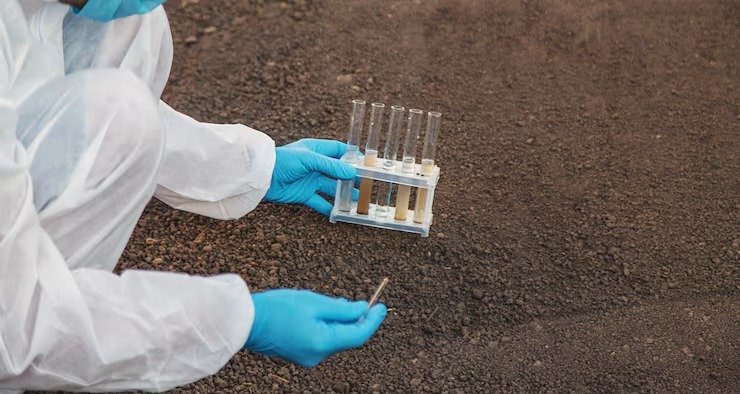
Building a home starts long before the first brick is laid. The strength of any structure depends on the ground beneath it, making soil testing for construction one of the most important pre-construction activities. A proper soil investigation helps engineers design the right foundation, reduce construction risks, and avoid costly structural problems. At Walls and Dreams, every residential project begins with understanding the site’s soil conditions to ensure a safe and durable home.
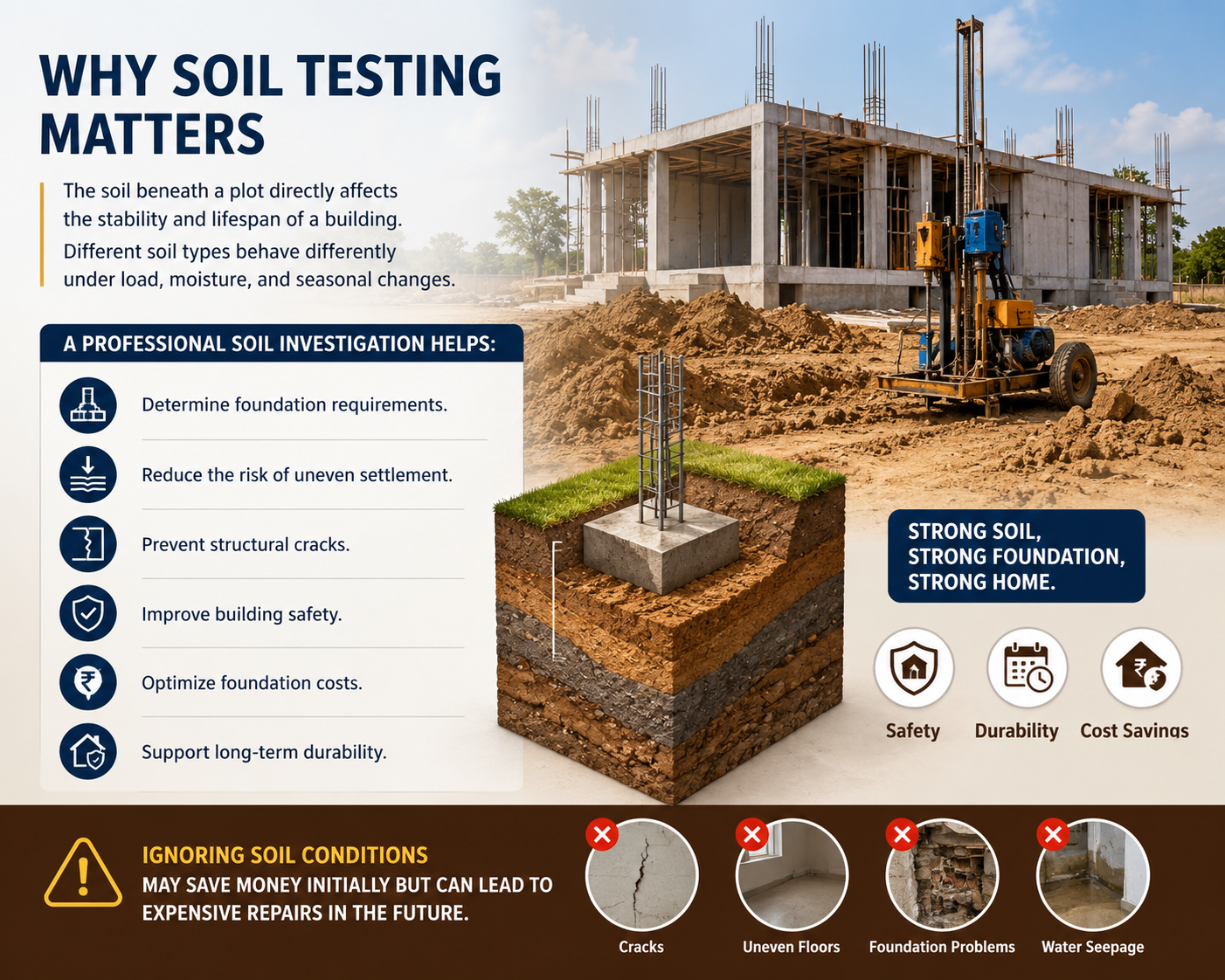
Why Soil Testing Matters
The soil beneath a plot directly affects the stability and lifespan of a building. Different soil types behave differently under load, moisture, and seasonal changes.
A professional soil investigation helps:
- Determine foundation requirements.
- Reduce the risk of uneven settlement.
- Prevent structural cracks.
- Improve building safety.
- Optimize foundation costs.
- Support long-term durability.
Ignoring soil conditions may save money initially but can lead to expensive repairs in the future.
What Does a Soil Test Include?
A geotechnical investigation provides engineers with critical information about the site.
Typical observations include:
- Soil type and composition
- Groundwater level
- Moisture content
- Density and compaction
- Load-bearing characteristics
- Chemical properties affecting concrete and steel
These findings help structural engineers select the most suitable foundation system.
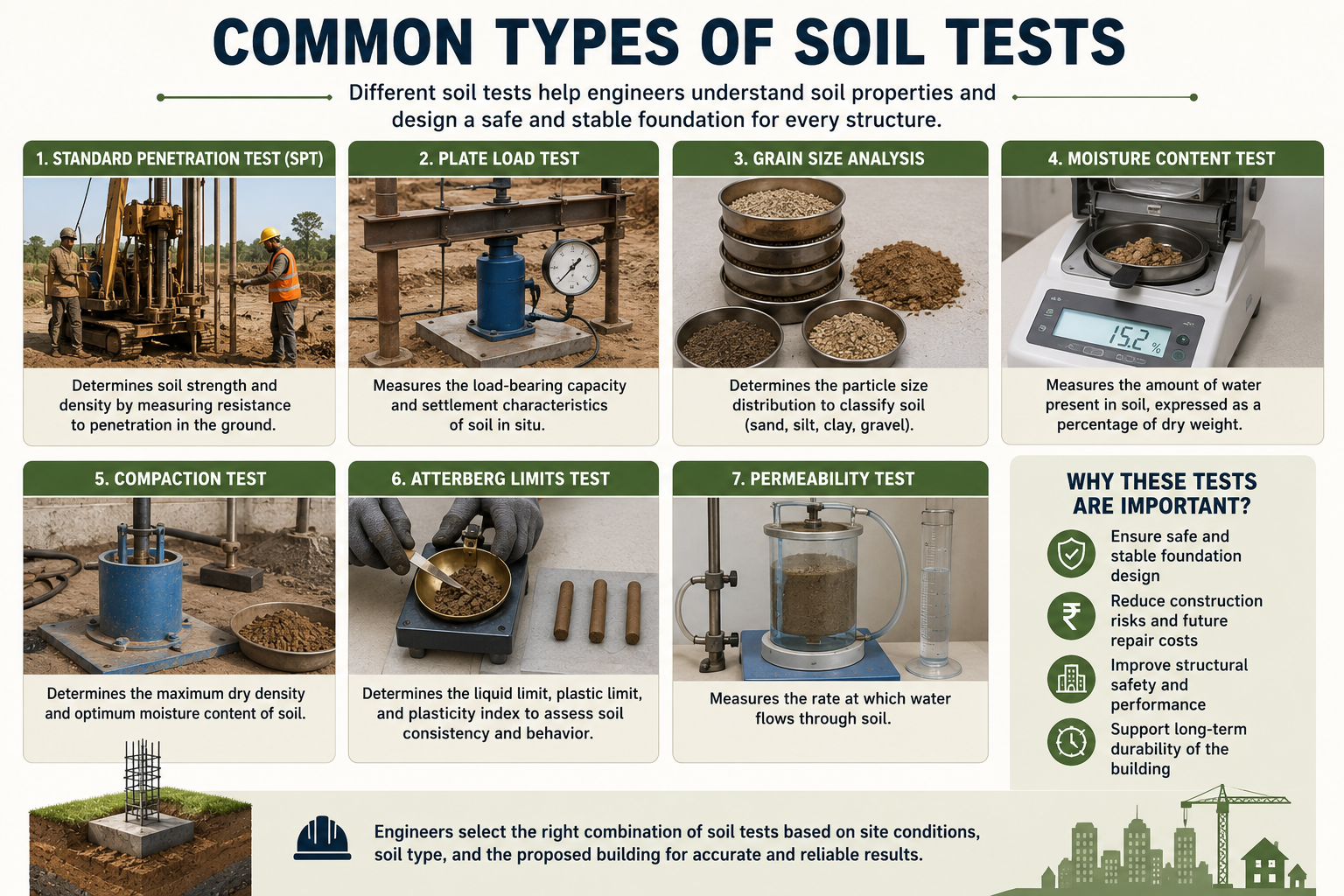
Common Types of Soil Tests
Several types of soil test are conducted depending on the project size and site conditions.
Some of the most common tests include:
- Standard Penetration Test (SPT)
- Plate Load Test
- Grain Size Analysis
- Moisture Content Test
- Compaction Test
- Atterberg Limits Test
- Permeability Test
Engineers choose the appropriate combination of tests based on soil conditions and the proposed building.
Understanding Safe Bearing Capacity
One of the most important outcomes of a soil investigation is determining the safe bearing capacity of soil.
It indicates how much load the ground can safely support without excessive settlement.
A proper bearing capacity assessment helps:
- Select the correct footing size.
- Avoid foundation failure.
- Reduce unnecessary excavation.
- Prevent structural movement.
- Improve long-term building performance.
Foundation design should never rely on assumptions or neighbouring plot conditions.
Soil Testing Methods Used by Engineers
Different soil testing methods are used to collect reliable field and laboratory data.
These methods generally include:
- Borehole drilling
- Trial pits
- Sampling and laboratory testing
- Plate load testing
- Cone penetration testing
- Standard penetration testing
The chosen method depends on the soil profile, project size, and engineering requirements.
Why Skipping Soil Testing Can Cost Lakhs
Many homeowners skip soil investigations to reduce initial construction costs. However, this decision often becomes far more expensive later.
Potential consequences include:
- Foundation settlement
- Wall cracks
- Floor unevenness
- Water seepage issues
- Structural repairs
- Additional reinforcement costs
- Reduced property value
Correcting foundation problems after construction is significantly more expensive than conducting a soil test before work begins.
How to Choose the Right Soil Testing Laboratory
If you’re searching for a soil testing lab near me, consider more than just price.
Choose a laboratory that offers:
- Qualified geotechnical engineers
- NABL or relevant accreditation
- Modern testing equipment
- Detailed soil investigation reports
- Experience with residential projects
- Timely report delivery
A quality report gives structural engineers the confidence to design safe and efficient foundations.
When Should Soil Testing Be Done?
The ideal time for soil investigation is before:
- Finalizing the structural design
- Preparing foundation drawings
- Excavation work
- Material estimation
- Construction budgeting
Early testing helps avoid design revisions and project delays.
Conclusion
A successful home begins with informed engineering decisions. At Walls and Dreams, soil investigation is treated as the first step toward building a safe, durable, and cost-effective home. By understanding the ground conditions before construction starts, homeowners can avoid unexpected expenses and ensure their foundation is designed to perform for decades.
FAQs
Why is soil testing important before construction?
Why soil testing is important lies in identifying the soil’s strength, composition, and suitability so engineers can design a safe foundation.
How much does a residential soil test cost?
The cost varies based on plot size, location, and the number of boreholes required, but it is a small investment compared to potential repair costs.
Can I use my neighbour’s soil report?
No. Soil conditions can vary even within adjacent plots, so every construction site should have its own investigation.
Is soil testing mandatory for house construction?
Requirements differ by location and project type, but it is strongly recommended for all residential buildings to ensure structural safety.
How long does a soil investigation take?
Most residential soil investigations are completed within a few days, with laboratory reports generally available shortly afterward.