
Quick answer: Commercial construction runs in six stages. Planning and design take 4 to 8 weeks and approvals 1 to 3 months. The structure is the longest phase: 5 to 8 months for offices, 3 to 6 for retail and 4 to 7 for warehouses. MEP, interior fit-out and handover follow. Approval delays and design changes are the usual causes of slippage. A PG construction company should design for many small rooms, shared services and fire exits from the start.
Every commercial construction project starts with a target completion date, but achieving that objective relies on careful planning, approvals, resource management and implementation. Knowledge about the construction schedule helps you plan investments, business operations and project milestones more efficiently be it construction of an office, retail showroom or warehouse. Walls and Dreams follows a systematic project management approach to deliver commercial projects on schedule alongside maintaining quality and regulatory adherence.
Quick reference: typical durations
| Stage | Typical duration |
|---|---|
| Planning and design | 4 to 8 weeks |
| Government approvals | 1 to 3 months |
| Structural construction: office | 5 to 8 months |
| Structural construction: retail | 3 to 6 months |
| Structural construction: warehouse | 4 to 7 months |
| MEP, interior fit-out, inspection and handover | Depends on project size and scope |
Importance of Construction Timelines
Coordination among architects, engineers, contractors, suppliers and government officials are enhanced by a practical construction schedule.
A structured timeline assists businesses:
- Plan budgets effectively
- Allocate resources efficiently
- Decrease project delays
- Monitor project progress
- Improve coordination among stakeholders
- Prepare for business operations after completion
Proper scheduling also helps minimise unnecessary cost escalations.
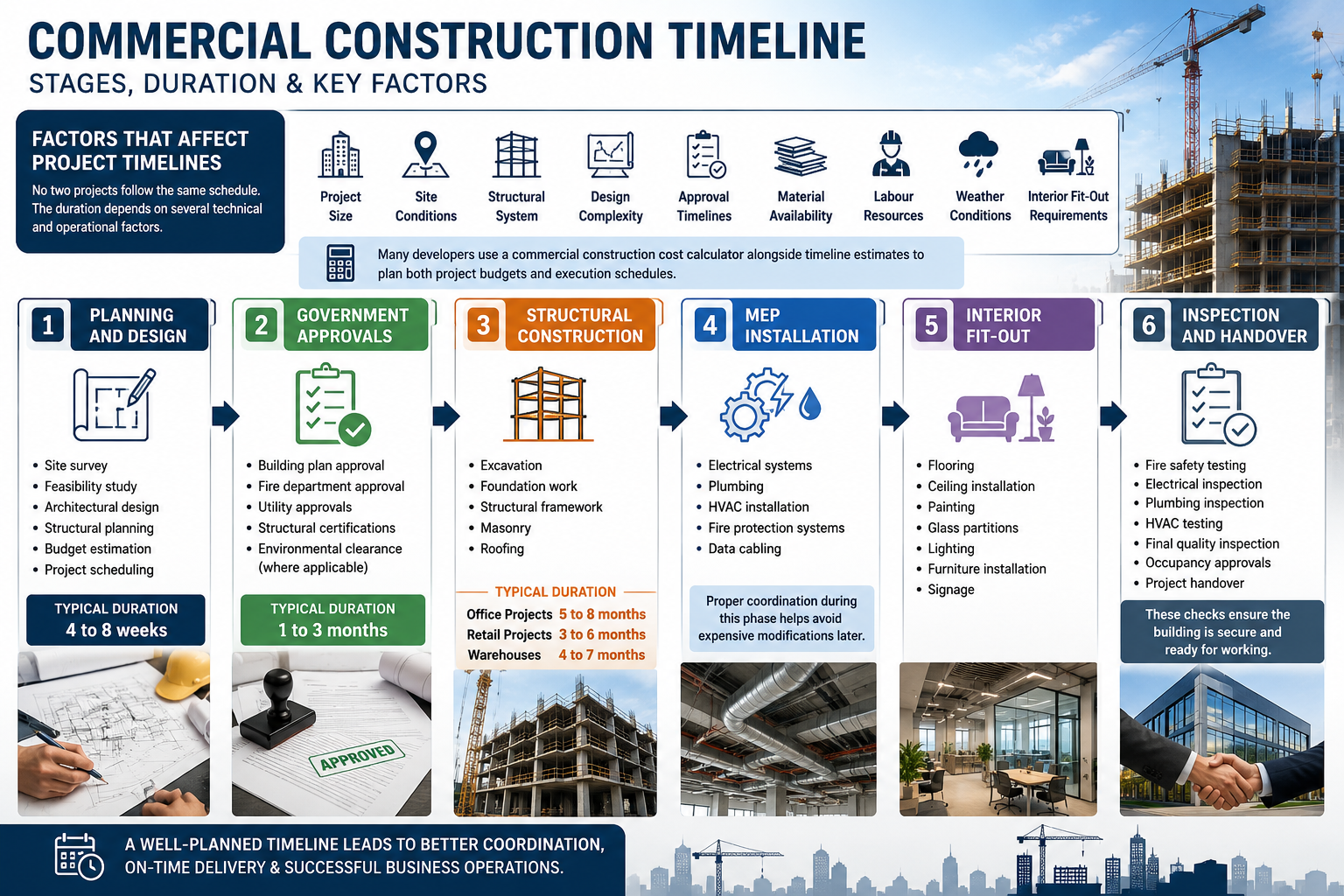
Factors That Affect Project Timelines
No two projects follow the same schedule. The duration depends on several technical and operational factors.
Key factors include:
- Project size
- Site conditions
- Structural system
- Design complexity
- Approval timelines
- Material availability
- Labour resources
- Weather conditions
- Interior fit-out requirements
Many developers use a commercial construction cost calculator alongside timeline estimates to plan both project budgets and execution schedules.
Stage – 1 → Planning and Design
Every successful project begins with thorough planning.
This stage includes:
- Site survey
- Feasibility study
- Architectural design
- Structural planning
- Budget estimation
- Project scheduling
Typical duration – 4 to 8 weeks
A strong planning phase reduces construction delays and improves project coordination.
Stage – 2 → Government Approvals
Construction starts only after obtaining the necessary statutory approvals.
Crucial approvals include:
- Building plan approval
- Fire department approval
- Utility approvals
- Structural certifications
- Environmental clearance (where applicable)
- Typical duration – 1 to 3 months
Approval schedules change according to project sophistications and local rules.
Stage – 3 → Structural Construction
This is usually the longest phase of the project.
It generally covers:
- Excavation
- Foundation work
- Structural framework
- Masonry
- Roofing
Typical durations:
- Office projects – 5 to 8 months
- Retail projects – 3 to 6 months
- Warehouses – 4 to 7 months
An experienced commercial builder helps ensure construction quality while maintaining project schedules.
Stage – 4 → MEP Installation
Mechanical, Electrical, and Plumbing services are installed after the primary structure is completed.
This stage includes:
- Electrical systems
- Plumbing
- HVAC installation
- Fire protection systems
- Data cabling
Proper coordination during this phase helps avoid expensive modifications later.
Stage – 5 → Interior Fit-Out
Interior work transforms the completed structure into a functional commercial space.
Activities include:
- Flooring
- Ceiling installation
- Painting
- Glass partitions
- Lighting
- Furniture installation
- Signage
The scope changes relying on whether the project is an office, retail outlet or warehouse.
Stage – 6 → Inspection and Handover
Before occupancy, the completed building undergoes inspections and quality checks.
The final stage includes:
- Fire safety testing
- Electrical inspection
- Plumbing inspection
- HVAC testing
- Final quality inspection
- Occupancy approvals
- Project handover
These checks ensure the building is secure and ready for working.
Common Reasons Behind Construction Delays
Even properly-planned projects can face difficulties during implementation.
Some common causes include:
- Design revisions
- Approval delays
- Material shortages
- Labour shortages
- Weather disruptions
- Poor coordination
- Unexpected site conditions
Early planning helps reduce these risks.
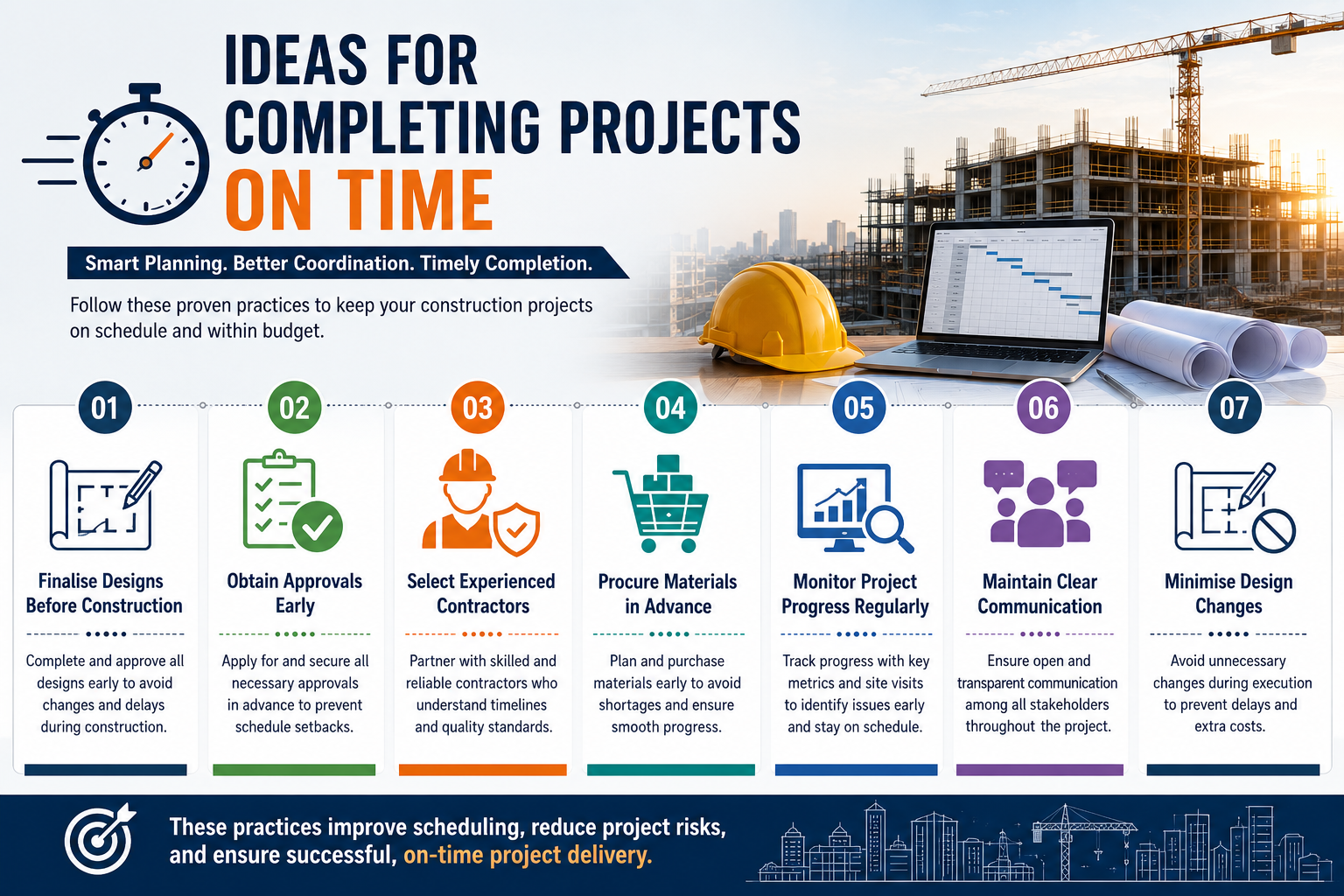
Ideas for Completing Projects on Time
Businesses can enhance project effectiveness by following proven planning practices.
Some useful suggestions include:
- Finalise designs before construction.
- Obtain approvals early.
- Select experienced contractors.
- Procure materials in advance.
- Monitor project progress regularly.
- Maintain clear communication.
- Minimise design changes during execution.
These practices improve scheduling and reduce project risks.
Choosing the Right Construction Partner
Timely project completion depends on experienced professionals and disciplined project management. Selecting a contractor with commercial construction expertise improves coordination and quality throughout execution.
When evaluating a contractor, consider:
- Commercial project experience
- Engineering expertise
- Project management capability
- Safety standards
- Quality control
- Transparent communication
For a complete understanding of budgeting, approvals, contractor selection, and commercial planning, read our pillar guide: Commercial Construction in Delhi NCR: Cost, Approvals, Timelines & Contractor Selection.
Why Businesses Choose Walls and Dreams
On-time delivery of projects needs proper planning, technical knowledge and effective coordination. Walls and Dreams provides complete commercial construction services, handling planning, approvals, engineering, procurement, implementation, quality control and handover under one systematic procedure. Working hand-in-hand with every commercial architect and project stakeholder, Walls and Dreams guarantees each commercial building construction project progresses according to practical schedules alongside maintaining high standards of quality and security.
Conclusion
A practical construction schedule is crucial for successful commercial construction. Understanding each project phase helps businesses prepare budgets, allocate resources and reduce delays throughout construction. Through seasoned project management and the knowledge of Walls and Dreams, businesses can confidently deliver office, retail and warehouse developments that are completed effectively, comply with rules, and support long-term operational success.
FAQs
What are the important stages of commercial construction?
The majority of projects include planning, approvals, structural construction, MEP installation, interior fit-outs, cheks and final handover.
What factors influence commercial construction schedules?
Project size, approvals, design sophistications, labour availability, material supply, weather and site conditions all affect completion schedules.
How can businesses keep construction projects on schedule?
Finalising designs early, obtaining approvals on time, tracking progress and collaboration with seasoned experts enhance project schedules.
Why is project planning crucial before construction starts?
Careful planning assists estimate budgets, organise resources, decrease delays and guarantee seamless implementation from design to project handover.
Why do commercial construction projects get delayed?
Common causes include approval delays, design revisions, material shortages, workforce problems and poor coordination among stakeholders.