
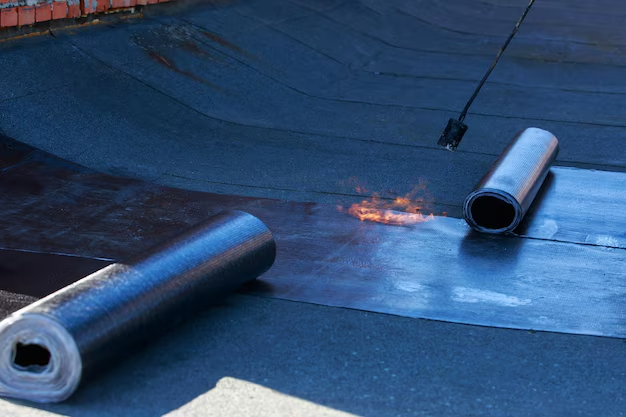
Quick answer: DPC stands for damp proof course. It is a continuous layer of waterproof material, such as bitumen sheet, polyethylene sheet or dense concrete with a waterproofing additive, laid across a wall at plinth level. It stops ground moisture from rising up through the brickwork by capillary action and causing damp patches, peeling paint and mould.
What is DPC in construction?
DPC is short for damp proof course. It is a barrier built into a wall, close to the ground, so that moisture from the soil and foundation cannot travel up into the wall above.
Bricks and mortar are porous. Without a DPC, water in the ground is drawn up through them, and the wall stays damp from the bottom. The problem is worst where humidity is high, rainfall is heavy or the water table is close to the surface. A DPC is laid once, during construction, and protects the building for the rest of its life.
Why is DPC needed in a building?
It stops rising damp
The main job of a DPC is to stop moisture rising through masonry by capillary action. This prevents damp patches, peeling paint and mould on the inside of the walls. If you already have these signs, see our guide on how to solve dampness in a wall.
It protects the structure
Constant moisture rusts steel reinforcement, rots timber and breaks down plaster. A properly laid DPC keeps these materials dry and adds to the life of the building.
It keeps the house healthy
Mould and mildew grow in damp conditions and can trigger allergies and breathing problems. A dry wall does not give them a place to grow.
It saves repair cost
Repairing water damage is expensive. Laying a DPC at the start costs far less than treating damp walls, replastering and repainting later.
What are the benefits of DPC in a new building?
- Durability: Building materials that stay dry stay strong for years.
- Property value: A house with an effective DPC has fewer maintenance problems, which matters to buyers and investors.
- Appearance: Moisture causes stains, peeling paint and warped flooring. A DPC protects the finishes.
- Compliance: Most local and national building codes require a damp proof course.
- Energy use: Dry walls hold temperature better than damp ones, which reduces heating and cooling costs.
Which materials are used for DPC?
How well a DPC works depends largely on the material. The common ones are:
- Bitumen sheets: Durable and highly waterproof. Used in both residential and commercial buildings.
- Polyethylene sheets: Light and flexible, and an effective moisture barrier.
- Concrete: A layer of concrete mixed with a water-resistant additive is laid as the DPC.
- Slate and stone: Naturally resistant to moisture and used traditionally, but they cost more.
- Chemical DPC: A liquid that forms a moisture-resistant layer when applied to, or injected into, masonry.
What are the methods of providing DPC?
Horizontal DPC
A continuous layer is laid across the full thickness of the wall near foundation level, normally at the plinth, so that moisture cannot rise into the walls and floor. It usually sits on top of the plinth beam or the plinth-level brickwork.
Vertical DPC
The barrier is applied to vertical faces, around junctions and on exposed surfaces, and the joints are sealed to block water from the side. It is used on walls in contact with soil, such as basement walls. See our guide to the methods of basement waterproofing.
Cavity wall construction
Two parallel walls are built with a small gap between them. The DPC is built into the wall, and any moisture that gets past the outer leaf drains down through the cavity without reaching the inner wall.
Injection method
For an existing building that has no DPC, holes are drilled into the wall and a chemical solution is injected to form a moisture-resistant barrier.
Membrane DPC
Flexible membranes are laid both horizontally and vertically to form one continuous barrier.
What should you check when DPC is laid?
- Site conditions: Soil type, groundwater level and climate decide which material and method are suitable.
- Building design: The size and layout of the structure decide where the DPC is needed and how it is detailed.
- Material compatibility: The DPC material must be compatible with the materials around it so that neither breaks down the other.
- Workmanship: The layer must be continuous, with joints properly lapped and sealed. One gap is enough for damp to get through.
- Inspection: Check the base of the walls from time to time. Early signs of a failed DPC are much cheaper to treat than widespread damp.
Related guides
A DPC deals with moisture rising from the ground. Water coming from a pipe or a roof is a different problem; our guide to seepage vs leakage explains how to tell them apart. For the work below the DPC, see the types of footings and plain cement concrete (PCC). Damp proofing is included in our construction service.
FAQs on DPC in construction
What is the full form of DPC in construction?
DPC stands for damp proof course. It is a moisture barrier built into the walls of a building, close to ground level, to stop water rising from the ground into the structure.
How long does it take to lay a DPC?
It depends on the size of the building and the method used. In general the work takes a few days to a week, including preparation and curing time.
What happens if a building has no DPC?
The walls take up moisture from the ground. This leads to damp patches, mould growth and gradual weakening of the structure, and the repairs are expensive.
Can a DPC be added to an existing building?
Yes. The injection method and membrane DPC both allow a damp proof course to be added to an older building that was built without one.
What is the best material for DPC?
It depends on site conditions. Bitumen sheets, polyethylene sheets and chemical DPC are the materials most commonly chosen, because they are durable and effective.