
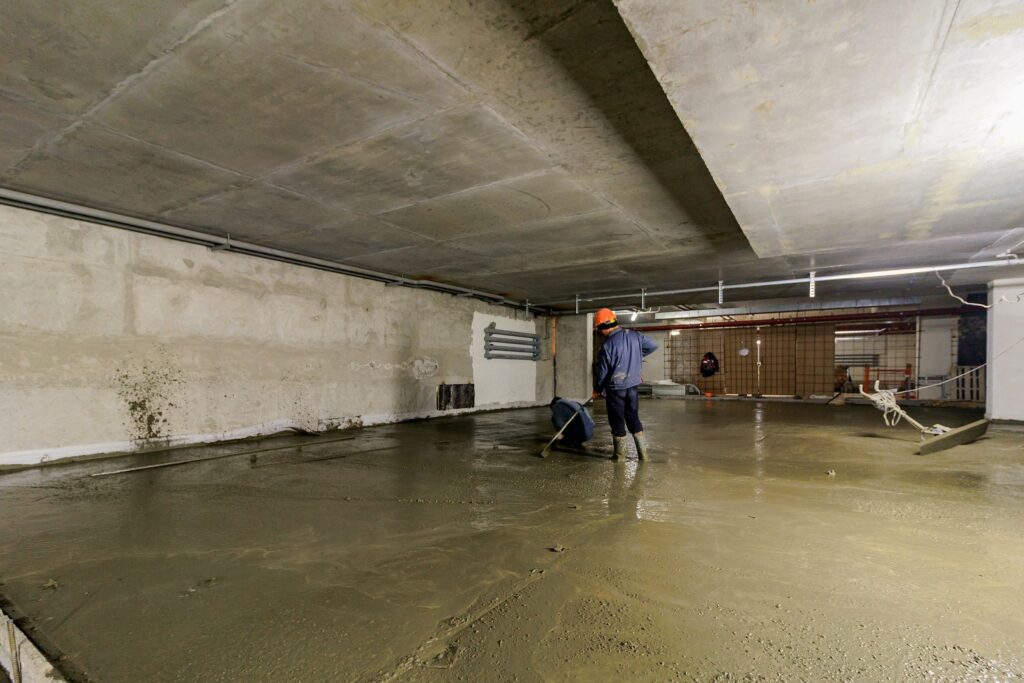
Quick answer: Basements in India are waterproofed in four main ways: exterior waterproofing with a membrane on the outside of the walls, interior sealant coatings, an interior drainage channel with a sump pump, and crack injection. Exterior waterproofing is the most reliable and is best done during construction. Interior methods manage minor dampness or water that already gets in.
A basement or cellar adds useful space to a house, for storage, parking, a utility room or an extra room. It is also the part of the building that sits in the ground, with wet soil against its walls and floor through every monsoon. Without waterproofing, a basement turns damp, then leaks, and in time the water damages the structure.
This guide explains why water enters a basement, how to find the source, the four main waterproofing methods and where each one works, and how a new basement should be waterproofed during construction.
Why Moisture Enters Basements
Water can enter your basement walls in many ways:
1. Hydrostatic Pressure
Groundwater in the soil presses against the basement walls and floor from outside. The higher the water table, the stronger the push.
2. Poor Drainage Around House
Water collects around the foundation when the ground slopes towards the house instead of away from it.
3. Leaky or Clogged Gutters
Rainwater comes running down the sides of the walls and seeps into them.
4. Condensation
When warm, humid air comes into contact with cool basement walls, water droplets form – and so does mold.
5. Cracks in Walls or Floors
Even small cracks let water in, and they tend to widen over time.
Once moisture gets in, it leads to damp walls, mould, stale indoor air and, in time, a weaker structure.
How to tell where the water is coming from
The right method depends on the source, so find the source before spending on a treatment. The pattern of dampness usually gives it away:
- Damp line where the wall meets the floor: groundwater under pressure is pushing in at the joint. This is the most common basement leak.
- Patches that appear or grow after rain: surface water is collecting against the wall from poor ground slope, a blocked drain or a leaking downpipe.
- Dampness along a visible crack: the crack is the path. It needs sealing, and a check on why it formed.
- Even dampness or droplets on walls and pipes in humid weather: this is condensation, not a leak. It needs ventilation, not a coating.
- A patch below a bathroom, kitchen or water tank: suspect a plumbing leak first.
A simple test separates condensation from seepage. Tape a square of plastic sheet or foil tightly to the damp wall and leave it for a day or two. If moisture forms on the room side of the sheet, it is condensation. If the wall behind the sheet is wet, water is coming through the wall.
Main Methods of Basement Waterproofing Used in India
Here are four key basement waterproofing techniques, explained in everyday language:
1. Interior Sealants
- You paint or coat the inside of the basement walls and floors with water-blocking material.
- It stops small leaks and damp patches.
- Best for minor moisture but won’t fix bigger issues.
2. Exterior Waterproofing
- This is the strongest method. You dig outside the foundation and put on a waterproof layer.
- It blocks water from entering the walls at all.
- Very reliable but more expensive and needs digging around your home.
3. Interior Drainage System + Sump Pump
- There is a drainage pipe around the basement floor that sends water into a sump pump.
- The pump works only when needed and throws the water outside.
- Great for water that already seeps in, but doesn’t stop new leaks.
4. Crack Injection
- Small cracks get treated from inside by injecting a liquid (like epoxy) that hardens and seals the crack.
- Quick fix for the cracks but not suitable for bigger structural damage.
Quick Comparison: Basement Waterproofing Methods
| Method | Works Like… | Ideal Use | Drawbacks |
| Interior Sealants | Applying water-blocking coat inside | Minor damp patches | Doesn’t fix big leaks or root causes |
| Exterior Waterproofing | Waterproof membrane on outer wall | Heavy leaking or new builds | Expensive and needs excavation |
| Interior Drainage + Sump Pump | Collection and pumping of water | Seepage that’s hard to stop | Doesn’t stop water entry |
| Crack Injection | Filling cracks from inside | Small foundation cracks | Not for deep cracks or structure issues |
How is a new basement waterproofed during construction?
A basement is easiest to waterproof before it is backfilled, when the outside of the structure can still be reached. The usual sequence in a new build:
- Under the floor: a waterproofing layer is laid over the levelling concrete before the basement raft or floor slab is cast.
- Dense concrete: the raft and retaining walls are cast in well-compacted concrete, often with a waterproofing admixture, because porous or honeycombed concrete will leak whatever is applied over it.
- Joints: the joint between floor and wall, and every construction joint, is the weak point. Water bars are cast into these joints.
- Outside of the walls: a waterproof membrane or coating is applied to the outer face of the retaining walls and joined to the layer under the floor, so the basement sits in a continuous envelope.
- Protection: the membrane is covered with a protective layer so that backfilling does not tear it.
- Pipes and cables: every pipe or cable that passes through the wall is sealed around.
- Drainage: the ground around the house is sloped away from the walls, and rainwater pipes discharge clear of the foundation.
Have the waterproofing inspected before backfilling. Once the soil is back, a missed patch can only be reached by digging again.
What to do when an existing basement leaks
Work from the cheapest and most likely cause to the most expensive:
- Fix the outside first: clean the gutters, repair downpipes and correct the ground slope so water drains away from the house.
- Rule out plumbing: check supply and drain lines that run through or above the basement.
- Seal the cracks: treat cracks by injection from inside.
- Coat the inside: use an interior sealant for the remaining minor dampness.
- Collect and pump: if water still enters under pressure, add an interior drainage channel and a sump pump.
- Go outside: where leaking is heavy and there is room to excavate, exterior waterproofing is the lasting repair.
Wide cracks, cracks that keep growing, or walls that bulge are structural matters. Get a structural engineer to look at them before any waterproofing is done.
Why Basement Waterproofing is Essential
Here are some big reasons to protect your cellar:
- Avoid damp walls and mold – better air quality and health.
- Protect your foundation and basement floors – avoid structural damage.
- Prevent basement flooding – safeguard stored items and living spaces.
- Help your sump pump last longer – less water reduces strain.
- Cut down on energy costs – dry, insulated spaces keep temperature stable.
Pro Tips for Waterproofing Your Basement
- Start early—inspect for cracks or small wet spots.
- Spot-check basement walls regularly during monsoons or heavy rains.
- If leaks are small, try interior sealants first.
- For serious water, call an expert for exterior waterproofing.
- Maintain a good basement drainage system at your home at all times.
- For new construction, put waterproofing in place from the beginning, it’s simpler and less expensive.
Common mistakes
- Painting over damp walls: ordinary paint or putty on a wet wall blisters and peels within a season. Stop the water first.
- Relying on an interior coat against water under pressure: a coating on the inside is being pushed off the wall by the water behind it. It works for minor dampness only.
- Treating condensation as a leak: no coating cures it. Improve ventilation.
- Ignoring the outside: blocked gutters and ground sloping towards the house keep feeding water to the walls.
- A sump pump with no backup: heavy rain and power cuts often come together. Plan for backup power and test the pump before the monsoon.
- Backfilling without protection: rubble thrown against a new membrane punctures it on day one.
- Leaving it for later in a new build: waterproofing skipped during construction costs far more to add afterwards.
Final Thought
A basement is useful only as long as it stays dry. If you are designing a house with a basement, build the waterproofing in from the start. If you already have a damp basement, find the source first and then choose the method that matches it: interior sealant, exterior membrane, drainage with a sump pump, or crack injection. If you are not sure which applies, ask our team to inspect it.
If you are still at the planning stage, read the basement construction steps to see where waterproofing fits in the sequence. To tell one water problem from another, see seepage vs leakage, and for walls above ground, how to solve dampness in a wall. Before injecting a crack, identify it with our guide to the types of cracks in concrete. For repairs to an existing basement, see our renovation service.
Frequently asked questions
Which is the best method of basement waterproofing?
Exterior waterproofing, where a waterproof membrane is applied to the outside of the basement walls, is the strongest method because it stops water before it enters the wall. It is best done during construction. In an existing house it needs excavation and costs more.
Can a basement be waterproofed from the inside?
Yes, for minor problems. Interior sealants stop small leaks and damp patches, crack injection seals small cracks, and an interior drain with a sump pump removes water that seeps in. None of these stops water from reaching the wall, so they do not cure heavy leaking.
When should a basement be waterproofed?
During construction, before the excavation is backfilled. The outside of the walls and the underside of the floor can be reached only at that stage. Doing it from the beginning is simpler and less expensive than repairing leaks later.
Does a sump pump stop basement leaks?
No. A sump pump removes water that has already entered. A drain around the basement floor leads the water to the sump and the pump throws it outside. It keeps the basement dry but does not stop new water from coming in.
Is crack injection a permanent solution?
It is a quick and effective fix for small cracks: a liquid such as epoxy is injected from inside and hardens to seal the crack. It is not suitable for deep cracks or structural damage, which need an engineer to assess the cause.