
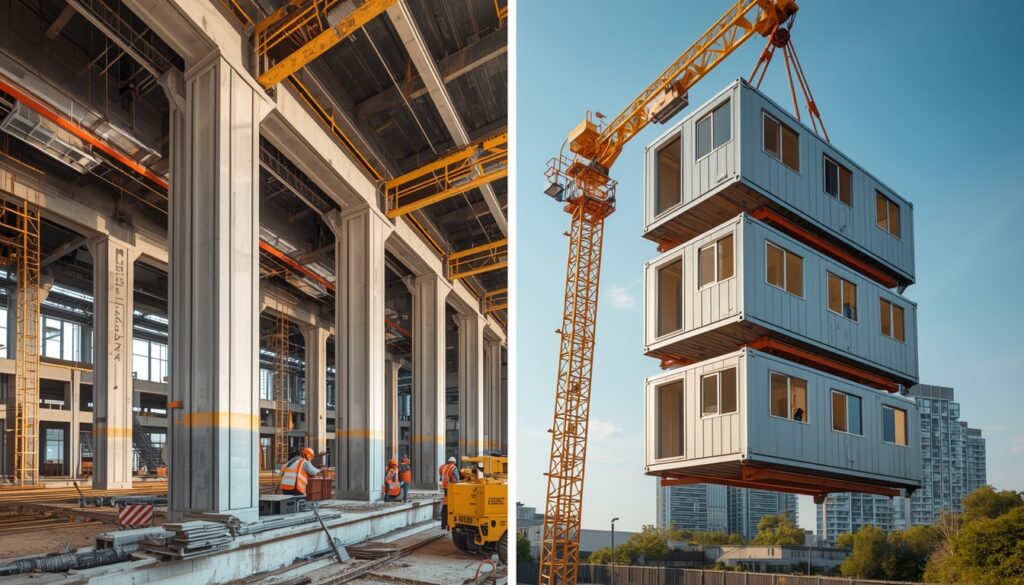
Constructing a house or a commercial facility in today’s rapidly changing construction environment requires not only the selection of high-quality materials but also strategic decision-making. In India, there are two prevailing methods according to which building construction is performed: rcc construction and modular construction. They both possess their unique benefits and differences in terms of cost and usage. To homeowners, developers, and industry professionals, it is important to know the differences between both to make an informed choice.
Walls and Dreams being a reputable brand in the construction area tends to lead clients through these decisions. This detailed article explains how rcc construction, modular construction methods, and the modular construction system stack up against each other — helping you determine what truly suits the future of building in India.
Understanding RCC Construction in India
rcc construction (Reinforced Cement Concrete construction) has been the backbone of Indian infrastructure for decades. It combines concrete with steel reinforcement bars to create a highly durable building structure. From traditional homes to high-rise buildings, this approach remains widely preferred.
Why RCC Construction Has Remained India’s Top Choice
1. Strength and Durability
Concrete is naturally compression-resistant and after getting reinforced with steel it gains amazing tensile strength. This allows rcc construction to be used in areas that experience seismic activity, extreme weather, or structural loads.
2. Versatility in Design
The flexible nature of RCC construction material means that an architect and an engineer can experiment with all sorts of shapes and layouts whether it be curved beams, slabs or elaborate structural designs.
3. Longevity and Reliability
Structures built using rcc construction tend to take several decades to wear out structurally, thus being a choice in terms of permanent housing, business hubs, and social infrastructures like roads.
Key Components of RCC Construction
The quality of any RCC project depends heavily on the RCC construction material, which typically includes:
- Cement
- Sand
- Aggregates
- Steel rebars
- Water
- Admixtures (optional, based on purpose)
Each plays a significant role in making the building strong and stable.
Cost Factors of RCC Construction
Understanding rcc construction cost is essential for budgeting. Several elements influence the cost:
- Quality and quantity of rcc construction material
- Labour charges
- Water curing duration
- Time spent during shuttering, de-shuttering, and reinforcement
- Local site conditions
As the RCC structures are constructed on-site, it is a labour intensive, time consuming process that is likely to experience delays because of weather or other logistical factors.
Understanding Modular Construction in India
In India, modular construction is becoming an effective alternative against conventional construction. It has been based on ready-to-use building components that are constructed in factories and assembled on site, which has greatly accelerated the construction process. This method involves a modular construction system in which 3D units or panels would be produced with precision and then shipped to the location for final assembling.
Why Modular Construction Is Changing India’s Construction Landscape
1. Faster Project Completion
Buildings created using modular construction methods take far less time compared to traditional techniques. While RCC structures might take months, modular buildings can be completed in weeks.
2. Precision Engineering
Factory-controlled environments ensure each module is manufactured with accuracy. This leads to better quality management and less wastage of materials.
3. Sustainability Advantage
Modular construction in India offers an environmentally friendly alternative as more people become aware of the environment’s safety. It consumes less resources, generates less waste and promotes green building.
4. Reduced Labour Dependency
On-site labour requirements decrease dramatically because most of the work happens in a controlled facility. This also reduces delays due to labour scarcity, weather or site disturbances.
Modular Construction System: What It Entails
The modern modular construction system is completely based on the concept of efficiency and flexibility. Its components include:
- Precast wall panels
- Pre-fitted utility systems
- Lightweight structural frames
- Insulated flooring and roofing components
- Customized module units
It is through these systems that residential buildings, hotels, schools, hospitals, and even affordable housing projects can be constructed at a faster and efficient rate.
Comparing RCC and Modular Construction in India
To decide which method works best, it’s important to evaluate how rcc construction and modular construction in India perform across various factors.
1. Construction Speed
RCC Construction:
Requires more time because of shuttering, curing, weather delays and manual work on site.
Modular Construction:
Quick project timelines due to factory production and parallel site preparation.
2. Cost Efficiency
RCC Construction:
rcc construction cost can vary widely, depending on materials, labour, curing time, reinforcement, and local market fluctuations.
Modular Construction:
Although the initial manufacturing cost can be high, it is extremely cost-effective as it saves time, labour, and material wastages.
3. Structural Strength
RCC Construction:
Incomparable load-bearing capability and suitable for multi-storey and long term permanent buildings.
Modular Construction:
Very strong, but has no comparison against the heavy-duty resilience of RCC used for skyscrapers or heavy-load projects.
4. Sustainability
RCC Construction:
Generates greater amounts of waste on the site and enhances carbon emission.
Modular Construction:
Utilizes the most refined materials with minimum wastage and promotes building designs that consume less energy.
5. Quality Control
RCC Construction:
Very sensitive to the location and local labour expertise.
Modular Construction:
Factory settings ensure consistent quality and precision.
6. Flexibility for Future Expansion
RCC Construction:
It can be expanded, but might need major modifications in the structure.
Modular Construction:
The addition and removal of modules can be performed with ease, making future expansions less complicated and more cost efficient.
Which One You Should Select?
The choice between rcc construction and modular construction in India depends largely on:
- Project scale
- Budget
- Time constraints
- Long-term structural requirements
- Environmental priorities
RCC is still a reliable choice in the case of long-term, high-rise or heavy-load projects. Nevertheless, modular construction techniques have a bright future in terms of quick construction, affordability and environmentally friendly constructions. At Walls and Dreams, the clients tend to select a hybrid model, incorporating components of both the systems, to enjoy maximum durability, speed, and value.
Conclusion
The rcc construction vs modular construction debate in India entails a dynamic change in India’s future construction activities. Although RCC remains a tested way for creating strong and permanent buildings, the modular construction system is revolutionizing the industry with efficiency, sustainability, and accuracy. With knowledge in every technique, including rcc construction cost, modular construction methods and the quality of rcc construction material, homeowners and developers can make informed decisions for the future.
With India advancing towards innovative and eco-friendly building approaches, brands such as Walls and Dreams are assisting people in choosing the right building pathway with confidence and precision.