
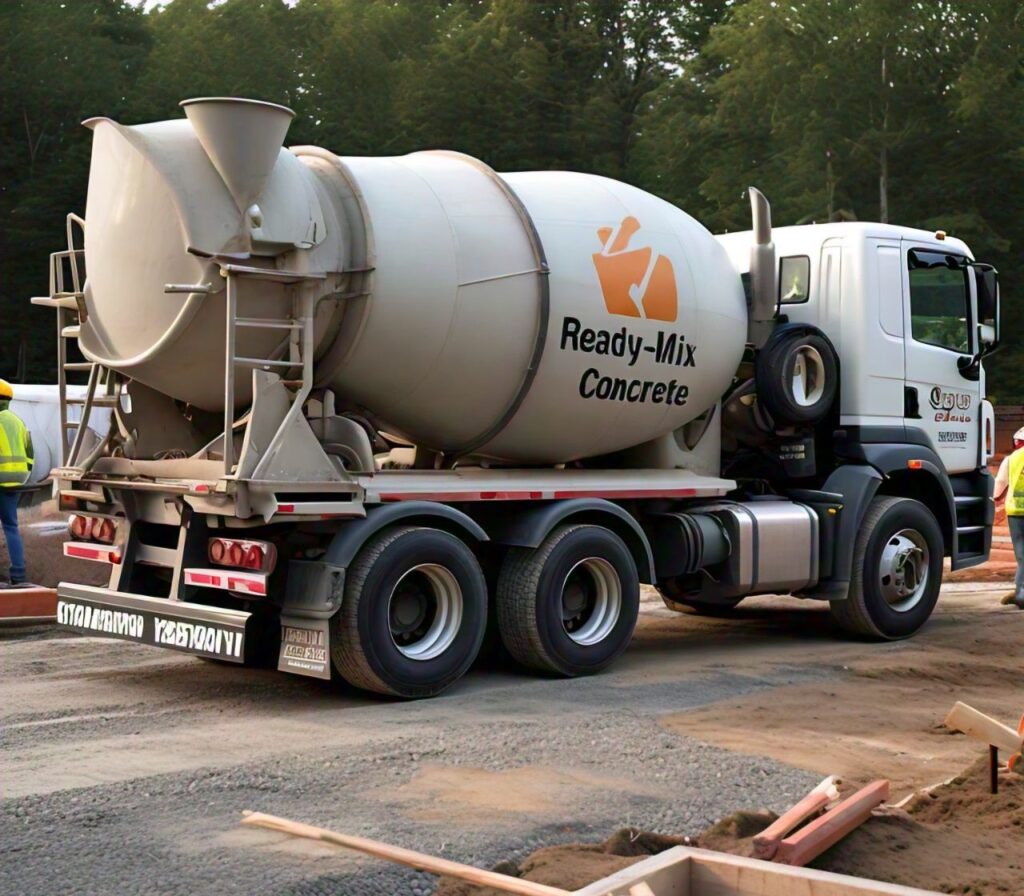
Quick answer: Ready-mix concrete (RMC) is concrete batched to a fixed mix design at a plant and delivered to site in a transit mixer, ready to pour. It gives consistent quality, faster work, less waste and a cleaner site than mixing on site. It costs more, has a limited working time and usually a minimum order quantity, so it suits larger jobs.
Picture the idea of constructing a house without having to mix concrete by yourself. But look, instead of bringing raw concrete material, a truck comes with the precise concrete blend that is already set for use! This is Ready-Mix Concrete (RMC), a product which is common in large construction projects expected to require large quantities of concrete that may take a lot of time to be prepared at the construction site.
Therefore, is RMC in construction, and how is it impactful in the efficiency of projects? In this article, we will discuss all about ready-mix concrete.
What is Ready-Mix Concrete (RMC)?

Ready-Mix Concrete (RMC) on the other hand concerns pre- proportional concrete that is prepared at a designated plant in relation to a predetermined mix design and then conveyed directly to the project site in a transit mixer mounted on a truck. The process entails a precise and quality mix that is homogeneous and ready for use, which makes RMC in construction suitable for compact respectively inhabited buildings and very large ones.
Breakdown of RMC
- Ingredients
Portland cement, aggregates – sand and gravel (or stones), and water are mixed in conformity to specified proportions. - Pre-Mixed
While site mix refers to concrete mix prepared on site ready mix concrete comes already prepared. - Convenience
RMC is time-saving and eco-friendly, as compared to a method of mixing the concrete on the site of construction. - Quality Control
Due to the fact that RMC is mixed off site and transported to the site for pouring, then RMC is ideal for structures that require a high degree of quality assurance.
Types of Ready-Mix Concrete
Ready-Mix Concrete can be classified by mixing methods:
- Transit-Mixed Concrete
In this type it is transported to the site with the truck mixer where the aggregate and paste are blended together. - Shrink-Mixed Concrete
While batching is partially mixed in transit concrete is finally mixed on site by the addition of water. - Central-Mixed Concrete
Batches at the batching plant and afterwards transported to the construction site.
The choice of the right type of RMC partly depends on issues to do with strength, durability as well as cost.
RMC vs. Site-Mixed Concrete
Concrete is produced in two main ways:
- Ready-Mix Concrete (RMC)
RMC is blended and used in a ready to use condition. This approach is widely used in urban environments and large construction projects in which limited space is available at the site and time factor is very significant. In construction, quality is maintained in RMC since it is mixed and prepared in a plant. - Site-Mixed Concrete
Made on-site using predetermined proportions, site-mixed concrete is more cumbersome in preparation and ideal for projects with limited transport units.
Benefits of Using RMC
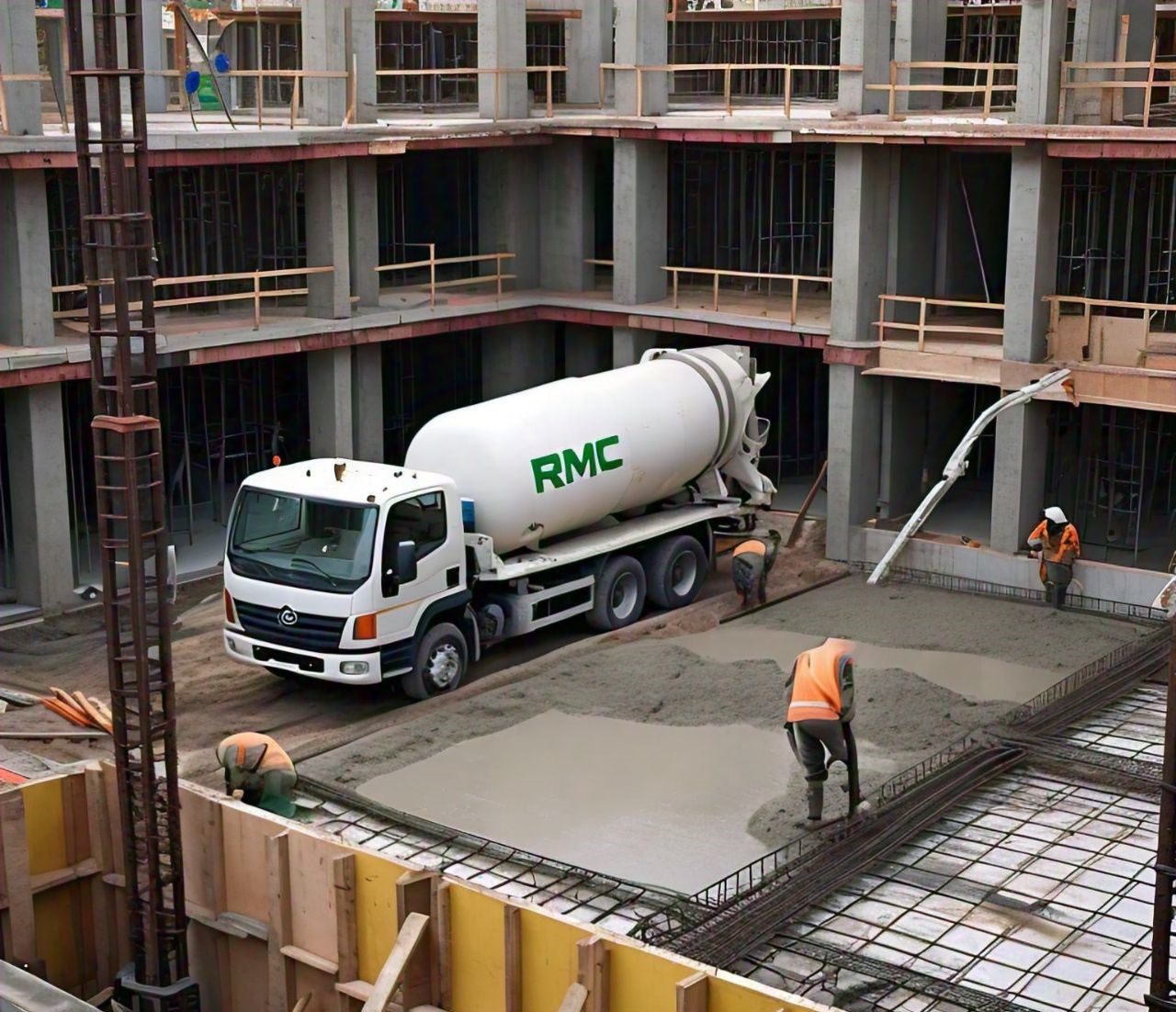
- Faster Construction
Surprisingly, with pre-mixed RMC, there is no need to perform the latter and that does not only make work easier but also ensures timely delivery of projects. - Consistent Quality
Coming from a controlled environment, ready-mix concrete produces vibrant and quality batches. - Reduced Waste
Using pre-measured ingredients reduces wastage of food material and hence reduce on the expenses as well as conserving the environment. - Cleaner Worksite
RMC also has less impact on dust and mess as against on site mixing which makes the environment to be cleaner. - Potentially Lower Labor Costs
Compared to conventional reinforced concrete, the mixing process for RMC is outsourced so that the overall manpower is minimized, which lessens labor expenses.
Limitations/Disadvantages of Ready-Mix Concrete
While RMC is beneficial for large-scale projects, it does have some drawbacks:
Higher Initial Cost
RMC might be costlier because of transportation and production expenses and costs between Rs. 4000- Rs. 6500 per cubic meter in India.
Limited Timeframe
RMC has a limited working time that is ideal to be incorporated into a structure before it starts setting, thus affecting the quality.
Quality Issues
This implies that transportation and placement causes variability in the RMC even when it is produced under a clean environment.
Higher Carbon Footprint
Site mix concrete has less emission of carbon compared to production and transporting of concrete.
Minimum Order Quantities
The specifications that indicate minimum requirements for an order may also expose RMC to develop a model more suitable for large projects rather than small ones.
Conclusion
Ready-mix concrete (RMC) offers pre-mixed concrete, eliminating the time-consuming process of transporting and mixing raw materials on-site. RMC also reduces site pollution. While both site-mix concrete and RMC have advantages and disadvantages, each can be chosen based on specific construction needs. Walls and Dreams provides insights to help select the best option for your project.
Before ordering RMC, learn how to read the grade in the M25 concrete ratio guide and what the slump value of concrete tells you on delivery. Site checks are covered in concrete testing methods and aftercare in concrete curing methods. For help with concrete work on your project, see our construction company page.
FAQs
What is the ratio of RMC?
RMC is supplied to a specified strength grade, with cement, sand and aggregate proportioned at the plant to that grade. Common mix ratios are 1:2:4 and 1:1.5:3.
What is the price of ready-mix concrete?
The guide above gives about Rs. 4000 to Rs. 6500 per cubic metre in India. The actual rate depends on the delivery location and the grade of the mix, so get a quote from the plant for your site.
What is the difference between a concrete mix and ready-mix concrete?
A site concrete mix is batched and mixed on the construction site. Ready-mix concrete is batched to a fixed mix design at a plant and delivered in a transit mixer, which saves time and labour on site.
What are the types of ready-mix concrete?
Transit-mixed concrete is mixed in the truck on the way. Shrink-mixed concrete is partly mixed at the plant and finished in the truck. Central-mixed concrete is fully mixed at the plant and then delivered.
What are the disadvantages of ready-mix concrete?
It can cost more because of production and transport. It has a limited working time before it starts to set, there is usually a minimum order quantity, and transport and placing can cause some variation in quality.