

Quick answer: Concrete curing means keeping freshly placed concrete moist and at a moderate temperature so that the cement can keep reacting with water and gain strength. The main methods are water curing (ponding and sprinkling), wet covering with hessian, leaving the formwork in place, curing membranes, plastic sheets, and cooling pipes for very thick concrete.
Concrete does not dry into strength; it gains strength through a chemical reaction between cement and water, called hydration. If the water in the concrete evaporates before that reaction is complete, the concrete stops gaining strength, and no amount of wetting later brings it back fully. Curing is the work of preventing that. It is cheap, it needs no skill, and it is the step most often cut short on house sites.
What is concrete curing?
Curing is the process of stopping water from evaporating out of concrete while it hardens, and of keeping the surface wet so that hydration can continue. It has two aims:
- Hold the moisture in, so the cement has water to react with.
- Control the temperature, so the heat produced by hydration can escape without the concrete cracking.
Concrete does not reach its intended strength right after it is cast. It gains only about 16% of that strength in the first 24 hours and reaches 100% at 28 days. The early days matter most, because that is when the concrete is weakest and loses water fastest.
What are the different types of concrete curing?
Water curing
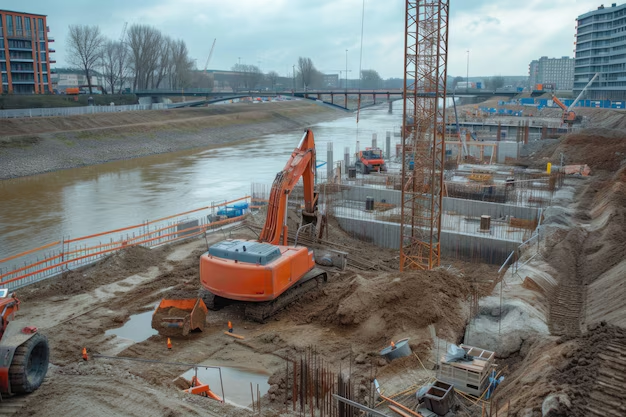
Water is kept on the concrete surface so that it never dries. This is the most common method on house sites and suits pavements, slabs and other flat surfaces.
- Ponding: small bunds of clay or mortar are built around the edges and across the slab, and the enclosed areas are filled with water. The slab stays soaked continuously.
- Sprinkling: water is sprayed over the surface at regular intervals, or continuously through sprinklers. It works only if the surface is never allowed to dry between rounds.
Wet covering
The concrete is wrapped or covered with an absorbent material such as hessian or gunny bags, which is then kept wet. This is the usual method for vertical surfaces such as columns and the sides of beams, where water cannot be ponded. The covering must be wetted again before it dries out; dry hessian pulls moisture out of the concrete.
Formwork curing
While the formwork is in place, it covers the concrete and stops moisture escaping from those faces. Leaving the forms on longer is therefore a simple way to cure thick sections. It adds no material cost, since the formwork is already paid for, but it holds up the formwork for the next pour.
Membrane curing
A liquid curing compound is sprayed or brushed on the fresh concrete. It dries into a thin film that seals the surface and stops evaporation. Curing compounds are water-based or oil-based; water-based ones are more popular because they are easier to remove. This method is useful where water is scarce or where regular wetting is hard to manage, as on tall columns and large areas.
Sheet curing
Polythene sheets or curing blankets are laid over flat surfaces to trap the moisture already in the concrete. The sheets must be overlapped and weighed down at the edges so that wind cannot get under them. It works best where evaporation is low.
Curing by absorbing heat
Pipes are cast inside the concrete and water is circulated through them to carry heat away and lower the core temperature. This is for very thick, higher-grade concrete, such as large foundations, where the heat of hydration can cause cracking. It is not used in ordinary house construction.
Which curing method suits which part of a house?
| Element | Usual method | Why |
| Roof and floor slabs | Ponding | Flat surface holds water; curing is continuous |
| Columns | Wet hessian wrap, or curing compound | Vertical faces cannot be ponded and dry quickly |
| Beams | Formwork left on, then wet hessian on the sides | Sides are exposed once the forms are removed |
| Footings and plinth beams | Sprinkling or wet covering | Easy to reach; backfill only after curing |
| Brickwork and plaster | Sprinkling | Cement mortar needs curing just as concrete does |
When should curing start, and how long should it continue?
Start as soon as the surface has hardened enough that water will not mark or wash it. On a slab that usually means covering it with wet hessian first and beginning to pond once it can be walked on without leaving prints. Do not wait until the next morning in hot or windy weather.
Concrete reaches its full intended strength at 28 days, and the first part of that period is when curing has the most effect. The minimum number of days depends on the type of cement and the weather. Your structural engineer should state it on the drawings or in the specification; follow that figure rather than the contractor’s habit.
What happens if concrete is not cured properly?
- Lower strength: hydration stops early, so the concrete never reaches the strength it was designed for.
- Surface cracks: the top dries and shrinks faster than the concrete below it. See the types of cracks in concrete.
- Dusty, weak surface: the top layer wears off under foot.
- Porous concrete: water gets in more easily, which leads to seepage and, over time, rusting of the steel inside.
None of this can be seen on the day of the pour, which is why curing is easy to neglect.
Common curing mistakes on site
- Wetting once or twice a day and letting the surface dry in between. Repeated wetting and drying is worse than steady moisture.
- Curing the slab and forgetting the columns. Columns carry the building and dry fastest.
- Starting late. The first day matters most.
- Stopping early because the next floor’s work has begun.
- Leaving hessian or sheets to blow off or dry out.
- No one made responsible. Name one person on site whose job it is, and check it yourself on visits.
In hot, dry or windy weather, pour in the evening where possible, cover the concrete immediately and wet it more often.
Summary
Curing keeps moisture and temperature right while concrete gains strength, from about 16% in the first 24 hours to 100% at 28 days. Pond the slabs, wrap the columns, keep everything continuously wet, and follow the curing period your engineer specifies. It costs little and it decides how strong and durable the structure will be.
Curing is one part of getting concrete right. The mix matters as much: see the M25 concrete ratio and what ready-mix concrete is. Our guides to honeycombing in concrete and concrete testing methods cover placing and quality checks. Walls and Dreams builds homes across Delhi NCR; see our construction company page, or use the cost estimator to plan your budget.
FAQs
What is curing of concrete?
Curing is keeping freshly placed concrete moist and at a moderate temperature while it hardens. It stops water evaporating from the concrete so that the cement can keep reacting with it and the concrete can reach its intended strength.
What are the types of concrete curing?
The main types are water curing by ponding or sprinkling, wet covering with hessian or gunny bags, formwork curing, membrane curing with a curing compound, sheet curing with polythene sheets or blankets, and curing by absorbing heat through cooling pipes in very thick concrete.
Which curing method is best for a roof slab?
Ponding. Small bunds are built on the slab and the enclosed areas are filled with water, so the whole surface stays continuously soaked. Sprinkling also works, but only if the slab is never allowed to dry between rounds.
How are columns cured?
Columns are vertical, so water cannot be ponded on them. They are wrapped in hessian or gunny bags that are kept wet, or coated with a curing compound that seals the surface. Columns dry faster than slabs and are often neglected.
How long does concrete take to gain full strength?
Concrete gains about 16% of its intended strength in the first 24 hours and reaches 100% at 28 days. Curing in the early part of that period has the most effect. Follow the minimum curing period your structural engineer specifies.
What happens if concrete is not cured?
The concrete does not reach its design strength. The surface cracks and turns dusty, and the concrete becomes more porous, which leads to seepage and rusting of the steel inside over time. The damage cannot be fully reversed by wetting later.