
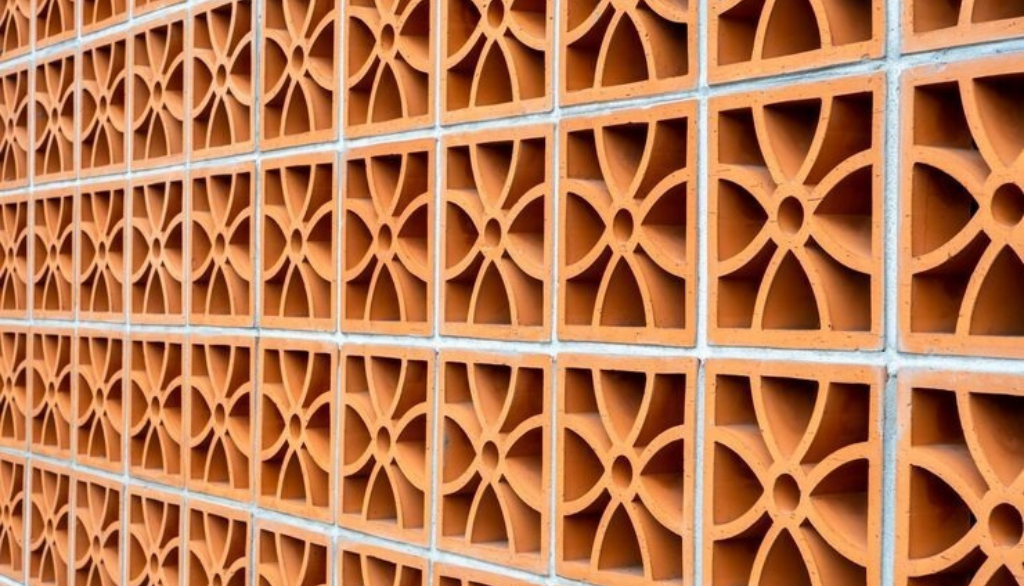
Quick answer: Terracotta jali bricks are open clay blocks, fired at high heat, with patterned holes that let light and air through. They are used for facades, partitions, boundary walls, balconies and screens. They reduce heat gain through natural ventilation, need little maintenance and come in geometric, floral and custom patterns and in standard or custom sizes.
Terracotta jali bricks have turned into a characteristic feature of modern architecture, perfectly combining traditional elements with the functionality. Jali work has traditionally been appreciated in Indian architecture, particularly in terms of controlling light, airflow and temperature, while providing decorative effect to buildings. This is a classic architectural feature that has been reintroduced today by brands such as Walls and Dreams in innovative ways, satisfying the needs of modern residential and commercial construction purposes. This blog discusses terracotta jali bricks, their designs, benefits, sizes, and application in the contemporary building.
Understanding Terracotta Jali Bricks
Terracotta jali bricks are open clay blocks that are made up of natural earth materials and are subjected to intense heat to give them strength and durability. These bricks have patterned holes that admit light and air, unlike solid masonry units. Jali was traditionally viewed in palaces, temples, and havelis and is now being reconsidered as an aspect of modern terracotta jali, that can meet the design sensibility of the new-century without losing its cultural essence.
These bricks are appreciated not only because of their good looks but also due to their practicality in sustainable construction and are therefore an intelligent decision for climate-responsive building designs.
Terracotta Jali Brick as a Building Element
The terracotta jali brick is used as a structural and decorative element. It can be applied to facades, partitions, boundary walls, balconies, and even staircases. When used in a proper combination, these bricks lower the need of artificial lighting and mechanical ventilation. Walls and Dreams often incorporates terracotta jali elements to create homes that feel open, breathable, and deeply connected to natural surroundings.
Popular Terracotta Jali Designs
The appeal of terracotta jalis lies largely in their design versatility. A carefully selected terracotta jali design has the capability of transforming an entire building’s nature. The following are some of the popular design styles:
- Geometric Patterns: Square, hexagonal, and diamond perforations that were ideal for modern homes.
- Floral & Classical Patterns: As these designs entirely revolve around Mughal and Rajasthani architecture, they are an ideal option for heritage-style residential buildings.
Abstract and Custom Patterns: Customized designs that provide a custom identity to contemporary villas and office areas.
By using these designs an architect has the opportunity to create a balance between privacy and openness without damaging functionality.
Terracotta Jali Size and Customization
The selection of right terracotta jali size is very important for aesthetics and structural integrity. Jali bricks come in standard modular dimensions, although customization is usually desired when they are needed to meet individual architectural needs. Their size may vary in terms of application, thickness of the wall, and load factor.
Individually sized jalis offer designers an opportunity to regulate light penetration, airflow intensity and visual rhythm over the facades. Walls and Dreams works closely with designers and clients to ensure jali dimensions complement the overall architectural language of the structure.
Terracotta Jali Work in Construction
Terracotta jali work requires skilled planning and execution. Unlike conventional brick masonry, jali installation demands precision alignment to maintain pattern continuity and structural balance. The correct choice of mortar, spacing and support mechanisms are necessary to guarantee longevity.
When properly implemented, terracotta jali work can be a timeless architectural element that does not demand high maintenance and provides maximum visual and environmental advantages.
Terracotta Jali Blocks for Modern Architecture
Terracotta jali blocks are increasingly being used in modern architecture due to their adaptability. These blocks are not restricted to exterior usage, they can also be used in interiors as room dividers, pooja room screens, ventilation panels, and ornamental partitions.
Jali blocks are used in urban homes where space optimization is a crucial requirement and thus instead of being closed, spaces have openness and visual connection.
What makes Terracotta Jali Bricks Sustainable
The terracotta jali bricks are produced using natural clay, making them an environmentally friendly building construction material. Their benefits include:
- Reduced heat gain due to natural ventilation
- Lower energy consumption for cooling
- Minimal carbon footprint during production
- Long lifespan with low maintenance needs
Walls and Dreams uses terracotta jalis to promote sustainability in building construction, which aligns perfectly with current environmental concerns.
Modern Uses of Terracotta Jali Bricks
Terracotta jali bricks are no longer confined to traditional settings. Their modern applications include:
- Residential Homes: Facades, balconies, courtyards and stairwell enclosures.
- Commercial Buildings: Office partitions, exterior screens and lobby features.
- Hospitality Projects: Resorts and boutique hotels apply jalis to get aesthetic warmth and passive cooling.
- Institutional Buildings: The schools and cultural buildings will enjoy an enhanced ventilation and diffused lighting.
These modern uses showcase how traditional materials can adapt to evolving architectural demands.
Sourcing Quality Terracotta Jali Bricks
The process of choosing the supplier is as significant as choosing the design. Builders and homeowners may seek the presence of a trusted building material supplier in their area to guarantee quality and consistency while ensuring timely delivery. A reliable building construction materials supplier knows about the climate conditions, compliance regulations, and specifics of the project.
Walls and Dreams operates with reliable partners so that all the supplied terracotta jali bricks have high standards of strength, finish, and performance.
Why Walls and Dreams Recommends Terracotta Jali Bricks
Walls and Dreams integrates terracotta jali bricks into projects not just as a design feature, but as a functional architectural solution. These bricks enhance natural comfort, reduce energy dependency, and add timeless character to homes. Whether used subtly or as a statement element, terracotta jalis align perfectly with the brand’s vision of creating elegant, climate-responsive living spaces.
Conclusion
The terracotta jali bricks reflect a magnificent balance between tradition, sustainability and modernity. They serve multiple purposes in contemporary structures including enhancement in the natural light and ventilation besides adding artistic value to the buildings. Terracotta jalis are transforming the way natural materials can be utilized in contemporary constructions through changing designs, replaceable sizes, and versatile application, which can be used as a worthy suggestion for thoughtful, future-focused homes developed by Walls and Dreams.
Frequently asked questions
What are terracotta jali bricks?
They are open clay blocks made from natural earth and fired at high heat. Unlike solid bricks, they have patterned holes that admit light and air while giving some privacy.
Where can terracotta jali bricks be used?
Outside, on facades, boundary walls, balconies, courtyards and stairwell enclosures. Inside, as room dividers, pooja room screens, ventilation panels and decorative partitions.
What designs are available in terracotta jali?
Geometric patterns such as square, hexagonal and diamond; floral and classical patterns inspired by Mughal and Rajasthani architecture; and abstract or custom patterns made to order.
What are the benefits of terracotta jali bricks?
They allow natural ventilation, which reduces heat gain and cooling energy. They are made of natural clay, have a long life and need little maintenance.
What size are terracotta jali bricks?
They come in standard modular sizes, and custom sizes can be made. The size you pick depends on the application, wall thickness and load.
What should I check when installing terracotta jali work?
Jali work needs precise alignment to keep the pattern continuous, the right mortar, correct spacing and proper support. It is more demanding than ordinary brick masonry, so use an experienced mason.