
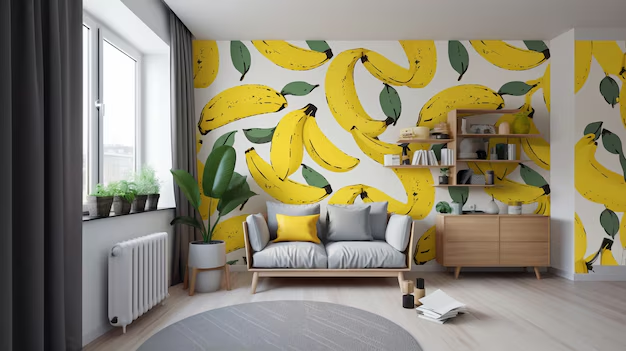
Quick answer: Wallpaper comes in rolls, is fixed with paste and covers a whole wall. It lasts for years and hides small cracks, but it costs more and is harder to put up and take off. Wall decals are peel-and-stick vinyl stickers. They are cheaper, quick to apply and easy to remove, but they cover less area and wear out sooner.
Wallpaper and wall decals both change how a room looks without repainting it, but they suit different jobs. Wallpaper is a full wall finish. A decal is an accent you add to a wall that is already finished. This guide covers the pros, cons and types of each, and then compares them side by side.
What is wallpaper?
Wallpaper is a wall covering sold in rolls and fixed to the wall with paste. It can change the look of an entire wall, and it comes in a very wide range of patterns, materials, textures and colours.
Advantages of wallpaper
- It is available in many patterns and textures.
- It gives a plain wall a finished look.
- Good-quality wallpaper lasts a long time and is not easily damaged.
- It hides minor defects such as hairline cracks or a slightly uneven surface.
- Well-chosen wallpaper can add to the value of a property.
Disadvantages of wallpaper
- Putting it up takes work: the wall has to be prepared, and the paper measured, cut and pasted.
- Old wallpaper can be very hard to strip, and stripping can damage the wall.
- Most wallpaper should not be used where it will meet water or damp, such as bathrooms and kitchens. If a wall is already damp, fix the dampness first.
- Some wallpaper is cheap, but good-quality wallpaper can be expensive.
- Patterns go out of fashion, so you may want to replace it after some years.
What are the different types of wallpaper?

- Liner wallpaper (lining paper): Made from paper or fibreglass. It covers defects in the wall and reduces the repair work needed before decorating. It can be used under a decorative wallpaper or on its own, it can be painted, and it is easy to put up and remove.
- Printed wallpaper: The basic type, available in many colours and designs. It costs less than handmade wallpaper but damages easily. The ink is water-based, so it is not suitable for kitchens and bathrooms.
- Vinyl wallpaper: Printed paper with a vinyl coating. It is thicker and has a harder surface than other types. It stands up to steam and is easy to clean, which makes it the right choice for kitchens and bathrooms.
- Foil wallpaper: A polished metal foil gives it a shiny, metallic finish. Because it reflects light, it shows up every flaw in the wall, so the wall must be prepared properly first.
- Flock wallpaper: A raised, velvet-like pattern made of fibres on a paper base. It costs more and is delicate, so it is best kept for rooms that are not heavily used.
- Mylar wallpaper: A polyester film layer gives it a glossy, foil-like look. The wall needs preparation, but the paper is simple to apply and can be washed, so it also suits kitchens and bathrooms.
- Bamboo wallpaper: Made by hand from natural bamboo glued to a paper base. The colour varies from roll to roll because the material is natural. It needs careful installation and must be kept away from water.
What are wall decals?

Wall decals, also called wall stickers, are pieces of wall art made of vinyl with an adhesive back. They come in many shapes and designs and are normally used to add a picture, pattern or lettering to part of a wall. They are easy to put up and easy to take off.
Advantages of wall decals
- They are quick to put up because the adhesive is already on the back.
- They come in many designs, from pictures to quotes, so you can pick what suits the room.
- They can be removed, and often reused elsewhere, without damaging the wall.
- They cost less than wallpaper or paint.
- They also stick to furniture, mirrors, windows and even laptops.
Disadvantages of wall decals
- They do not last as long. The adhesive weakens with time and the decal starts to peel.
- They cover a smaller area than wallpaper or paint.
- Air bubbles can form under the decal when it is applied, which makes it look uneven.
- Size, detail and custom designs are more limited than with other finishes.
- They do not stick well to rough or textured walls.
What are the different types of wall decals?
- Murals: Large stickers that cover the complete wall. They are also widely used for advertising, branding and information displays in places such as museums and schools.
- Vinyl stickers: Made of vinyl in different sizes and used for decoration at home or in the office. Large ones can stretch and tear with time, so smaller sizes hold up better.
- Traditional stickers: Self-adhesive PVC stickers printed on vinyl and cut to shape in a single colour. A good choice when one colour is all you need.
- Block-cut vinyl: More colourful, and available in finishes such as glossy, mirror-like or sparkly.
- Fabric wall graphics: Self-adhesive stickers made of materials other than PVC, which give the wall a fabric-like look.
Wallpaper vs wall decals: how do they compare?
| Feature | Wallpaper | Wall decals |
|---|---|---|
| Installation | The wall must be prepared and the paper measured, cut and pasted. Covers large areas without visible breaks. | Peel-and-stick backing. Easy to apply, and can be repositioned until the placement is right. |
| Durability | Durable. Keeps its look for many years and covers wall blemishes. Most types should not be used in humid rooms such as bathrooms and kitchens. | A temporary finish. Resists moisture and is easy to clean, so it works in humid areas, but it may start to peel as the adhesive weakens. |
| Look | Adds texture and depth to the whole room and gives a permanent, finished look. | Used for a few decorative accents, not for decorating an entire room in one theme. |
| Cost | Higher initial cost, but it lasts, so it works out economical over the years. | Generally cheaper. A low-cost way to change the look of a room. |
| Removal | Needs careful removal to avoid damaging the wall. | Easy to remove without stains or damage to the wall. |
Which should you choose: wallpaper or wall decals?
The choice depends on what you want the wall to do, your budget and how the room is used.
- Choose wallpaper when you want to finish a whole wall or room, want texture and depth, and plan to keep the look for years.
- Choose wall decals when you want an accent on a painted wall, want to keep the cost low, or expect to change the look again soon.
- For kitchens and bathrooms, use vinyl or Mylar wallpaper, or decals. Printed and bamboo wallpaper should be kept away from moisture.
- For rough or textured walls, decals will not hold well. Wallpaper over a lining paper is the better option.
Decals are also sold as brick-pattern, marble-pattern and kitchen stickers, which give the look of a material without the building work.
If you are weighing other wall finishes as well, see our guides to wall texture designs for the hall, wall painting designs for the living room and PVC wall panel design, and these home painting tips. Wall finishes are part of our renovation service.
FAQs
Which is better, wallpaper or wall decals?
Neither is better for every wall. Wallpaper suits a full wall or room where you want a durable, finished look and are willing to pay more. Wall decals suit small accents, tight budgets and walls you expect to change again, because they are cheap and easy to remove.
Are wall decals cheaper than wallpaper?
Yes. Wall decals generally cost less than wallpaper or paint, and you can put them up yourself. Wallpaper has a higher initial cost, but good-quality wallpaper lasts for many years, so it can work out economical over time.
Can wallpaper be used in a kitchen or bathroom?
Most wallpaper should be kept away from water and damp. Vinyl wallpaper is the exception: its coating stands up to steam and is easy to clean. Mylar wallpaper can also be washed. Printed wallpaper uses water-based ink and is not suitable for these rooms.
Do wall decals damage the wall when removed?
Wall decals are made to peel off without leaving stains or damaging the wall, and many can be reused elsewhere. Wallpaper is harder to take off. Old wallpaper can be difficult to strip, and careless removal can damage the wall surface.
How long do wall decals last compared with wallpaper?
Wall decals are a temporary finish. The adhesive weakens with time and the decal begins to peel. Good-quality wallpaper is far more durable and keeps its look for many years, provided it is not exposed to moisture.
Will wall decals stick to a textured wall?
Not well. Decals need a smooth surface, and they may not hold on rough or textured walls. Air bubbles can also form under a decal if it is not applied carefully. For an uneven wall, wallpaper over a lining paper is a better choice.