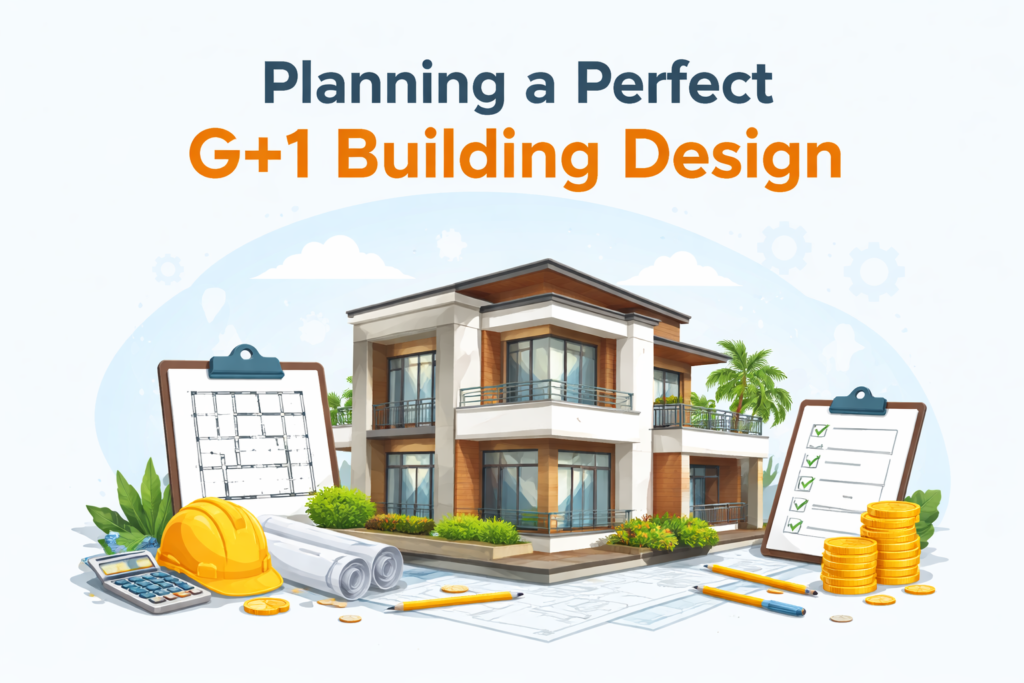
Developing a G + 1 home is a major achievement for any homeowner. An effective plan does not only provide optimum use of space but also assists in controlling expenses, adhering to legal clearance and producing a pleasing design. Whether you are constructing your first house or buying a residential place, it is important to have knowledge about the entire process which includes planning of the design layout, budget as well as approvals. At Walls and Dreams, we take homeowners throughout the whole architectural planning process in order to be clear, efficient and add value in the long-term.
This step-by-step guide will allow you to realize how to design a flawless g 1 building design in terms of functionality, aesthetics, and compliance without spending above your project budget.
Understanding the Concept of a G+1 Building
A G+1 building is a structure that has a ground level and one upper level. This design works best in city and semi-urban plot areas and provides sufficient living space to people without the hassle of high rise development. The G+1 layout is preferred by most homeowners as it allows them to separate their personal and shared spaces, thus making their home more organized and comfortable.
An effective g 1 residential building design enables the building to be flexible for use. The ground level can be used to accommodate living rooms, kitchens, and guest accommodation whereas the first floor can house bedrooms or personal family locations. The layout also facilitates the possibility of future expansion, including rental opportunities or expansion of the family.
Step 1: Finalizing the G+1 House Layout
The design is the foundation of your house. It is very imperative to have a layout, which suits your lifestyle, plot size, and the local bylaws before construction starts.
A functional g 1 house plan focuses on:
- Efficient room placement
- Proper ventilation & natural lighting
- Logical movement between spaces
The current homeowners also give emphasis to parking facilities, open balconies, and utility spaces. You should consider older parents, growing children and work-from-home requirements, before finalizing the layout.
A coordinated g 1 house plan and elevation makes the interior design match the outside appearance. This balance of structure and functionality increases comfort and appearance.
Modern Design Features for G+1 Homes
The aesthetics has evolved very rapidly over the recent years. Housing architecture includes clean lines, open spaces and minimalist finishing.
A modern g 1 house design typically includes:
- Open-plan living & dining areas
- Large windows for daylight
- Smart storage solutions
- Energy-efficient design elements
Equally important are g 1 building elevation designs, which define the visual identity of your home. Facade materials, color schemes, balcony styles and architectural detailing are elements of elevation design. Fabricated elevation not only improves the aesthetics but also raises the property rates.
Step 2: Budget Planning for G+1 Construction
One of the most important elements of a G+1 home planning is budgeting. An effective budget will help in preventing time wastage, compromise, and financial stress during construction.
Your total budget should account for:
- Design and consultancy fees
- Approval and documentation costs
- Construction labor
- Raw materials and finishes
- Contingency expenses
The factors which influence the cost of building construction include plot location, built-up area, complexity of the design and the quality of materials. When you are working with a team of experts such as the Walls and Dreams, you will be able to know the cost to estimate and the important expenses without compromising on the necessary features.
Choosing the Right Construction Materials
Durability, safety and cost of maintenance depends on selection of materials. It is essential to put quality before short-term savings. Availability of a preferred building material supplier near me guarantees reliable supply of materials along with good quality. Cement, steel, bricks, aggregates, and finishing products should be able to meet industry standards to ensure stability of structures.
Learning about various construction and building materials assists the homeowners in making correct decisions. From foundation-grade concrete to weather resistant exterior finishes, each of the materials play an important role in the lifespan of your G+1 home.
Step 3: Approval and Legal Process
It is required to have the approvals before construction begins. Failure to do so may lead to fines, stalling of construction, and even demolition of structure.
Key approvals usually include:
- Local authority building plan approval
- Environmental clearance (if applicable)
- Fire safety and utility permissions
The approval process varies depending on city regulations. In the case of homeowners working with a professional building construction company in Noida, the process of approval becomes much easier. Skilled professionals will make sure that your design is in accordance with the zoning laws, FAR limits, and safety norms.
Role of a Professional Construction Partner
The implementation of a G+1 project involves the collaboration of architects, engineers, vendors, and on-site team. Collaboration with an advanced building construction company guarantees accountability, quality management, and punctuality.
Walls and Dreams provides complete construction service including planning, approvals, construction, and material supply. Our project management operations reduce the risk, eliminate overruns and provide transparency in the project.
Schedule Planning and Project Implementation
A strict timeline helps your project to be on time. Depending on complexity and site conditions, a G + 1 residential construction usually takes 8-12 months.
Key phases include:
- Design finalization
- Approval process
- Foundation and structural work
- Electrical Wiring, plumbing & finishing
- Brickwork & roofing
Frequent monitoring of the site and scheduling based on milestones will help in assuring progress and standards of quality throughout the entire construction procedure.
Common Pitfalls to Avoid in G+1 Planning
Bad planning or hasty decisions have cost a lot of time and money to many house owners. Avoid these common mistakes:
- Ignoring future expansion needs
- Underestimating approval timelines
- Choosing low-quality materials
- Not allocating a contingency budget
A strategic approach from the start will make sure that your home stays capable, compliant, and valuable in the future.
Why Planning Matters More Than Construction Speed
Fast construction might sound attractive, however, wise planning leads to greater results. An effective plan will minimize redundancy, maximize safety, and improve the overall living experience. All decisions from layout to choice of material must be in accordance with your long term objectives.
Conclusion
For the development of an ideal G+1 home a mix of intelligent design, practical budgeting, and adherence to approval standards is required. The homeowners can make their houses comfortable and future-proof through efficient layouts, modern aesthetics, quality materials and professionalism. Under the professional advice of Walls and Dreams, your G+1 project becomes a scheduled reality instead of just being an idea, ensuring peace of mind, value and permanent satisfaction.