
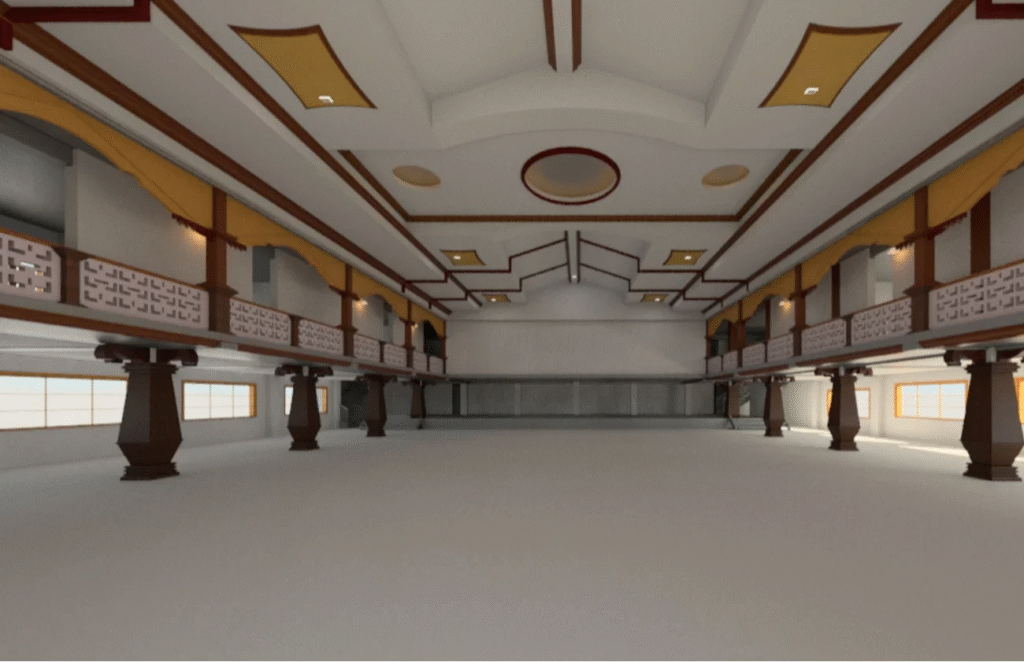
Quick answer: In 2026, building a marriage hall in Delhi NCR costs roughly ₹2,200 to ₹4,500 per square foot, depending on finish quality, clear-span roofing, air-conditioning, and parking. A standard hall lands near the lower end; a premium air-conditioned banquet with basement parking sits at the top — and metro-city luxury projects can go higher. On a 10,000 sq ft hall that’s a total of about ₹2.2 to ₹4.5 crore, excluding land.
Below is the full breakdown — tier by tier, city by city, and guest-capacity by guest-capacity — based on how we actually cost and build these projects at Walls & Dreams across Noida, Gurgaon, Delhi, Ghaziabad and Faridabad.
Marriage hall construction cost per sq ft — 2026-27 rates
The per-sq-ft rate is your fastest planning number, but it swings a lot with finish level. Here’s how we band it:
| Tier | Cost per sq ft (2026-27) | What it includes |
|---|---|---|
| Standard | ₹2,200 – ₹2,800 | RCC frame, basic clear-span roofing, vitrified/tile flooring, standard MEP, non-AC or partial AC, basic stage & toilets |
| Premium | ₹2,800 – ₹3,600 | Larger clear spans, full central AC, better flooring (large-format tile / partial marble), acoustic ceiling, upgraded electricals, decorative façade |
| Luxury | ₹3,600 – ₹4,500+ | Long-span steel trusses, full HVAC, marble/imported flooring, designer lighting rig, premium façade, basement/stack parking, bridal suites |
A marriage hall costs more per sq ft than a home because it isn’t just a bigger building — it’s a different structural problem. Large column-free spaces need heavier beams or steel trusses, the electrical and plumbing loads are far higher, and fire safety, parking and approvals add real cost that a house never carries.
How much hall do you need? Capacity, area and parking?
Most owners start with how many guests, not square feet. Use this to translate:
| Guest capacity (seated/floating) | Hall area (main) | Total built-up (with kitchen, toilets, lobby, stage) | Parking guideline |
|---|---|---|---|
| 200 – 300 | 3,000 – 4,000 sq ft | 5,000 – 6,000 sq ft | 40 – 60 cars |
| 400 – 600 | 5,000 – 7,000 sq ft | 8,000 – 10,000 sq ft | 80 – 120 cars |
| 800 – 1,000 | 8,000 – 10,000 sq ft | 12,000 – 15,000 sq ft | 150 – 200 cars |
Two things first-timers miss: a floating (standing) crowd needs roughly 8–10 sq ft per guest while a seated banquet needs 12–15, and local authority parking norms often decide your plot size before the hall does. In much of Delhi NCR, sanction depends on providing a set number of car spaces per hall area, so parking isn’t optional — it’s a gating cost.
Full cost breakdown — where the money goes
For a 10,000 sq ft hall, here’s how a real budget splits. These are the heads we cost line-by-line in our BOQ:
| Work head | Share of cost | Cost (₹/sq ft) | On 10,000 sq ft (₹ lakh) |
|---|---|---|---|
| Structure & civil (foundation, RCC/steel frame, roofing) | ~35% | ₹1,000 – ₹1,300 | 100 – 130 |
| Internal finishes (flooring, walls, ceiling) | ~22% | ₹650 – ₹900 | 65 – 90 |
| MEP (electrical, plumbing, HVAC, fire, power backup) | ~18% | ₹550 – ₹800 | 55 – 80 |
| Fixtures, stage, furnishing, décor | ~10% | ₹300 – ₹450 | 30 – 45 |
| External works, façade, landscaping, parking | ~8% | ₹250 – ₹400 | 25 – 40 |
| Approvals, fire NOC, contingency, PMC | ~7% | ₹200 – ₹350 | 20 – 35 |
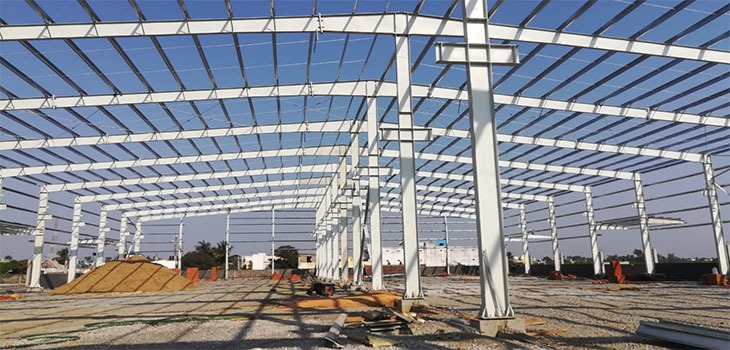
The single biggest cost variable is the roof. A hall needs a large space with no columns in the middle, and how you span that gap changes everything: conventional RCC works up to moderate spans, but wide, column-free banquets usually move to steel trusses or space frames, which cost more up front but open up the floor plate weddings actually want.
City-wise rates across Delhi NCR
Rates shift with labour, material logistics and local approval costs. Rough 2026 bands for a premium (AC) hall:
| City | Premium hall (₹/sq ft) | Notes |
|---|---|---|
| Noida / Greater Noida | ₹2,900 – ₹3,600 | Authority parking + fire norms add cost; good contractor supply |
| Delhi | ₹3,200 – ₹4,200 | Higher labour + tighter plots, costlier approvals |
| Gurgaon | ₹3,100 – ₹4,000 | Premium market, higher finish expectations |
| Ghaziabad / Faridabad | ₹2,700 – ₹3,400 | Typically the most cost-efficient of the NCR belt |
What pushes the cost up (and how to bring it down)
Pushes it up: wide column-free spans, full central AC, marble/imported flooring, designer lighting and false ceilings, basement parking, bridal/green rooms, and premium façades.
Brings it down without cheapening the hall:
- Design the span efficiently: A slightly smarter column grid or the right truss choice can cut structural cost noticeably — this is where an experienced structural engineer earns their fee.
- Phase the finishes: Build the full structure and core services now; upgrade décor and premium finishes as revenue starts.
- Standardise the MEP: Right-size the AC tonnage and electrical load to real usage instead of over-speccing.
- Use precast where it fits: Precast boundary walls, staircases and some elements save time and labour.
Common (and costly) mistakes we see
- Underestimating parking: Owners size the hall, then discover the plot can’t meet the parking norm — and lose sanction. Solve parking first.
- Skimping on the kitchen and services: A wedding kitchen, adequate toilets and power backup aren’t “extras” — an under-built service block kills the venue’s rating.
- Ignoring acoustics and AC early: Retrofitting central AC and acoustic treatment after the shell is built costs far more than designing them in.
- Chasing the lowest per-sq-ft quote: A ₹2,200 quote and a ₹3,200 quote are rarely the same building — the gap is usually clear-span quality, AC, and finishes. Compare BOQs, not headline rates.
How marriage hall projects are financed
Unlike a house, a marriage hall is a commercial, revenue-generating asset, so financing usually runs through commercial construction finance, a loan against property (LAP), or project finance rather than a home loan. Banks typically disburse against construction milestones — foundation, slab, finishing, services — which keeps interest in check and matches cash flow to progress. Keep a 10–15% buffer for overruns, and keep every bill, because lenders audit before releasing each stage.
Estimate your hall’s cost
Use our cost estimator for a quick ballpark, or talk to our expert for a real, itemised BOQ based on your plot, capacity and finish level — the way we scope every project.
Want to see the standard we build to? Browse our construction projects, or read how we plan structure end-to-end in our guide to designing a home like an architect. If you’re comparing structural options, our note on the difference between PCC and RCC and types of footings will help you read a BOQ properly.
Building in a specific city? See our teams in Noida, Greater Noida, Delhi, Gurgaon, Ghaziabad and Faridabad.
Frequently asked questions
What is the construction cost of a marriage hall per square foot in India in 2026?
A marriage hall costs about ₹2,200–₹4,500 per sq ft in 2026, depending on finish tier, air-conditioning and roofing type. Standard non-AC halls sit near ₹2,200–₹2,800; premium AC banquets run ₹2,800–₹3,600; luxury projects go above ₹3,600.
How much does it cost to build a 10,000 sq ft marriage hall?
Roughly ₹2.2–₹4.5 crore for construction (excluding land), depending on tier. A premium AC hall in Delhi NCR typically lands around ₹3–₹3.6 crore.
How much does a 5,000 sq ft banquet hall cost?
About ₹1.1–₹2.25 crore to build, depending on finish level and whether it’s air-conditioned.
Is steel or RCC cheaper for a marriage hall?
RCC is usually cheaper for shorter spans, but wide column-free halls often need steel trusses. Steel costs more up front yet gives the large, open floor weddings need — the right choice depends on your span and layout.
How much land do I need for a marriage hall?
Beyond the hall itself, plan for parking and setbacks. A 400–600 guest hall usually needs enough plot for 8,000–10,000 sq ft built-up plus 80–120 car spaces, so local parking norms often decide the plot size.
Does the cost include air-conditioning?
Only if you’re at the premium tier or above. Central AC is a major cost head — designing it in from the start is far cheaper than retrofitting later.
What is the cost difference between cities in Delhi NCR?
Delhi and Gurgaon are typically the costliest (₹3,100–₹4,200/sq ft for a premium hall), while Ghaziabad and Faridabad are usually the most cost-efficient (₹2,700–₹3,400/sq ft).
How long does it take to build a marriage hall?
A standard hall typically takes 10–14 months from foundation to handover; larger or luxury projects with basement parking and heavy finishes can run 16–20 months.