
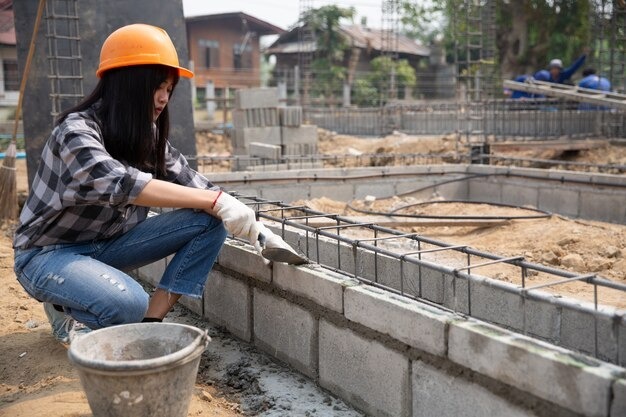
Construction of a strong house begins from the foundation. The home foundation is the most important component that determines the longevity, stability and life of your building. In India, soil conditions, weather changes and budget factors have a great influence in selecting the correct foundation for building.
At Walls and Dreams, selecting the right foundation isn’t just a technical step — it’s a strategic choice that guarantees long-term safety and cost effectiveness. This guide simplifies the home foundation types available in India and helps you understand which one suits your plot best.
Significance of Selecting the Correct Foundation
Before getting to know about the different types of home foundations, it’s essential to understand why this choice is important:
- Carries the full load of the building structure
- Avoids uneven settlement and cracks
- Guarantees moisture and soil mobility
- Enhances the overall life of your home
- Minimizes maintenance expenses in the long term
A poorly constructed foundation can lead to structural problems, even if everything above is perfectly constructed.
Factors that Affects Foundation Choice
Selecting the right home foundation construction relies on various site-specific factors:
1. Soil Type
- Clay soil – Expands and contracts → needs deeper foundations
- Sandy soil – Good drainage but less stability
- Rocky soil – Ideal for strong support
2. Load of the Structure
- Single-floor homes require simpler foundations
- Multi-storey buildings need stronger, deeper bases
3. Budget Considerations
- Foundation can take up 10–20% of overall home foundation cost
4. Water Table Level
- High groundwater demands special waterproofing or raft foundation
5. Climate Conditions
- Areas experience heavy rainfall need moisture-proofed foundation
Types of Home Foundations in India
Here are the most widely used foundation kinds, explained in an easy, functional way:
1. Shallow Foundation
Must be used for:
- Small to medium residential buildings
- Stable soil conditions
Main Characteristics:
- Constructed close to the ground surface
- Cost-effective and widely used in India
- Easy to build and maintain
Types under Shallow Foundations:
- Isolated footing
- Combined footing
- Strip footing
Advantages:
- Lower construction cost
- Faster execution
- Appropriate for low-rise structures
Limitations:
- Not suitable for weak or waterlogged soil
2. Raft Foundation or Mat Foundation
Must be used for:
- Weak soil conditions
- Areas with high water table
Main Characteristics:
- A large slab covering the entire building area
- Distributes load evenly across the ground
Advantages:
- Prevents uneven settlement
- Ideal for soft or loose soil
- Provides strong structural support
Limitations:
- Higher material usage
- Slightly expensive compared to shallow foundations
3. Pile Foundation
Must be used for:
- High-rise structures
- Very weak or loose soil
Main Characteristics:
- Deep vertical columns driven into the ground
- Transfers load to stronger soil layers below
Types:
- End-bearing piles
- Friction piles
Advantages:
- Suitable for challenging soil conditions
- High load-bearing capacity
Limitations:
- Expensive
- Requires specialized equipment and expertise
4. Basement Foundation
Must be used for:
- City houses where extra space is required
Main Characteristics:
- Includes an underground living or storage area
- Acts as both foundation and usable space
Advantages:
- Maximizes land usage
- Increases property value
Limitations:
- Requires proper drainage system
- Higher construction and waterproofing cost
5. Slab-on-Grade Foundation
Must be used for:
- Warm regions with minimal soil movement
Main Characteristics:
- Concrete slab applied directly on the ground
- No basement or crawl space
Advantages:
- Cost-effective
- Quick construction
- Low maintenance
Limitations:
- Not suitable for areas with heavy rainfall or soil shifting
Comparison of Foundation Types
| Foundation Type | Cost Level | Soil Suitability | Best For |
| Shallow Foundation | Low | Stable soil | Independent houses |
| Raft Foundation | Medium | Weak soil | Medium-rise buildings |
| Pile Foundation | High | Very weak soil | High-rise construction |
| Basement Foundation | High | Moderate to strong | Urban homes with space needs |
| Slab-on-Grade Foundation | Low | Stable, dry soil | Budget-friendly homes |
Understanding Foundation Costs in India
The home foundation cost varies depending on multiple factors:
Cost Influencers
- Type of foundation selected
- Soil testing results
- Depth and size of foundation
- Material quality (cement, steel, etc.)
- Labor and construction service charges
General Cost Breakdown
- Shallow foundation – Rs. 150 to Rs. 300 per sq. ft.
- Raft foundation – Rs. 300 to Rs. 600 per sq. ft.
- Pile foundation – Rs. 600 to Rs. 1200 per sq. ft.
How to Select the Correct Foundation for Your Plot
At Walls and Dreams, foundation selection follows a systematic approach:
Step-by-Step Process
- Perform soil testing
- Analyze load requirements of the building
- Evaluate water table levels
- Consider budget and long lasting advantages
- Select the most effective and safe option
Expert Tips
- Never skip soil testing—it’s the backbone of safe construction
- Always consult with experts for building design
- Avoid choosing cheaper options without technical validation
Common Pitfalls to Prevent
- Ignoring soil conditions
- Underestimating load requirements
- Using low-quality materials
- Poor waterproofing in high moisture areas
- Hiring inexperienced contractors
A strong foundation is not an area where shortcuts should be taken.
Why Professional Construction Services Matter
Choosing the right construction service provider ensures:
- Accurate soil analysis
- Proper structural design
- Quality materials and execution
- Long lasting durability and safety
- Timely project completion
Walls and Dreams pays attention to providing reliable foundation solutions tailored to Indian conditions, ensuring your home stands strong for generations.
Conclusion
Home foundation is one of the most critical choices in the building process. There are several different types of home foundations available, and selection of the most suitable option will depend on soil conditions, budget and construction needs. Properly planned home foundation construction will not only make your house strong but also save you money on future repairs. Knowing your options and consulting with the experts of Walls and Dreams, you can create a safe, stable and durable home.