
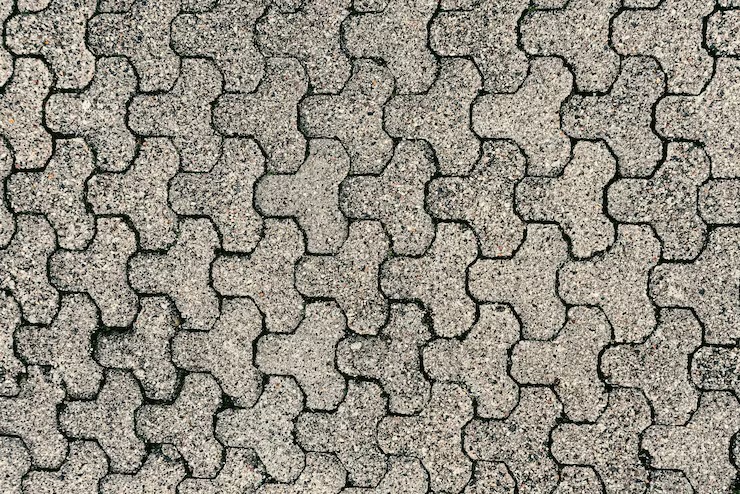
Interlocking bricks are one of the popular alternatives of conventional construction materials that have developed over the last 10 years. Such bricks are considered eco-friendly, cost effective and beautiful. Interlocking bricks, which are designed to slide into one another, without using any mortar, make the construction process easier as there is no need to create the mortar. It saves plenty of construction time. Nevertheless, whatever the advantages of the interlocking bricks, one important thing to note before deciding to use interlocking bricks in any project is the interlocking bricks disadvantages.
Here in this blog we will discuss the greatest faults regarding the technology of inter locking bricks construction such as their drawbacks as regards to their durability, applicability in changing weather etc. and how much problem it causes when it comes to integrity of the construction. We are also going to explore the contrast between interlocking mud bricks and other types of interlocking mud bricks, interlocking clay bricks and other types of interlocking bricks and why taking all the positives and negatives is essential before coming to a conclusion.
What are Interlocking Bricks?
Before going into the down sides, it is nice to briefly describe what interlocking bricks are. These are uniquely designed bricks that interlock both horizontally and vertically.Unlike traditional bricks that need cement mortar, interlocking bricks are designed to fit together tightly, creating a strong bond without using much or any mortar. Interlocking brick construction is commonly used for building compound walls, houses, and even multi-story buildings in some areas.
Interlocking bricks come in various forms depending on the material applied- mostly interlocking mud bricks, interlocking clay bricks and even interlocking bricks made of concrete. Every type possesses its peculiarities, advantages, and, obviously, drawbacks.
1. Limited Structural Strength
The interlocking bricks disadvantage that is also a big impediment is the fact that they are not as strong as traditional bricks in multi-storey or heavy-loaded structures. They can be used in single storey or two-storey houses, however they cannot be considered the most appropriate selection in high-rises or regions prone to earthquakes unless additional reinforcement measures (concrete pillars, concrete beams) are introduced.
2. Not Ideal for Seismic Zones
Interlocking brick structures are not supposed to do well in high seismic zones without reinforcements. The appearance of cement mortar is missing hence the structure will not hold very well in the case of tremors unless other support systems are put in place. Conventionally reinforced cement concrete (RCC) construction has greater resistance and can be regarded as safer in this part of the world.
3. Vulnerability to Moisture and Erosion
The second important drawback, particularly that with interlocking mud bricks, is that they are susceptible to moisture. These bricks may absorb a lot of water especially when they are exposed to excessive rain or humidity thereby causing water damages such as erosion, cracking or even structural weakening. Although interlocking clay brick is slightly superior in this aspect it may also wear out over time unless care is taken by sealing and maintaining them.
4. Inconsistent Quality
The quality of interlocking bricks may also differ a lot on location and in terms of production. Most of the bricks used are interlocking bricks; Unlike the factory cement bricks, these bricks are locally produced in some cases with no standard tests. It causes variation in strength, durability as well as dimension accuracy. Failure of fit of the lock bricks may undermine the structural integrity of the whole wall or building.
5. Limited Availability and Expertise
Although Interlocking brick construction is becoming popular it is not mainstream in most regions. This implies that it may be hard to get good quality interlocking bricks and skilled labour to work on interlocking bricks house designs. Lacking knowledge, constructors might resort to incorrect methods of construction resulting in ineffective results.
6. Higher Initial Costs for Moulds and Equipment
Interlocking bricks can be cheap in the long-run since it requires little mortar or plastering but the set up costs can be expensive. Manufacturing of good quality interlock bricks to be used in constructing walls will require moulds, machinery and good curing methods. In case you want to manufacture the bricks through the on-site method this might cost you a lot more in your initial project.
7. Limited Design Flexibility
The house designs using interlocking bricks are simple, most of them having some general architectural design that suits the mechanism of interlocking. These bricks may be not as easy or impossible to create complex architectural features, curves or irregular shapes on walls. This drawback can limit innovative or contemporary forms of architecture in the designs of buildings.
8. Maintenance Requirements
Interlocking bricks and interlocking mud bricks may be easily influenced by weather and external conditions. Consequently, they might have to be maintained regularly. You may want to seal, repaint or re-align the bricks every several years to maintain their good appearance and working ability. Compared to that, ordinary concrete walls require much less maintenance in the long run.
9. Not Suitable for High-Load Applications
Interlocking bricks may not be capable of handling heavy loads like large beams, slabs or commercial buildings with machines and equipment. Although interlock bricks used in wall constructions suit the partition walls or residential buildings, they do not necessarily fit the commercial or industrial constructions.
10. Dependence on Weather Conditions for Installation
The construction of Interlocking bricks frequently depends upon either dry construction or limited amount of mortar and this construction needs dry weather to work well. Construction may be affected during rainy seasons or in humid regions where water may seep into the gaps prior to the joints being sealed off.
Final Thoughts
Although the concept that your construction work can use interlocking bricks has a lot to offer in terms of sustainability, speed in construction work, and much less material during the construction process, it is important to identify all the interlocking bricks disadvantages prior to using them.
Interlocking bricks indeed have their list of challenges: they include structural limitations and moisture problems, issues of availability, and even design restrictions. These bricks, however, to the appropriate kind of undertaking eco-friendly homes, small residential buildings, or low-cost housing, might continue to be an exceptional option when handled with caution and under the direction of the specialists.
Make sure to read on the type of interlocking bricks, consider the climate of your local area, and discuss with the professionals who have experience in the area of the interlocking bricks house construction and interlocking bricks house designs. Knowing all the pros and cons will assist you in making the right decision and succeed in your building project.