Quick answer: The main types of house elevation design are contemporary, modern, traditional Kerala, European and combination styles. Contemporary elevations are bold and asymmetrical, modern ones are plain and functional, Kerala homes use sloping tiled roofs and verandas, European homes use stone, stucco and ornament, and combination styles mix two of these on one facade.
The elevation is the outside face of the house: its shape, roof line, windows, materials and colours. It decides how the house looks from the street, and it also affects daylight, ventilation, how the walls weather and what the property is worth later. The five styles below cover most of what homeowners in India choose from.
House elevation styles at a glance
| Style | What it looks like | Typical materials | Suits |
|---|---|---|---|
| Contemporary | Bold, asymmetrical shapes, large windows, sharp-angled roofs | Glass, concrete, timber | Owners who want a striking, current look |
| Modern | Clean lines, very little ornament, large glass areas | Glass, wood, stone | Owners who want a simple, practical house |
| Traditional Kerala | Sloping clay-tiled roofs, carved woodwork, wide verandas | Clay tile, timber, stone | Owners who want a traditional home with a courtyard |
| European | Grand entrance, decorative detail, classical proportions | Stone, stucco, brick, copper roof details | Larger family homes with a formal look |
| Combination | Two styles mixed, held together by one material or colour | Depends on the mix, such as wood with metal or exposed brick | Owners who like parts of more than one style |
Contemporary Style House Elevation Design
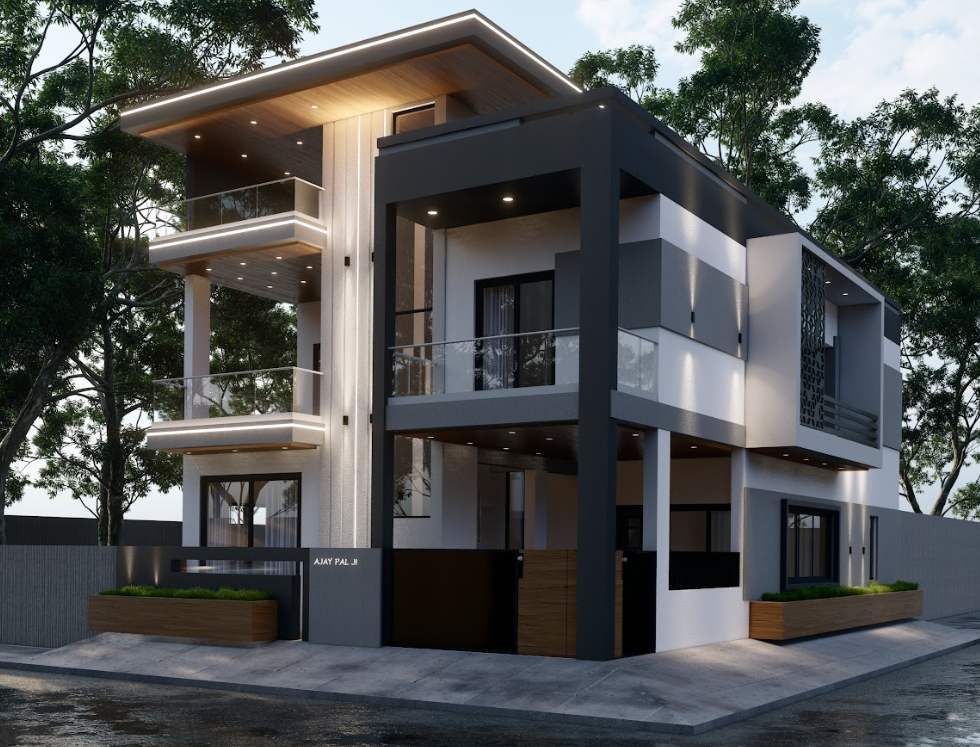
A contemporary elevation is bold and asymmetrical. Large windows bring in plenty of daylight, the roofs are sharp-angled, and landscaped green areas are treated as part of the frontage.
The style is flexible. You can borrow elements from other styles, pair a bright colour with plain shades, and mix materials such as glass, concrete and timber on the same facade.
It also works well with solar panels and rainwater harvesting, because both can be planned into the roof and facade from the start instead of being added later.
Modern Style House Elevation Design
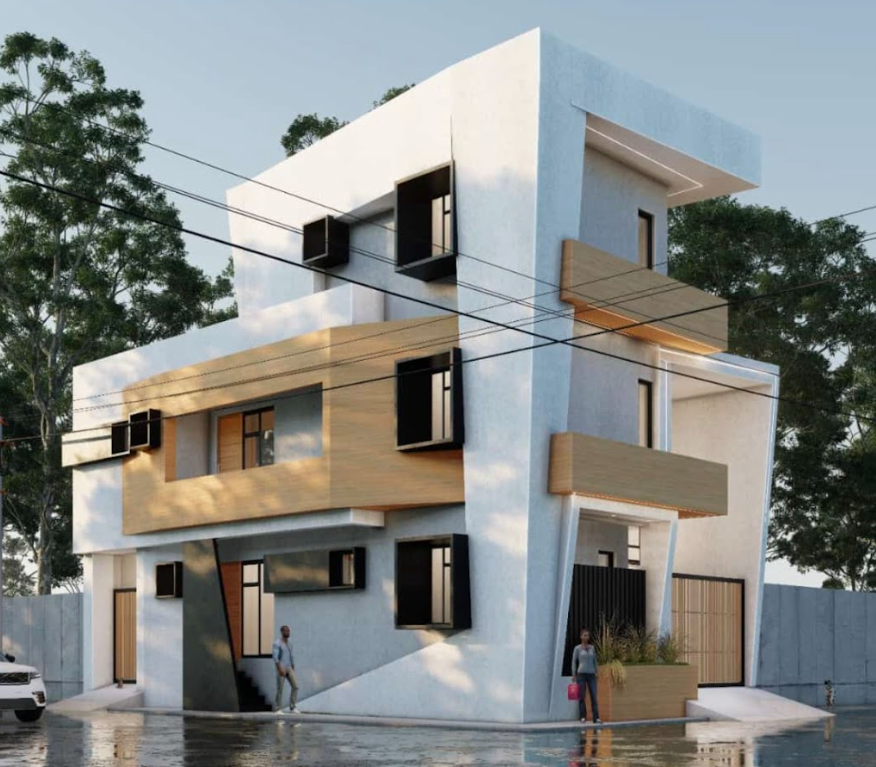
A modern elevation is built around simplicity and function. The lines are clean, there is very little decoration, and the inside and outside of the house are meant to connect.
Large glass windows, open floor plans and natural materials such as wood and stone are typical. Open frames such as pergolas and glass panels bring in daylight, which cuts the need for artificial lighting during the day.
Because there is so little detail, the proportions, the window placement and the quality of the finish have to be right. The size and position of the openings matter most, so see these window designs for the outside of the house before you finalise them.
Traditional Kerala Style House Elevation Design
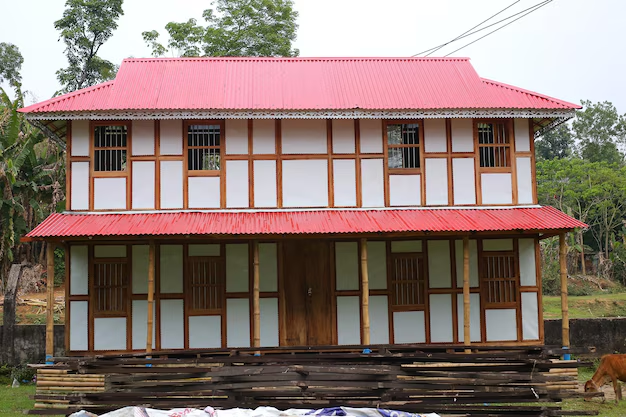
A traditional Kerala elevation has sloping roofs covered in clay tiles, carved woodwork and wide verandas. It is good to look at and it also suits the climate it comes from.
Many Kerala homes are planned around a “nadumuttom”, a courtyard open to the sky. It gives the family a place to gather and keeps air moving through the house. Local materials such as clay, timber and stone tie the building to its surroundings.
Another typical feature is the “padippura”, a gateway with its own tiled roof that sets the theme before you reach the house. The style suits owners who want a traditional home with present-day comfort inside.
European Style House Elevation Design
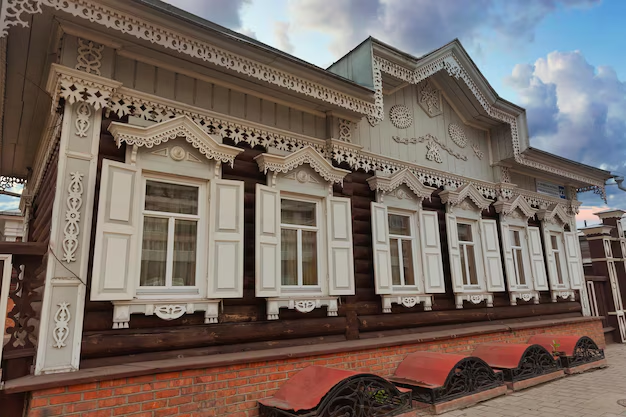
A European elevation gives the house a classic, formal look: a grand entrance, decorative detail and a mix of stone, stucco and brick. Some roofs carry copper detailing, which adds to the effect.
Inside, these homes often have a formal dining hall, a library and a large staircase, which suits families who host guests often.
The style is not limited to large plots. The same elements can be scaled down and adapted to a smaller site.
Combination Style House Elevation Design
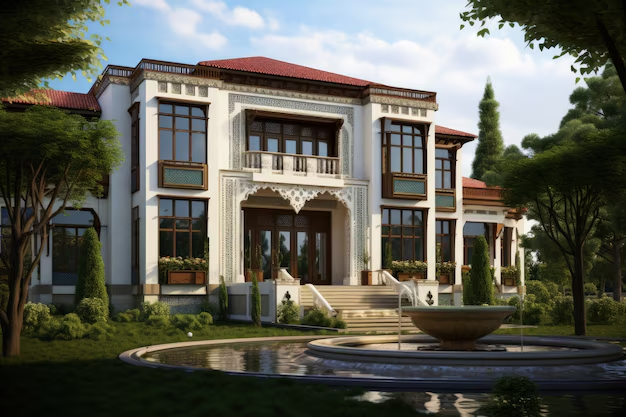
A combination elevation takes features from two styles and puts them on one facade. It works for owners who want both contemporary and traditional elements. The risk is clutter, so the mix has to be balanced.
Popular combination styles
- Modern farmhouse: clean contemporary lines with traditional farmhouse details, plenty of wood and many windows.
- Industrial chic: exposed brick, metal surfaces and visible pipes on an otherwise minimal facade.
- Rustic modern: earthy elements such as timber set against contemporary lines.
- Traditional modern: traditional features such as arched windows, arched doors and columns used on a present-day house.
A combination elevation holds together when one thing runs through all of it: a single material, a colour or one architectural detail.
Why the elevation design matters
The elevation is more than a good-looking front.
- Ventilation: the position and size of the openings decide how air moves through the house.
- Daylight and heat: window placement and shading control how much sun each room gets.
- Durability: the choice of external materials and finishes decides how well the walls stand up to weather.
- Property value: a well-designed elevation raises the value of the house.
How to choose an elevation for your house
- Start from the plot: the width of the frontage, the road side and the direction the house faces limit what will work.
- Match it to the floor plan: the elevation is drawn from the plan, so windows, balconies and the staircase position must agree with the rooms behind them.
- Think about the climate: large glass areas need shading on the sides that take strong sun, and sloping roofs shed heavy rain faster than flat ones.
- Pick materials you can maintain: every cladding, paint and wood finish needs upkeep. If budget is tight, see these low-cost materials for front elevation design.
- Fix the colours early: our guide to exterior paint colour combinations explains how to pair a main shade with accents.
- Check the rules: the elevation has to stay within the height and setback limits of your local authority, so settle it before the building plan is submitted.
If you are building two floors for one family, see these duplex house front elevation designs. To have an elevation drawn for your plot, see our architecture service.
FAQs
What are the main types of house elevation design?
The five common types are contemporary, modern, traditional Kerala, European and combination styles. They differ in roof shape, the amount of ornament and the materials used on the facade.
What is the difference between modern and contemporary elevation?
A modern elevation is plain and functional, with clean lines and very little detail. A contemporary elevation is bolder and asymmetrical, with sharp-angled roofs, and it freely mixes materials, colours and elements from other styles.
What is a combination style elevation?
It mixes features from two styles on one facade, such as modern farmhouse, industrial chic, rustic modern or traditional modern. One shared material, colour or architectural detail keeps the design from looking cluttered.
What are the features of a Kerala style house elevation?
Sloping roofs with clay tiles, carved woodwork, wide verandas, an open courtyard called a nadumuttom and a tiled entrance gateway called a padippura. Local clay, timber and stone are the usual materials.
Does the elevation affect anything other than looks?
Yes. The elevation decides where the openings are, so it affects ventilation and how much sun the rooms get. The external materials decide how the walls weather, and a well-designed elevation raises the value of the property.