
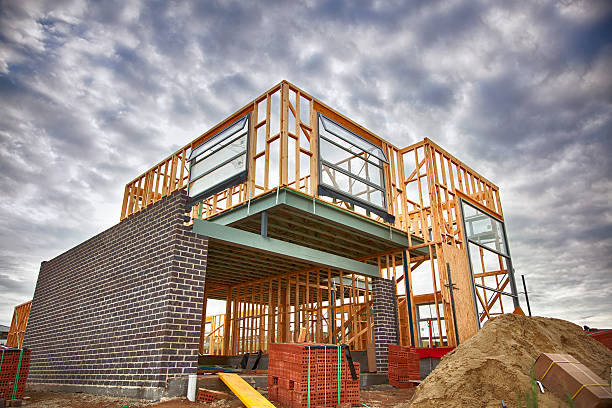
Quick answer: By Vaastu and Panchang tradition, the best months to start building a house are Chaitra (March–April), Vaishakh (April–May), Kartik (October–November) and Magh (January–February). On site, October to March is the most productive period in north India, so a start in late October or early November suits both tradition and dry-weather foundation work.
For most Indian families, building a house is more than a financial decision — it carries emotional and spiritual weight, and the question of when to begin is taken almost as seriously as where. Indian tradition holds that auspicious beginnings shape the journey that follows, and choosing the right month to start construction is believed to bring peace, prosperity, and well-being to the household that will eventually live in the home.
When a family decides to build, Vaastu Shastra — the ancient Indian science of architecture — usually enters the conversation. Vaastu is concerned with the harmony between a building, its inhabitants, and the natural forces around it. While most discussions of Vaastu focus on the design and orientation of the house, the timing of construction is treated with equal importance. Selecting the right month to lay the foundation is traditionally believed to invite stability, fortune, and a smooth construction process.
This article walks through the months traditionally considered most auspicious to start a house in India, the months traditionally avoided, the role of Bhumi Pujan, and a practical note from our project team on how to balance tradition with the realities of the Indian monsoon.
A note before you read: The recommendations below are drawn from traditional Vaastu Shastra and Hindu Panchang practice. They are not a substitute for personalised consultation with a qualified Vaastu practitioner or family priest, who can identify the specific Shubh Muhurat suited to your family’s horoscope and the location of your plot.
Why Is Choosing the Right Month Important?
The concept of Shubh Muhurat — an auspicious window of time — is woven into almost every significant decision in Indian life, whether it is a wedding, a business launch, or the beginning of a house. Traditional belief holds that an undertaking begun during a favourable period is more likely to proceed without obstacles, while the same undertaking begun during an inauspicious period may face delays, financial strain, or family discord.
For house construction specifically, Vaastu and Panchang traditions are clear that the laying of the foundation is the moment that sets the energetic tone for the home. A construction begun during an auspicious month, with the proper rituals performed, is believed to support the long-term peace and prosperity of those who will eventually live in the house. So which months does tradition actually recommend? Let’s go through them.

Best Months to Start Building a House as Per Vaastu
Of the twelve months in the Hindu lunar calendar, four are most consistently cited across Vaastu and Panchang traditions as the most favourable for beginning house construction.
1. Chaitra Month (March – April)
Chaitra, falling roughly between mid-March and mid-April in the Gregorian calendar, marks the start of the Hindu New Year and is considered one of the most auspicious months to begin any new venture, including house construction.
The month is associated with renewal, fresh beginnings, and the blessings of the deities and ancestors (Pitru Devtas). Tradition holds that a foundation laid during Chaitra invites these blessings into the home from its very first stones, making it one of the most favoured choices for Bhumi Pujan and the start of building work.
2. Vaishakh Month (April – May)
Vaishakh, which falls roughly between mid-April and mid-May, is another highly auspicious period for beginning construction. Vaastu practitioners associate this month with abundance, prosperity, and family well-being.
Vaishakh contains several traditionally favoured days for Bhumi Pujan — the groundbreaking ritual performed before construction begins — and is also a popular month for Griha Pravesh (the housewarming ceremony) once homes are completed. For families looking for an auspicious date in the early summer, Vaishakh offers multiple suitable options.
3. Kartik Month (October – November)
Kartik, falling roughly between mid-October and mid-November, is one of the most spiritually charged months in the Hindu calendar. The festival season — Diwali, Dhanteras, Bhai Dooj — falls during Kartik, and the entire month is associated with devotion, purity, and celebration.
Vaastu tradition considers Kartik especially favourable for beginning a family home because the festive energy of the month is believed to translate into long-term harmony and contentment for the residents. For many North Indian families, beginning construction shortly after Diwali is a natural cultural fit.
4. Magh Month (January – February)
Magh, falling roughly between mid-January and mid-February, is considered favourable for those who prefer to begin construction at the start of the calendar year. The month is associated with stability, steady progress, and long-term success.
Tradition holds that a foundation laid in Magh supports gradual, sustained growth in all areas of the family’s life — health, wealth, and harmony — making it especially suited to families who value long-term planning over rapid expansion.
Worth noting: Some Vaastu practitioners also include Margashirsha (November–December) as a favourable month, particularly for families in regions where the post-monsoon weather is more conducive to construction than the four months above. Practice varies by region and tradition, so consulting your family priest or Vaastu specialist is the right path for confirmation.
Months Traditionally Avoided for House Construction
Just as some months are considered favourable, others are traditionally considered unsuitable for beginning a house.
Vaastu practitioners generally advise avoiding Bhadrapada (August–September), Ashwin (September–October), Pausha (December–January), and Shravan (July–August) for laying the foundation of a new home. These months overlap with the monsoon season in much of India and with periods that traditional texts associate with reduced auspiciousness for new beginnings.
It is worth understanding that the traditional avoidance of these months is not purely religious — there is a practical layer to it as well. Beginning excavation and foundation work during heavy monsoon rains creates real engineering problems: waterlogging, soil instability, difficulty in compacting, and delays in concrete curing. The traditional calendar and the practical construction calendar align here for good reason.
The Role of Bhumi Pujan Before Construction
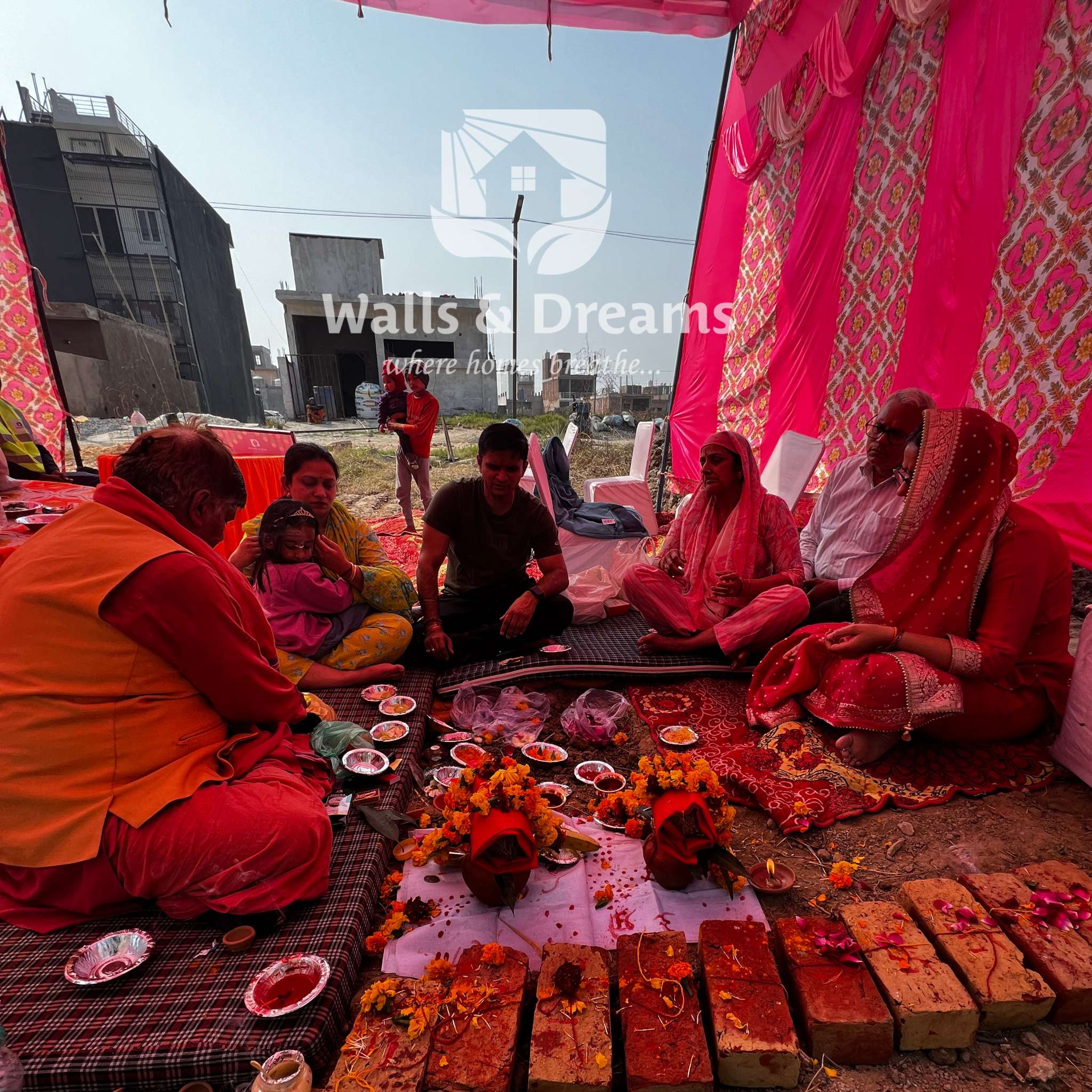
Once the auspicious month is chosen, tradition calls for Bhumi Pujan to be performed before any actual construction begins. Bhumi Pujan is a ritual ceremony that honours the five elements of nature — earth (Prithvi), water (Jal), fire (Agni), air (Vayu), and space (Akash) — and seeks the blessing of Bhumi Devi (Mother Earth) for the work that will follow.
The ceremony is typically conducted in the north-east corner of the plot, which Vaastu considers the most sacred direction (known as Ishanya). The ritual is believed to purify the land, dispel any negative energy that may have accumulated on the site, and invite positive forces to support the construction.
For a complete walkthrough of the ritual itself — including the puja samagri (ceremonial items) required and the typical sequence of the ceremony — see our detailed guide on Bhumi Pujan for a new house. Most families perform Bhumi Pujan on the same day they begin physical excavation, though some traditions allow for a gap of a few days between the ceremony and the start of digging.
How to Choose the Best Date to Start House Construction
Knowing the auspicious month is only the first layer. Within that month, traditional practice calls for selecting a specific Shubh Muhurat — an auspicious date and time window — for the actual start of construction.
This selection is influenced by several factors:
- The horoscope (Janma Kundali) of the head of the family or primary decision-maker
- The current planetary positions and Nakshatra (lunar mansion)
- The orientation and Vaastu characteristics of the plot itself
- The Tithi (lunar day) and Vaar (weekday) traditionally associated with construction
Because all of these variables are personal to the family and the plot, the only reliable way to identify the right Muhurat is to consult a qualified astrologer (Jyotishi) or Vaastu specialist. They will examine the relevant charts and recommend specific dates within the auspicious month for both Bhumi Pujan and the start of building work.
Tips to Keep in Mind Before Starting Construction
Beyond choosing the right month, there are practical steps families should take before the foundation work actually begins:
- Consult a Vaastu specialist: A pre-construction Vaastu consultation can flag orientation issues, room placement decisions, and timing recommendations that are far easier to address before the foundation is poured than after.
- Finalise your budget and financing: Construction delays caused by funding gaps mid-project are one of the most common reasons families end up disappointed with the build. Have your full budget — including a 10–15% contingency — confirmed before breaking ground.
- Factor in the weather: Even the most auspicious month means little if the actual work runs straight into peak monsoon. Excavation in dry weather is faster, safer, and significantly cheaper than excavation in wet conditions.
- Complete the necessary rituals: Bhumi Pujan and any other family-specific ceremonies should be completed before the first day of physical construction work.
- Confirm your structural drawings and approvals: Construction should not begin until your structural drawings are signed off and any local sanction or approval is in place — auspicious month or not.
A Practical Note from Our Project Team
While this article has focused on the traditional Vaastu-based recommendations, it’s worth knowing that the practical construction calendar in India lines up reasonably well with the traditional one — and where the two differ, it’s worth understanding why.
In our experience delivering residential projects across Delhi, Noida, Greater Noida, Gurgaon, Faridabad, and Ghaziabad, the most productive months for residential construction are October to March. These months offer dry weather, manageable temperatures, and longer working days for site labour. Foundation excavation in particular benefits from dry soil — wet monsoon soil is hard to compact properly and risks delaying the entire downstream schedule. A construction company in Greater Noida West that already works in the area will know the local approval process. When choosing builders in Faridabad ask for a sector-wise list of completed homes you can visit.
Starting construction in late October or early November (which often aligns with Kartik) gives a project the best run: the foundation and ground-floor structure can be completed before the worst of the summer heat in May–June, and the building is typically weatherproof before the next monsoon arrives. A start in March (Chaitra) is the second-best window — there is heat to manage, but construction can progress steadily before the July monsoon, and the slab work can be timed to avoid the heaviest rains.
The months that are traditionally avoided — particularly Shravan and Bhadrapada (July–September) — are also the months when our site teams report the highest delay rates due to rain, the highest material wastage, and the most quality issues with concrete curing. Tradition and practice agree on this point.
If your family’s auspicious window happens to fall during the monsoon, a good builder can still manage the project — but the foundation work usually gets sequenced carefully around rain forecasts, with significant pre-monsoon prep on the site.
Conclusion
Building a house is one of the most significant undertakings a family will ever take on, and beginning at the right time is traditionally believed to set the tone for everything that follows. According to Vaastu, the most favourable months to start construction are Chaitra, Vaishakh, Kartik, and Magh — each carrying its own associations with renewal, prosperity, devotion, and stability.
But choosing the right month is only one part of a successful build. A Vaastu-aligned start, combined with a sound structural design, a realistic budget, and an experienced construction team, is what carries a project from foundation to handover without compromise.
If you are planning to build your dream house and would like help balancing traditional considerations with the practical realities of construction, our team at Walls and Dreams works regularly with Vaastu consultants on residential projects across Delhi NCR. We can help you plan a build that respects both traditions — the cultural one and the engineering one.
Frequently Asked Questions
Which is the best month to start house construction in India?
According to Vaastu Shastra and Hindu Panchang tradition, the four most auspicious months to begin house construction are Chaitra (March–April), Vaishakh (April–May), Kartik (October–November), and Magh (January–February). Each is associated with positive energy, prosperity, and stability for the household. Some traditions also include Margashirsha (November–December) as favourable, particularly for post-monsoon construction.
Which months should be avoided for starting house construction?
Vaastu practitioners traditionally advise avoiding Bhadrapada (August–September), Ashwin (September–October), Pausha (December–January), and Shravan (July–August). These months overlap with the monsoon season and periods that traditional texts associate with reduced auspiciousness for new beginnings — and are also practically difficult months for excavation and foundation work due to waterlogging, soil instability, and concrete curing problems.
What is Bhumi Pujan and why is it performed before construction?
Bhumi Pujan is a ritual ceremony performed before construction begins, typically at the north-east corner of the plot. It honours the five elements of nature — earth, water, fire, air, and space — and seeks the blessing of Bhumi Devi for the work ahead. The ceremony is believed to purify the land, dispel negative energy, and invite positive forces to support the construction. It is performed on a Shubh Muhurat date selected by a qualified astrologer or family priest.
How is the exact date for starting construction selected within an auspicious month?
Within an auspicious month, a specific Shubh Muhurat is identified based on the head of family’s horoscope, current planetary positions and Nakshatra, the orientation of the plot, and the Tithi and Vaar traditionally favoured for construction. Because these variables are personal to the family and plot, families typically consult a qualified astrologer or Vaastu specialist to identify the right date for both Bhumi Pujan and the start of building work.
What is the most practical month to start construction in north India?
From a practical construction standpoint, the most productive months for residential construction in north India are October to March, with dry weather, manageable temperatures, and longer working days. Late October or early November (often aligning with Kartik) is the most efficient start window — allowing the structure to be weatherproof before the next monsoon. Tradition and practical engineering largely align on this point, with the traditionally avoided monsoon months also being the months that see the highest delay rates and material wastage on residential sites.
This article presents traditional Vaastu Shastra and Hindu Panchang perspectives on the timing of house construction. For Muhurat selection specific to your family and plot, please consult a qualified Vaastu practitioner or family priest.
Last reviewed: April 2026 by the Walls and Dreams editorial team. Next review: October 2026.