
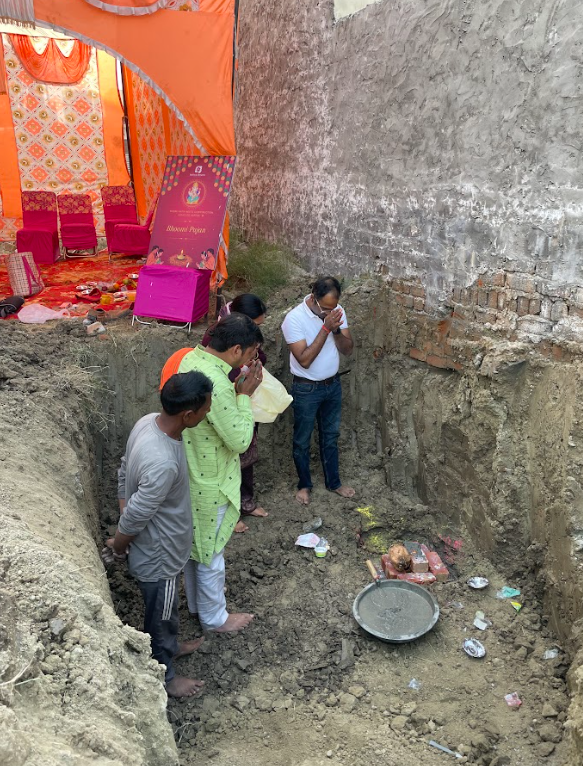
In Indian tradition, no significant construction begins without first honouring the land it stands on. Bhoomi Pujan — the ritual ceremony performed before the foundation of a new home, building, or major project — is one of the oldest and most widely observed practices in Indian culture. The ceremony is a request for permission and forgiveness from Bhumi Devi (Mother Earth) for the disturbance the construction will cause, and a prayer for the prosperity, harmony, and protection of those who will eventually live or work there.
This guide walks through what Bhoomi Pujan is, why families perform it before starting their home construction, the traditional procedure, the complete list of puja samagri (ceremonial items) you’ll need, the right time to perform it, and the restrictions traditionally observed.
A note before you read: The content below reflects traditional Vedic and Vaastu Shastra practice. Specific rituals, samagri lists, and timings vary by region, family tradition, and the priest officiating. For your specific ceremony, please consult a qualified family priest (purohit) or Vaastu specialist who can adapt the practice to your circumstances.
What Is Bhoomi Pujan?
Bhoomi Pujan is a ritual performed at the north-east corner of a construction site or plot — known as Ishanya in Vaastu Shastra and considered the most sacred direction. The ceremony honours Lord Vastu Purusha (the deity of the building site), Bhumi Devi (Mother Earth), the Pancha Bhutas (the five elements: earth, water, fire, air, and space), and the directional deities who govern the eight cardinal and ordinal directions.
The purpose of the ceremony is fourfold:
- To seek the permission of Bhumi Devi for the construction that will take place on her surface
- To remove any negative energies or Vaastu Dosh that may be associated with the land
- To purify the site and consecrate it for habitation
- To invite divine blessings for the prosperity, peace, and well-being of the family that will live there
Some families also include vegetation rituals before construction begins — planting a tulsi or other auspicious plant on the site, or allowing cows to graze on the land for a short period. These are traditional gestures of harmony with nature, signalling that the family approaches the construction with respect for the existing life of the land.
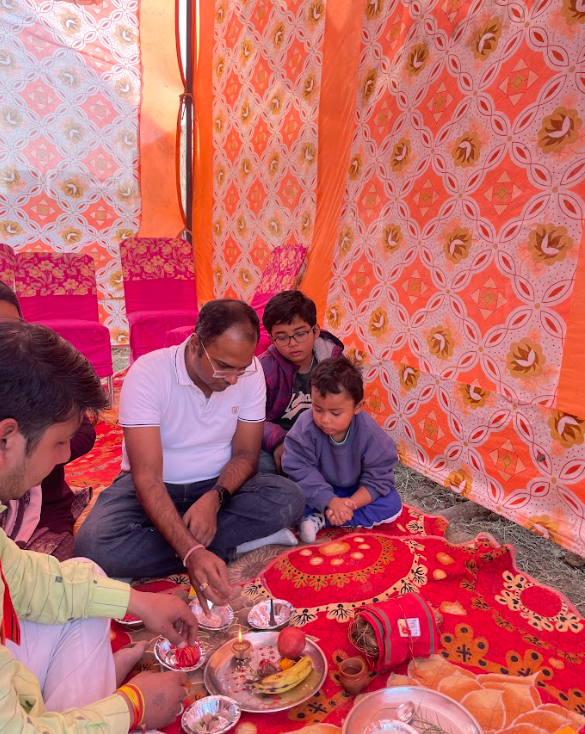
Benefits of Bhoomi Pujan
The traditional benefits associated with performing Bhoomi Pujan before construction include:
- Purification of the land: The ceremony is believed to cleanse the site of any residual negative energy from prior use or events.
- Removal of obstacles: Beginning construction with proper invocations is traditionally believed to reduce the chances of delays, accidents, or unexpected problems during the build.
- Vaastu compliance: The ritual aligns the site with Vaastu Purusha, supporting balance and order in the structure that follows.
- Prosperity and well-being: The ceremony invites blessings for the family’s health, harmony, and material success in the new home.
- Cultural and family continuity: Performing Bhoomi Pujan honours generations of practice and brings family elders meaningfully into the start of a major life decision.
Bhoomi Pujan Procedure (Step by Step)
The exact sequence varies by region, family tradition, and the priest officiating, but the standard procedure follows these stages:
1. Prepare the site: The plot is cleaned thoroughly, with all debris and contaminants cleared. The ground at the north-east corner — where the ceremony will take place — is levelled and made ready.
2. Position of the worshipper: The family member performing the puja sits facing east, the direction of the rising sun and new beginnings. The priest officiates from a position appropriate to the layout.
3. Ganesh Puja: The ceremony begins with prayers to Lord Ganesha, the remover of obstacles, invoked at the start of every Hindu auspicious occasion. This sets the tone for the rest of the ritual to proceed without disruption.
4. Setup of the deities: The platform is cleaned and the idols of the relevant deities — typically Ganesha, Lakshmi, and Vastu Purusha — are placed alongside the ceremonial items. The arrangement follows the priest’s instructions.
5. Coconut placement: A coconut, wrapped in a red cloth and accompanied by mango leaves, is placed at the centre of the puja area. The coconut symbolises the offering of one’s ego and self to the divine.
6. Havan (sacred fire): The priest lights the havan kund (sacred fire pit) and performs the fire ceremony, offering ghee, samidha (sacred wood), and herbs into the flames while reciting Vedic mantras.
7. Main rituals: The core sequence typically includes:
- Devi Puja — worship of the Goddess
- Sankalpa — the formal vow stating the purpose of the ceremony
- Shatkarma — the six purification processes
- Pran Pratishtha — invocation of life force into the deity idols
- Manglik Dravya Sthapana — placement of auspicious symbolic items at the site
8. First brick or first dig: The ceremony often concludes with the family elder turning the first spade of earth or laying the first ceremonial brick at the north-east corner — the symbolic beginning of construction.
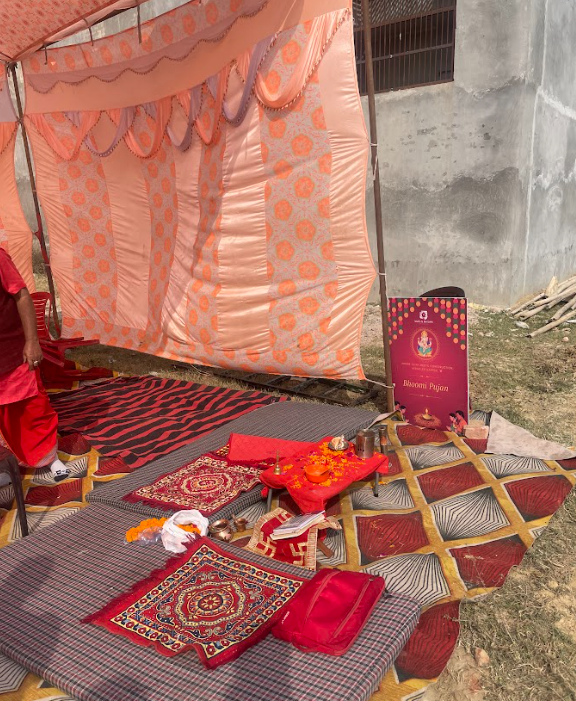
Essential Bhoomi Pujan Samagri (Item Checklist)
Below is a comprehensive list of items typically required for a Bhoomi Pujan ceremony. Quantities are indicative and can be adjusted on the priest’s recommendation; some items may be optional depending on the regional tradition followed.
Core ritual items
- Turmeric (Haldi): 100 grams
- Kumkum (vermilion): 100 grams
- Sandalwood powder (Chandan): 1 small box
- Camphor (Kapur): 1 small box
- Incense sticks (Agarbatti): 1 pack
- Diya / earthen lamps: with cotton wicks and oil/ghee
- Matchbox
- Bell (Ghanti)
- Knife (small, for ritual use)
Offerings and consumables
- Rice (Akshat / unbroken rice): about 5 kg
- Loose flowers: 2 bunches (marigold, rose, or seasonal)
- Mango leaves: 10 (for the kalash)
- Assorted fresh fruits: 3 varieties, 6 pieces each
- Coconuts: 4 (whole, with husk)
- Lemons: 8 (yellow / fresh)
- Milk: 1 litre
- Drinking water: 4–5 litres
- Yogurt rice (curd rice): prepared as prasadam
- Pan leaves (Betel): 40
- Betel nuts (Supari): 25
- Nava Dhanya (nine grains): 200 grams (assorted lentils and grains, a symbolic offering)
Symbolic and decorative items
- Kalash (sacred pot): 1, typically copper or brass
- Coins: ₹40 in small denominations (for ceremonial offerings)
- Navaratna (nine gems): 1 small set (symbolic)
- Pancha Loha (five metals): 1 small set (symbolic)
- Deity picture or idol: 1
- Red or yellow blouse piece (cloth offering): 1
- White towel: 1
- Mango leaves and flowers: for kalash decoration
Construction-related symbolic items
- Bricks: 10 (for symbolic foundation laying)
- Shovel / spade: 1 (for the ceremonial first dig)
- Rice flour: for drawing rangoli at the puja site
Practical items for the gathering
- Aluminium / steel trays: 5 (for arranging samagri)
- Sheets and plastic ground covering: for seating
- Umbrella or canopy: if the ceremony is being held under the open sky
- Plastic cups, plates, spoons: for prasadam distribution
- Napkin roll: for general use
A practical tip from our project team: Keep the samagri list with you when shopping — most pandit-supplied lists are in Hindi or Sanskrit and easy to misread. In Delhi NCR, dedicated puja samagri shops in older markets (Sadar Bazar, Chandni Chowk, Lajpat Nagar) carry pre-assembled Bhoomi Pujan kits at around ₹1,500–₹3,000 depending on completeness, which can save considerable time over sourcing items individually.
When to Perform Bhoomi Pujan
The ideal date and time for Bhoomi Pujan is determined by the Shubh Muhurat — the auspicious window calculated based on the Hindu calendar (Panchang), the lunar day (Tithi), the lunar mansion (Nakshatra), and the planetary positions at the time of the ceremony.
Auspicious Muhurats for Bhoomi Pujan typically occur a few times each month, with stronger windows during certain Hindu months (Chaitra, Vaishakh, Kartik, and Magh are widely cited). Consult an experienced priest or astrologer who can identify the most favourable date and time specific to:
- The horoscope of the family head or main decision-maker
- The orientation and Vaastu characteristics of the plot
- The current planetary positions at the time of the proposed ceremony
For more on choosing the right month for starting construction overall, see our guide on the best month to start construction of a house.
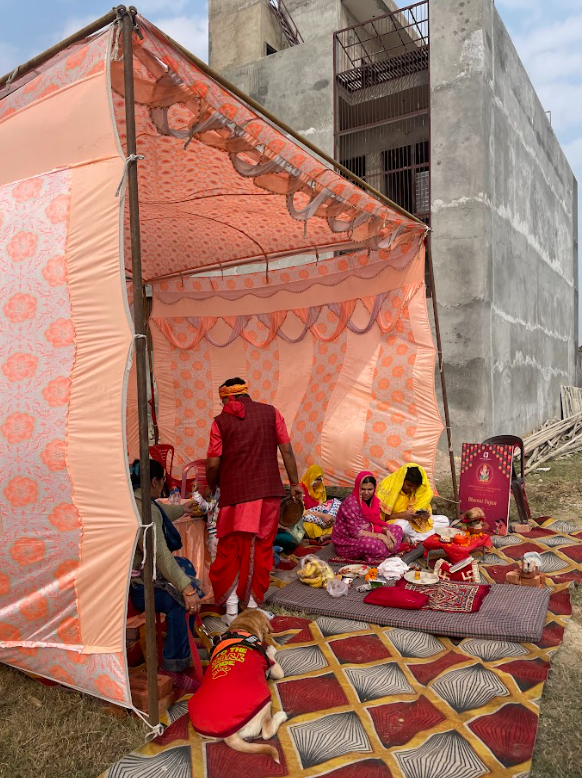
Who Should Perform Bhoomi Pujan?
Bhoomi Pujan is traditionally performed by the head of the household (the family elder or primary decision-maker), often joined by the spouse, with a qualified priest (purohit / pandit) officiating the ritual.
In modern practice:
- The priest leads the chants, mantras, and ritual sequence
- The family member who will be the primary occupant or owner of the home performs the symbolic actions — placing the coconut, offering into the havan, turning the first spade
- Other family members participate as witnesses and recipients of blessings
For the ceremony to be considered traditionally complete, it should be conducted during the Shubh Muhurat identified by the priest, with all participants in clean traditional attire and the appropriate ritual frame of mind.
Restrictions Traditionally Observed
Certain days, dates, and circumstances are traditionally avoided for Bhoomi Pujan:
- Days of the week: Tuesdays are often avoided in some traditions (associated with Mars and considered inauspicious for new beginnings). Practices around Saturdays and Sundays vary by region — confirm with your family priest.
- Lunar dates (Tithis): The 4th (Chaturthi), 9th (Navami), and 14th (Chaturdashi) lunar days are traditionally considered less favourable for foundation ceremonies in some traditions.
- Eclipse periods: Solar and lunar eclipse days, and the periods immediately before and after them, are universally avoided.
- Family circumstances: Some families defer Bhoomi Pujan if the household is observing a period of mourning, or if a family member is in advanced stages of pregnancy and cannot comfortably attend. Practice varies — a priest’s guidance is the right reference, not generic rules.
A reminder: these are traditional considerations, not absolute prohibitions. The right path is to share the proposed date with your priest and let the family tradition guide which restrictions apply to your ceremony.
Bhoomi Pujan Mantra
A central mantra recited during Bhoomi Pujan, invoking the blessings of Bhumi Devi:
- Om Vasundharaye Vidmahe Bhutadhatraye Dheemahi Tanno Bhumi Prachodayat
- The mantra is repeated multiple times during the ceremony, and the priest may recite many additional Vedic mantras specific to the deities being invoked at each stage.
Bhoomi Pujan and the Construction That Follows
While the ceremony itself is a religious and cultural one, the construction that follows is where the practical part of the journey begins. A well-conducted Bhoomi Pujan is best paired with:
- A Vaastu-compliant design that honours the orientation principles invoked during the ceremony
- A clear structural design signed off by a qualified architect and structural engineer
- An experienced construction team that respects both the traditional considerations and the engineering realities of the build
Our team at Walls and Dreams regularly works with families across Delhi NCR who want their new homes to honour both the traditional and the practical sides of construction. We coordinate with Vaastu consultants and family priests on site arrangements before Bhoomi Pujan, and our project team is on hand the next day to begin the structural work without delay. If you are planning a Bhoomi Pujan and the construction that follows, our team is happy to help — we can be reached at hello@wallsanddreams.com or (+91) 813 037 7070.
Conclusion
Bhoomi Pujan is far more than a formality. For families across India, it is the moment a piece of land becomes a home in waiting — when the practical work of construction is preceded by a deeper acknowledgment of the earth, the elements, and the divine that the family is asking to bless their new beginning.
Whether your construction is a modest independent house or a multi-storey villa, performing Bhoomi Pujan with the right intent, the right samagri, and the right Muhurat is the traditional first step. Consult an experienced priest, prepare the samagri carefully, and approach the ceremony with the respect it deserves — the rest of the journey, as the tradition says, follows from a beginning done well.
Frequently Asked Questions
What is Bhoomi Pujan and why is it performed?
Bhoomi Pujan is a traditional Vedic ritual performed before construction begins on a new home, building, or major project. The ceremony honours Lord Vastu Purusha, Bhumi Devi (Mother Earth), and the five elements of nature, and is performed to seek permission for the construction, remove negative energies or Vaastu Dosh from the land, purify the site, and invite divine blessings for the family that will live there. It is performed at the north-east corner (Ishanya) of the plot, considered the most sacred direction in Vaastu Shastra.
What samagri (items) are required for Bhoomi Pujan?
Standard Bhoomi Pujan samagri includes core ritual items (turmeric, kumkum, sandalwood powder, camphor, incense, diyas), offerings (about 5 kg rice, fruits, coconuts, lemons, milk, betel leaves and nuts, Nava Dhanya), symbolic items (kalash, navaratna, pancha loha, deity idol, ₹40 coins), and construction-related symbolic items (10 bricks, a shovel for the first dig). The exact list varies by region and family tradition — confirm with the priest officiating the ceremony. Pre-assembled Bhoomi Pujan kits are also available at major Delhi NCR puja samagri markets.
When is the right time to perform Bhoomi Pujan?
Bhoomi Pujan should be performed during a Shubh Muhurat — an auspicious window calculated based on the Hindu Panchang (calendar), Tithi (lunar day), Nakshatra (lunar mansion), and current planetary positions. Auspicious Muhurats typically occur a few times each month, with stronger windows during certain Hindu months — Chaitra (March–April), Vaishakh (April–May), Kartik (October–November), and Magh (January–February) are widely cited. The exact date should be confirmed with a qualified priest or astrologer based on the family head’s horoscope and the Vaastu characteristics of the plot.
Who should perform the Bhoomi Pujan ceremony?
Bhoomi Pujan is traditionally performed by the head of the household — the family elder or primary decision-maker — often joined by the spouse, with a qualified priest (purohit or pandit) officiating the ritual. The priest leads the chants, mantras, and ritual sequence, while the family member who will be the primary occupant performs the symbolic actions like placing the coconut, offering into the havan, and turning the first spade of earth. Other family members participate as witnesses and recipients of blessings.
Are there any days or circumstances when Bhoomi Pujan should be avoided?
Yes, certain days and dates are traditionally avoided. Tuesdays are often considered inauspicious in some traditions (due to the association with Mars), and the 4th, 9th, and 14th lunar days (Chaturthi, Navami, Chaturdashi) are traditionally less favourable for foundation ceremonies. Solar and lunar eclipse days — and the periods immediately before and after them — are universally avoided. Some families also defer the ceremony during mourning periods or other family circumstances. These are traditional considerations rather than absolute prohibitions; share the proposed date with your priest and let family tradition guide the final choice.
This article presents traditional Vedic and Vaastu Shastra practice on Bhoomi Pujan. Specific rituals, samagri requirements, and Muhurat selection should be confirmed with a qualified family priest or Vaastu specialist for your circumstances.
Last reviewed: April 2026 by the Walls and Dreams editorial team. Next review: October 2026.