
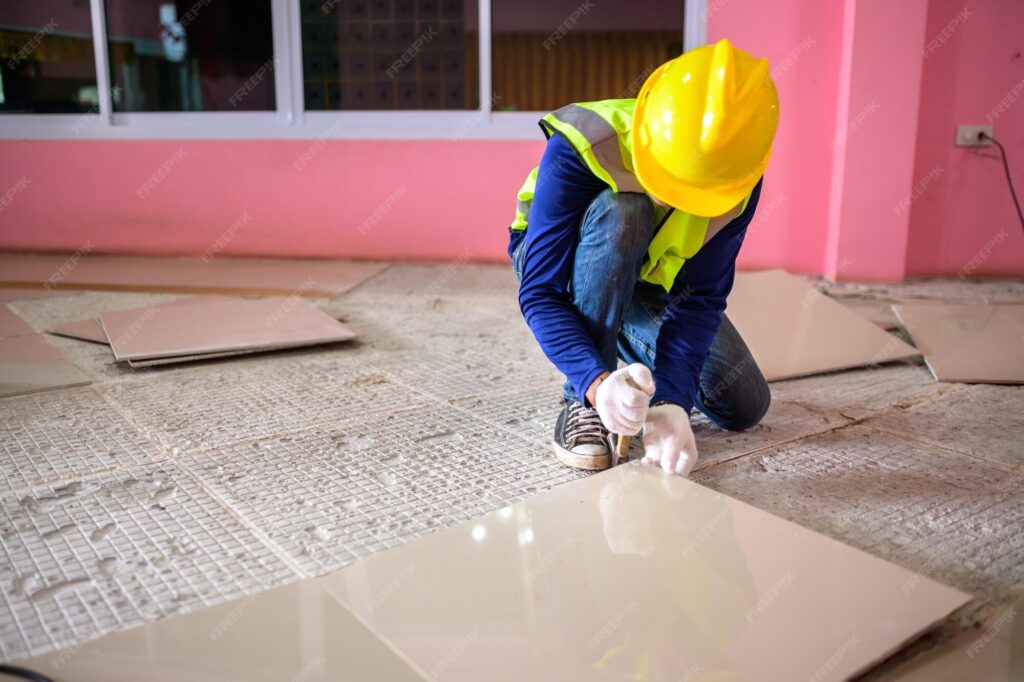
Flooring is a very important aspect in any building structure. It does not only lend assistance in day-to-day operations, but would also add to durability and performance. IPS flooring remains a trustworthy and affordable choice of flooring in residential, commercial, and industrial areas when it comes to traditional flooring techniques that are widely used in India. This paper will define what is IPS flooring, explain the IPS flooring full form, comprehend IPS in construction, and the types, benefits, applications of IPS flooring and the entire process of IPS flooring.
What Is IPS Flooring?
The question that is frequently asked in the construction area is: What is IPS flooring?
IPS flooring is a cement based flooring which is created by pouring over a mixture of cement, sand and water on a concrete base. After being made and processed well, it becomes hard, smooth and durable to be used in most building activities.
IPS Flooring Full Form
Indian Patent Stone flooring is its IPS flooring full form. The IPS abbreviation of civil engineering, when translated literally, is found in civil engineering as well, as the Indian Patent Stone, a type of flooring that was very popular prior to the rise of tiles and marble. It is also referred to as IPS cement flooring particularly in construction sites and residential projects.
The Role and Importance of IPS in Construction
IPS in construction has been appreciated due to its strength, simplicity and affordability. It is particularly applicable in those projects where:
- There should be a high pedestrian traffic.
- Budget limitations exist
- It needs a surface that is durable.
- An informal and practical finish is tolerable.
Even with the existence of the modern flooring materials, IPS flooring is widespread in the government buildings, schools, warehouses and residential houses.
Types of IPS Flooring
Even though IPS flooring is typically uncomplicated, it can be classified according to the finish and usage.
1. Plain IPS Flooring
This is the simplest IPS cement flooring. It is a normal cement-sand mixture that is left smooth with a trowel.
Features:
- Simple grey finish
- Highly economical
- Strong and durable
It is common in storage facilities, utility rooms, and in the industrial environment.
2. Colored IPS Flooring
In this kind, the decadence is obtained by the addition of pigments to the cement mix.
Features:
- Available in various shades
- Better visuals than plain IPS.
- Slightly higher cost
Colored IPS floor is mostly found in residential verandas, corridors and institutional buildings.
3. Polished IPS Flooring
The surface is then polished into smoothness and shine after a proper curing is done.
Features:
- More polished and smooth finish.
- Easier to clean
- Better aesthetic appeal
This one is appropriate to be used in offices, schools, and other state buildings where the durability and the look also count.
IPS Flooring Process
The performance of the IPS flooring highly depends on correct performance. IPS flooring process consists of a number of key steps.
Step 1: Surface Preparation
Cleaning of the base concrete slab is done. The dust, loose particles and debris are cleared so as to have good bonding.
Step 2: Base Layer Application
A coating of cement slurry is added to enhance the attachment between the base slab and the IPS layer.
Step 3: Mixing
To form concrete, the mixture of cement and sand is placed in an appropriate proportion (usually 1: 2 or 1: 3), so that the cement and sand are mixed with some water to attain a working consistency.
Step 4: Laying the Mix
The mixture that has been prepared is then placed all over the surface and is usually laid in panels to regulate the shrinkage and prevent cracks.
Step 5: Leveling and Finishing
Straight edges are used to level the surface and a trowel is applied to make the surface smooth.
Step 6: Curing
At least 7 to 14 days are required to cure it to show strength and avoid cracking.
The proper IPS flooring procedure provides lifetime and sustainable outcomes.
Benefits of IPS Flooring
IPS flooring has a number of merits to be adopted in construction ventures.
-
Cost-Effective Solution
IPS flooring is very cost effective when compared to marble, granite, and vitrified tiles thus it can be the best choice in projects that require tight finances.
-
High Durability
IPS cement flooring is capable of supporting heavy loads and high traffic hence saving on industrial and commercial areas.
-
Low Maintenance
IPS flooring is not very demanding in terms of maintenance and is easy to clean once it is cured appropriately.
-
Long Lifespan
IPS flooring may last decades with the help of curing and regular maintenance.
-
Uncomplicated Location of Materials
IPS construction is easy and can be found easily as cement and sand are readily available ensuring that it is available in different regions.
Uses of IPS Flooring
IPS flooring is also a flexible product and can be used in all kinds of buildings.
Residential Applications
- Bedrooms
- Living areas
- Verandas
- Utility spaces
Commercial Applications
- Offices
- Schools
- Shops
- Hospitals
Industrial Applications
- Warehouses
- Storage units
- Factory floors
IPS flooring is also a good flooring to be used in places where style is not as valued as functionality.
Limitations of IPS Flooring
Although IPS flooring has numerous advantages, certain disadvantages of the material also exist:
- Lack of design and aesthetic choice.
- Threat of cracks in case of poor curing.
- Surface may appear dull in comparison to the contemporary floor materials.
- Skilled workmanship is best with this.
But the majority of these problems could be reduced in case of the appropriate implementation of the IPS flooring process.
IPS Full Form in Civil engineering
To explain again, IPS full form of civil engineering is Indian Patent Stone. It is a conventional cement-based flooring system to give the buildings a strong and smooth flooring.
ISD is still applicable in construction, even nowadays, due to its longevity and affordability.
When do you prefer IPS Flooring?
You ought to think about the IPS flooring in the event that:
- There are budget constraints involved in your project.
- The area must have durable flooring.
- You require a long-term and low maintenance surface.
- It is acceptable that it has a simple and working finish.
Nevertheless, in case your priority is the luxury and contemporary design, another type of flooring can be more appropriate.
Conclusion
It is important to understand what IPS flooring is and what is its purpose in construction so that one could make informed decisions. The full form of IPS flooring is known as Indian Patent Stone which emphasizes on its tradition and practical significance in the construction of buildings. IPS cement flooring is strong, durable and economical regardless of whether it is in a home, commercial building or industrial space. This flooring solution can be used to offer