
A reliable water tank is essential for every home and building. Whether you are constructing a new house, upgrading your plumbing system, or managing a commercial property, choosing the right storage solution ensures uninterrupted water supply, safety, and durability.
In this guide, we’ll explore the types of water tank, understand popular water tank types in India, and help you select the best type of water tank based on your needs.
The reason why it is significant to choose the appropriate water tank
A water tank is not only used to store water. It plays a critical role in:
- Maintaining water quality
- Providing effective water pressure.
- Serving domestic or commercial purposes.
- Reducing maintenance costs
- Increasing the building safety.
Use of unsuitable tank may result in spillages, pollution and increased costs in the long run. That is why it is better to know the types of water tanks before deciding.
Comments on Type of Water tank depending on material
The material used in manufacturing is among the main methods of categorizing the types of water tanks. All the materials possess their own strengths and can be applied in certain applications.
-
Polyethylene (PW) Water Tanks
Plastic tanks are also one of the most widespread types of water tanks in India. These tanks are light, durable, and of low cost and made of food-grade polyethylene.
Key Benefits:
- Rust and corrosion impervious.
- Portable and non-complicated to install.
- Many sizes and layers (single, double, triple layer) are available.
- Cost-effective
The tanks are perfect to be used in residential buildings especially on top of the roofs. Plastic tanks are a viable choice when you are interested in a cheap form of water tanks to be used at home.
-
Concrete (RCC) Water Tanks
RCC or concrete tanks are characterised by high strength and high life span. These are most often built at the location and can be used to hold large amounts of water.
Key Benefits:
- Extremely durable
- Proper under ground storage.
- Low risk of physical damage
- Perfect when it comes to high capacity needs.
The concrete tanks are applied in apartments, commercial complexes, and independent houses which have high storage needs.
-
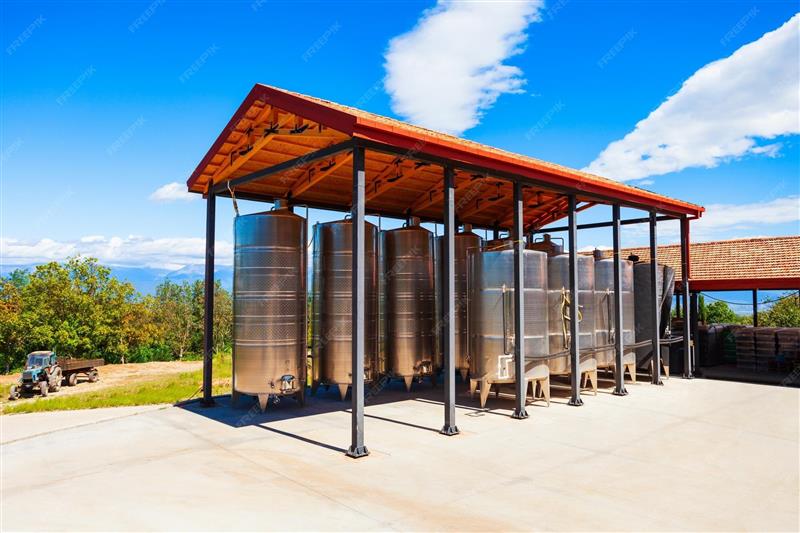
Stainless Steel Water Tanks
The stainless steel tanks are increasingly becoming popular owing to their hygienic characteristics and durability.
Key Benefits:
- Great resistance to rusting and corrosion.
- Maintains water purity
- Long-lasting and strong
- Easy to clean and maintain
Such kind of a water tank is appropriate in a hospital, hotel and high end residential buildings, where the water quality is a consideration.
-
Fiberglass (FRP) Water Tanks
Fiberglass reinforced plastic (FRP) tanks are very powerful but light. Their application is common in industries and business.
Key Benefits:
- Corrosion resistant
- Light and yet strong structurally.
- Appropriate to withstand the harsh weather.
- Personalized digitalization features.
FRP tanks are preferable in case of necessity of durability and flexibility.
Types of water tanks based on the place of installation
Other than material, the types of water tanks are also divided according to the location where they are set.
-
Overhead Water Tanks
The overhead tanks are mounted on the roof or high buildings. They have taken advantage of the concept of gravity to spread water to every part of the building.
Advantages:
- Better water pressure
- Effective distribution channel.
- Ordinarily used in residential structures.
These are the most popular types of water tanks in India used in individual houses and small buildings.
-
Underground Water Tanks
The underground tanks are constructed at the ground level but beneath the ground and they are commonly used to preserve municipal supply or rainwater collected.
Advantages:
- Saves terrace space
- Holds lower temperatures of water.
- Perfectly suitable in terms of large storage capacity.
- Appropriate to rain water collection systems.
Most buildings have underground and overhead water tank systems combined in order to have efficient supply.
Comparison Between Various Water Containers And Water Tanks
The distinction between various types of water containers and water tanks should be made.
- Water containers are drums, cans, and barrels that are used either as a temporary or on-the-fly storage.
- A water tank is a permanent and more massive structure that is used in the storage of water, which is long-term in the buildings.
This difference in the choices can be used to determine the right storage solution to your needs.
Types of Water Tanks in India: What do we Normally Use?
In case of the types of water tank in India, a number of factors determine the type to be used such as the climate, water availability and the design of the building.
These are the most popular ones:
- Residential home plastic overhead tanks.
- Large storage tanks RCC underground large tanks.
- Ultra-violet protection plastic tanks with multiple layers.
The most popular are still plastic tanks, which are inexpensive, easy to install, and have a broad range of availability.
The Selection of the Correct Type of Water Tank
In choosing the appropriate kind of water tank, one needs to be very careful in giving regard to a number of factors.
-
Capacity Requirement
Approximately how much water do you use every day:
- Small family (4–5 members): 500–1000 liters
- Large family: 1000–2000 liters
- Apartments or business structures: 5000liters and above.
Selecting the right capacity will not only avoid shortages of water but will also avoid wastage of money.
-
Available Space
- Space on the terraces is not sufficient → Select small or vertical tanks.
- Expansive plot area → Take into consideration underground storage.
Space is also a major factor in the selection of various types of water tanks.
3. Budget
In general, plastic tanks are cheap.
Tanks can use concrete and stainless steel which can be expensive in the short run, but they are durable in the long run.
4. Water Quality and Safety
In case the water is impure or has a high level of mineral content, select materials which are resistant to corrosion. Better hygiene is suggested by the use of food-grade and UV-stabilized tanks.
5. Climate Conditions
UV-protected and multi-layer tanks can be used in hot environment to prevent the algae growth and excessive heat. Corrosion proof materials are necessary in the coastal areas.
Water Tank Maintenance Advice
When water tanks are well maintained, they have more life span.
- Wash the tank at least once in a year.
- Keep the lid tightly closed
- Inspect for cracks or leaks
- Proper overflow and drain systems should be installed.
- Make sure that pipes and fittings are fastened.
To be safe and clean water storage is maintained regularly.
Conclusion
It is an awareness that will assist you in making an informed choice about the kind of water tank you will choose. Plastic and concrete, stainless steel and FRP are all good options depending on their purposes. The types of water tanks here include capacity, location, budget, and longevity. Plastic overhead tanks and RCC underground types of water tanks are still the most popular types of water tanks in India because of their applicability and affordability. When comparing the different types of water tanks, the proper type of water tank and knowing the distinction between tanks and the different types of water containers, you would be able to select an appropriate solution, which guarantees long-term operation and the safety of water storage in your home or building.