
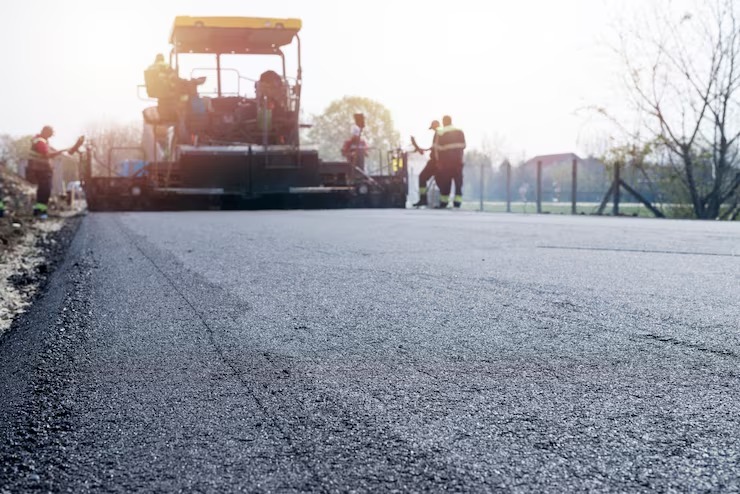
Contemporary road systems require robust, pliable, and high functionality surfacing materials. Bituminous concrete is among the most popular solutions and is characterized as a strong material with high versatility and long service life. From urban streets to national highways, this surfacing material plays an important role in the development of smooth, safe and reliable transport networks.
At Walls and Dreams, knowledge about the science of construction material assists in providing long-lasting infrastructure solutions. This blog discusses composition, properties, construction process and benefits of bituminous concrete in the development of roads.
What Is Bituminous Concrete?
Bituminous concrete is a dense compound created by encapsulating mineral aggregates with bitumen as a binding agent. It is widely used as the topmost layer of roads because of its capacity to handle extreme weight of traffic and varying climatic conditions.
In comparison to rigid pavements, the bituminous concrete is flexible which helps in absorbing the stress formed by the traffic flow and temperature variations. This property is particularly effective in the Indian road conditions where the traffic density and fluctuating weather are the key affecting factors.
Composition of Bituminous Concrete
The quality and proportion of the components for any kind of bituminous surface are crucial to determine its performance. A well-planned blend is used to achieve longevity and quality on the surface.
Aggregates
Aggregates make the skeleton of the mix and typically constitute more than 90 percent of the entire weight. They consist of crushed stone, gravel and sand which are chosen according to the strength, shape, and durability. Good load distribution and interlocking are guaranteed by proper gradation.
Bitumen Binder
Bitumen serves as a bonding chemical, which coats the aggregates and asserts them. It makes it flexible, deform-resistant, and waterproof. The bitumen quality varies according to the strength of traffic, climatic conditions, and requirement of the project.
Filler Materials
Mineral fillers like stone dust or cement are used to increase the density and stability of the mix. They help in reducing air pores and enhance the interlocking between aggregates and bitumen.
Understanding the Bituminous Concrete Layer
An efficient pavement system comprises several layers, each having its own purpose. The top wearing course applied over base and binder layers is the bituminous concrete layer.
This surface layer is directly exposed to traffic loads, environmental exposure and wear. It should provide skid-resistance, effortless ride and enduring durability. This layer needs to be properly thickened and compacted to avoid overstraining of the surface like rutting or cracking.
Density and Its Importance in Performance
Density of bituminous concrete is one of the parameters that define both its strength and durability. The degree of compactness between the aggregates and binder is called the density.
- Increased density eliminates air pores and enhances resistance to water infiltration
- Correct weighing leads to high load bearing capacity
- Optimal density reduces the chances of untimely surface failures
The right density on-site would be gained by having accuracy in temperature control, rolling methods, and quality control during laying operations.
Bituminous Concrete Road Construction Process
The success of a bituminous concrete road construction project depends on a systematic and controlled execution process.
Mix Design and Testing
Laboratory mix designs are made prior to the start of construction in order to establish the optimal ratio of aggregates, bitumen, and fillers. These designs make sure that the mix has met the performance standards in terms of stability, flow and durability.
Batching and Mixing
Materials are mixed in a hot mix plant at controlled temperatures to ensure uniform coating of aggregates with bitumen. Consistency at this stage is crucial for achieving desired performance on-site.
Transportation and Laying
The hot mix is transported to the site and laid using pavers. Temperature must be maintained to allow proper compaction. Any delay can affect bonding and surface quality.
Compaction
Rolling is carried out in multiple stages to achieve the specified density. This step determines the longevity and structural integrity of the finished surface.
Applications in Road Infrastructure
Highways, city roads, industrial access roads and airport pavements are mostly paved with a bituminous concrete road. It has a smooth finish that makes it comfortable to drive and its flexibility makes it able to bear repetitive traffic loads without structural breakdown.
Due to its versatility, it can be used in both high-speed corridors and urban congestion. Its service life is further increased through proper maintenance making it a cost effective surfacing option.
Important Advantages of Bituminous Concrete
Durability and Strength
Bituminous concrete roads can support heavy traffic loads when appropriately developed and pressed. They do not crack or deform easily, which ensures stable performance in the long run.
Smooth Riding Quality
Aggregates of very fine grades give a smooth surface to minimize vehicle wear while making driving more comfortable.
Water Resistance
Bitumen’s waterproofing properties make sure that pavement structure is not destroyed by moisture, which is one of the primary reasons for road degradation.
Ease of Maintenance
Repairs and resurfacing can be undertaken without making a major disturbance. This makes bituminous surfaces workable in heavy traffic areas.
Cost Efficiency
In comparison to rigid pavements, bituminous roads generally have less initial construction expenses and faster construction schedules.
Quality Assurance & Optimal Practices
A crucial factor in the optimization of pavement life is quality assurance. The correct choice of materials, temperature regulation, compaction control, and periodic examination will make sure that the final surface meets design standards.
Walls and Dreams gives priority to material knowledge and precision of execution so that road construction projects can deliver consistent performance and long-term value.
Conclusion
Due to its flexibility, extension and cost efficiency bituminous concrete continues to be one of the constituents in modern road construction. Beginning with well-optimized mixes to laying and compaction, each process influences the performance of pavements. Bituminous concrete roads, when properly planned and constructed, offer smooth and durable surfaces that can withstand current heavy traffic situations while maintaining the infrastructure’s stability.