
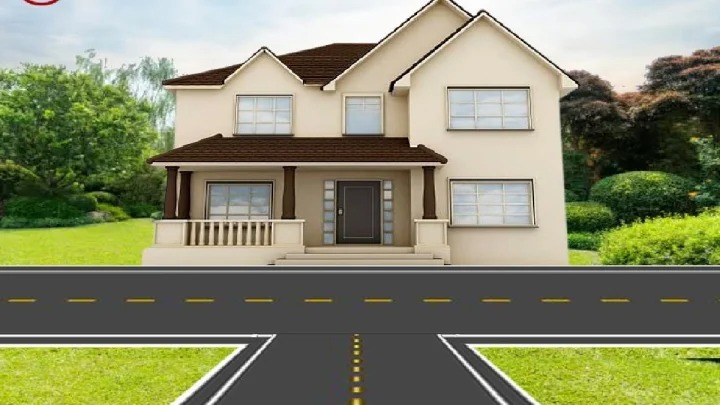
Purchasing or constructing a house is one of the biggest choices in life, and for many Indian homeowners Vastu Shastra is an important part of it. Among several plot structures that are explained in Vastu, T-point houses commonly bring doubts and inquiries. People frequently wonder whether living on a T-junction brings negative energy, financial instability, or health issues—or whether these effects can be balanced with the right planning.
At Walls and Dreams, we often guide homeowners who want modern homes designed with traditional wisdom in mind. This blog explains the concept of T-point house Vastu in detail, its possible impact on daily life, and practical ways to create harmony without compromising on design or comfort.
What Is a T-Point House in Vastu Shastra?
A T-point house is a property located at the end of a road where another road meets it, forming a “T” shape. The real issue is that the road directly approaches the house and provides a quick energy rush to the house.
According to Vastu Shastra, shape of land, direction of road and movement around are determined to affect the movement of energy inside the house. It is commonly believed that a house located at a T-junction exposes the house to too much outside energy, which disrupts the internal balance unless appropriate measures are taken. This is why gt point house vastu is considered a sensitive topic and requires careful evaluation rather than outright rejection.
Why T-Point Houses Are Considered Challenging
The concern with T-point houses lies in the direction and force of energy flow. Roads act as channels of movement, and when a road directly hits the center of a house, it is believed to create pressure on the occupants.
Commonly discussed challenges include:
- Mental stress or lack of peace
- Financial instability
- Health-related discomfort
- Frequent obstacles in personal or professional growth
However, Vastu is not meant to create fear. It offers corrective measures that allow homeowners to live comfortably even in such locations.
Vastu Shastra’s Importance in Home Planning
It is important to learn vastu shastra for home planning before making any decisions regarding the plot. Vastu considers several aspects simultaneously which includes direction, layout, room placement, open spaces, and energy flow.
The fate of a house does not entirely depend on a T-point location. With adequate entry positioning, internal zoning, and structural balance, most of the undesired effects can be offset efficiently.
When modern architectural planning is done in accordance with the Vastu principles, the homes usually have a beautiful appearance and balanced energy.
Direction Matters: North, East, South, and West T-Points
Not all T-point houses are the same. The direction from where the road leads to the house is a significant factor for determining its effects.
North and East T-Point Houses
These are mostly thought to be less problematic. North and East directions relate to development, transparency, and possibilities. With correct entrance placement and open spaces, these houses can function well.
South and West T-Point Houses
These directions are more sensitive and require greater attention. A south-facing house vastu analysis becomes especially important here, as improper planning may amplify challenges related to health or finances. Professional evaluation helps in deciding suitable remedies rather than rejecting the property altogether.
Entrance Placement and Its Influence
In Vastu, the main entrance acts as the mouth of energy. In T-point houses, incorrect entrance placement can intensify external pressure.
Important considerations include:
- Avoiding doors exactly at the center of the road-facing wall
- Choosing auspicious padas (zones) for entry
- Creating buffer spaces such as verandas or setbacks
These vastu tips for t point house layouts help control the speed and direction of energy entering the home, promoting stability and peace.
Internal Layout Planning for T-Point Homes
Once the external challenges are addressed, internal planning becomes equally important. Balanced room placement helps distribute energy evenly throughout the house.
Key planning suggestions include:
- Living room in the north or east
- Kitchen in the southeast
- Master bedroom in the southwest
- Toilets away from the northeast
Following basic vastu for house planning ensures that no single area becomes energetically overloaded, which is especially important for T-point properties.
Structural Remedies Without Demolition
The biggest myth regarding Vastu correction is that it involves breaking or reconstruction of the house. In reality, many corrections can be done structurally without major changes.
Effective remedies include:
- Compound walls of proper height
- Landscaping and water features
- Angular cuts or extended boundaries
- Strategic placement of trees or planters
Experienced planners at Walls and Dreams often integrate such solutions seamlessly into modern designs, ensuring functionality without visual compromise.
The Psychological Aspect of T-Point Living
Beyond energy principles, there is also a psychological dimension. Constant traffic movement facing a house can create subconscious stress or lack of privacy.
Design solutions like:
- Offset entrances
- Boundary screens
- Controlled window placement
help reduce visual disturbance and enhance emotional comfort, reinforcing the importance of holistic planning. This is where practical vastu tips for house design merge with everyday lifestyle needs.
Can a T-Point House Be Auspicious?
Yes, a T-point house can be perfectly livable and even prosperous when designed thoughtfully. Vastu does not label homes as “good” or “bad” in isolation. It focuses on balance.
- Correct directional planning
- Controlled energy flow
- Smart architectural buffers
- Vastu-aligned interiors
Many homeowners experience positive outcomes even in challenging locations.
Modern Architecture Meets Traditional Wisdom
In the contemporary world, homeowners demand houses that are in line with current aesthetics but without compromising the cultural ideologies. Being vastu friendly doesn’t mean old-fashioned planning.
At Walls and Dreams, we integrate Vastu concepts subtly—aligning layouts, proportions, and movement patterns with contemporary architecture. This approach ensures that homes feel open, modern, and energetically stable, regardless of plot location.
Conclusion
Not every T-point house shows adverse effects, its effects will be dependent on the direction, layout, and level of planning. By careful application of Vastu principles with sound architectural design, these homes can be very comfortable, dependable and fulfilling in the long run. With the knowledge of energy flow, entrance location and internal zoning, homeowners can transform a T-point house into a harmonious living environment that favors both modern lives and traditional values.