
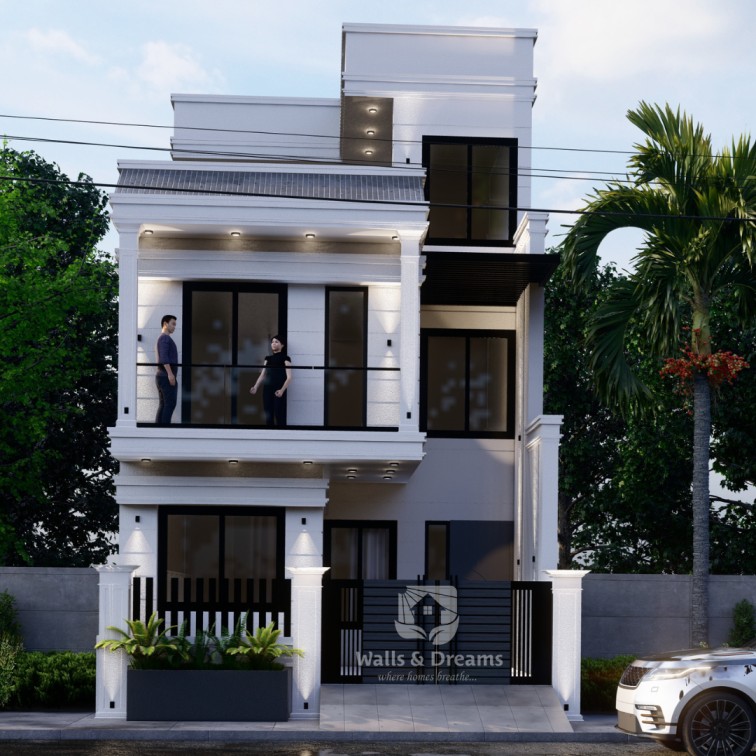
Quick answer: Building a 3 BHK house in India in 2026 costs about ₹1,800 per sq ft at basic, ₹2,500 at standard and ₹3,500 or more at premium specifications. A 1,000 sq ft single-storey 3 BHK comes to around ₹18 lakh, ₹25 lakh or ₹35 lakh. Most families build 1,000–1,500 sq ft at the standard tier, for ₹25–37.5 lakh.
| Finish tier | Rate per sq ft | 1,000 sq ft | 1,500 sq ft | 2,400 sq ft |
|---|---|---|---|---|
| Basic | ₹1,800 | ₹18 lakh | ₹27 lakh | ₹43.2 lakh |
| Standard | ₹2,500 | ₹25 lakh | ₹37.5 lakh | ₹60 lakh |
| Premium | ₹3,500+ | ₹35 lakh | ₹52.5 lakh | ₹84 lakh |
Rates are per sq ft of built-up area and exclude land. A duplex adds roughly 15–25% over a single-storey home of the same total area.
The 3 BHK home — three bedrooms, a hall, and a kitchen — remains the most-built residential format in India. It works for young couples planning a family, joint families needing room for parents and children under one roof, and retirees building a long-term home. Yet for all its popularity, the construction cost of a 3 BHK house is one of the most confusingly quoted numbers in the residential market — different contractors quote different rates, material prices shift seasonally, and city-by-city variations are large. The 2000 sqft house construction cost scales from the per sq ft rate, but corners, balconies and finishes add to it.
This guide breaks down what a 3 BHK house actually costs to build in India in 2026, the factors that move the price up or down, how to calculate the area you need, and the budget tiers most families end up choosing between. The figures and ranges reflect what we see across residential builds delivered by our team across Delhi NCR.

Factors That Affect 3 BHK House Construction Cost
Several variables drive the final cost of a 3 BHK build. Understanding each helps you budget realistically rather than chasing the lowest quote.
1. Area and Layout
Construction cost is almost always quoted per square foot of built-up area, so the total cost scales directly with how big the home is. 3 BHKs in India range from compact 650 sq ft layouts (typical in dense urban plots) to spacious 3,000+ sq ft villas, with most middle-class builds settling between 1,000 and 1,500 sq ft.
The layout matters as much as the total area. A simple rectangular plan with three bedrooms in a row costs less than the same square footage spread across an L-shaped or U-shaped plan with multiple corners and longer external wall runs.
2. Number of Floors
A 3 BHK can be built on:
- A single storey — simpler, cheaper, but requires a wider plot
- Two storeys (duplex) — fits on smaller plots but adds the cost of staircases, intermediate slabs, additional structural reinforcement, and longer plumbing/electrical runs
Going from single-storey to duplex doesn’t double the cost, but it does add roughly 15–25% over the single-storey equivalent of the same total area.
3. Location and Site Conditions
Cities like Mumbai, Delhi, Bengaluru, and Gurgaon carry significantly higher construction costs than tier-2 cities, driven by higher material costs, higher labour rates, and more complex statutory environments. The same specification of build can run 25–35% higher in central Delhi than in a tier-2 city.
Site conditions matter just as much. Plots with stable soil and good drainage allow standard isolated foundations at predictable cost. Plots with loose fill, high water tables, or seismic considerations need deeper foundations, raft slabs, or piling — which can add 8–15% to total project cost.
4. Architectural Design and Specifications
Simple, minimalist designs cost less than homes with elaborate facades, double-height ceilings, large picture windows, cantilevered balconies, or curved walls. Each design feature adds material, labour complexity, and engineering effort.
Specifications — the choice of fittings, flooring, paint, doors, windows, and finishes — can move the per-sq-ft cost by 50% or more between basic and premium tiers. Specifications are where families have the most control over the final figure.

Calculating the Area Required for a 3 BHK House
A 3 BHK house contains three bedrooms (one usually as the master), two or more bathrooms, a kitchen, and a living/dining area. A working baseline for the carpet area (the actual usable floor space inside the rooms):
| Room | Carpet Area |
| Bedroom 1 | 100 sq ft |
| Bathroom 1 | 28 sq ft |
| Bedroom 2 | 100 sq ft |
| Bathroom 2 | 28 sq ft |
| Master Bedroom | 120 sq ft |
| Master Bathroom | 40 sq ft |
| Living / Dining | 120 sq ft |
| Kitchen | 64 sq ft |
| Total Carpet Area | ~600 sq ft |
But carpet area isn’t the same as built-up area. The built-up area includes walls, internal columns, and the thickness of the structure itself, which typically adds another 10% on top of the carpet area:
- Carpet area: 600 sq ft
- Add walls and structure (approx 10%): 60 sq ft
- Built-up area for a single-storey 3 BHK: ~660 sq ft
For a more comfortable layout — slightly larger rooms, dedicated dining space, a balcony, and a parking area — the built-up area for a typical 3 BHK works out to 1,000–1,500 sq ft.
For a duplex 3 BHK spread over two floors, the math changes:
-
- Carpet area (with staircase landings): ~700 sq ft
- Walls and structure (approx 10%): 70 sq ft
- Semi-enclosed spaces (balconies, parking, utility): ~260 sq ft
- Built-up area (enclosed): 770 sq ft
- Total chargeable area (built-up + semi-enclosed): ~1,030 sq ft
The semi-enclosed areas — covered balconies, stilt parking, utility yards — are typically charged at 40–60% of the built-up rate rather than full rate, because they consume less material and labour per sq ft than fully enclosed spaces.
Field note from our project team: When comparing contractor quotes, always confirm whether the rate is being applied to the carpet area, the built-up area, or the total chargeable area. The same project at “₹2,500 per sq ft” can produce three different totals depending on which area is being multiplied. The standard residential practice is to quote on built-up area, with semi-enclosed spaces priced separately at a discounted rate.
How Much Does It Cost to Build a 3 BHK House?
The construction cost depends primarily on three things: material grade, finish level, and labour rates in your region. Most residential builds fall into one of three tiers.
1. Basic Construction — ₹1,800 per sq ft
Suitable for budget-sensitive builds with simple layouts and economy specifications.
- RCC structure with M20/M25 concrete for foundation and frame
- Concrete blocks (or red bricks) for walls
- Economy vitrified tiles (₹40–60/sq ft tier)
- Flush doors and aluminium windows
- Entry-level CP and sanitary fittings (~₹30/sq ft)
- Basic emulsion paint, standard electrical fittings
2. Average / Standard Construction — ₹2,500 per sq ft
The tier most middle-class families settle into — durable, well-finished, and reasonably future-proof.
- RCC structure with M20/M25 concrete and structurally optimised steel
- Concrete blocks or premium bricks for walls
- Mid-tier vitrified tiles (₹60–100/sq ft)
- Wooden doors and uPVC windows
- Branded plumbing and CP fittings (~₹50/sq ft)
- Premium emulsion paint, branded electrical fittings (Anchor, Legrand, Schneider tier)
3. Premium / Luxury Construction — ₹3,500+ per sq ft
For families building a long-term home with design-led specifications.
- Designer tiles or natural stone flooring (₹500–₹600/sq ft tier)
- Solid teakwood or hardwood doors
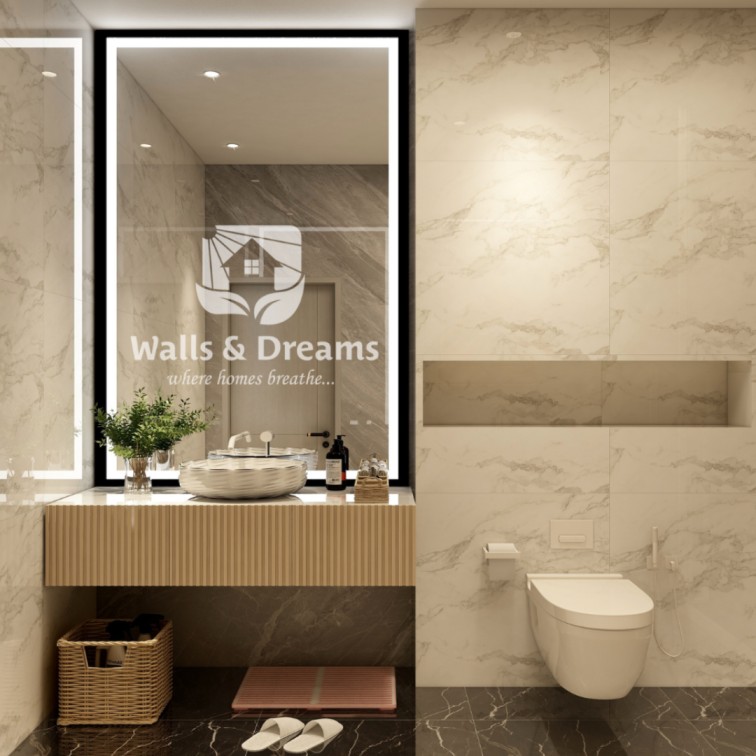
- Premium branded fittings — Jaquar, Kohler, Grohe (~₹80–100/sq ft)
- High-end paints, texture finishes, designer lighting
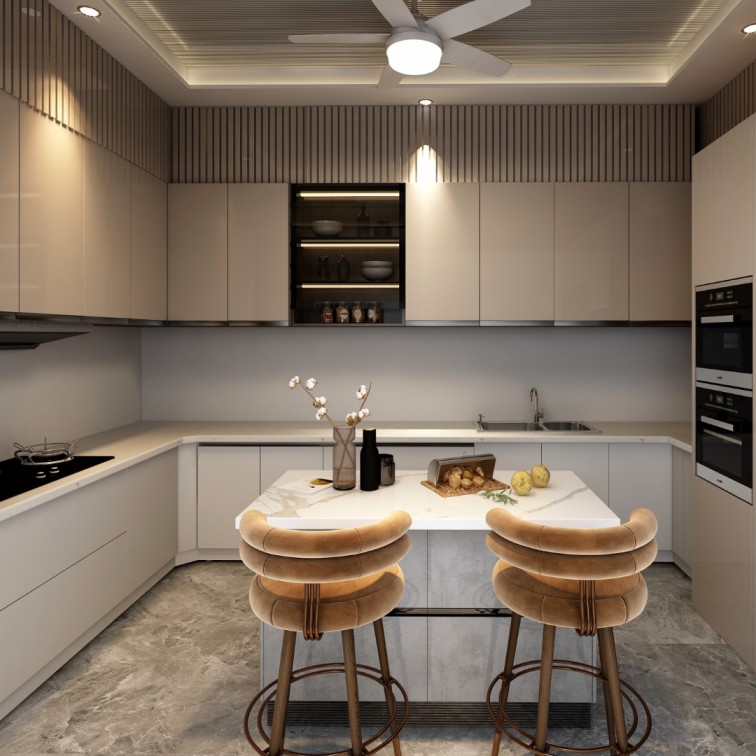
- Modular kitchen, false ceiling, custom carpentry throughout
Example Cost Estimates by Built-up Area
| Built-up Area | Basic (₹1,800/sq ft) | Standard (₹2,500/sq ft) | Premium (₹3,500/sq ft) |
| 700 sq ft | ₹12.6 lakh | ₹17.5 lakh | ₹24.5 lakh |
| 1,000 sq ft | ₹18 lakh | ₹25 lakh | ₹35 lakh |
| 1,500 sq ft | ₹27 lakh | ₹37.5 lakh | ₹52.5 lakh |
| 2,400 sq ft | ₹43.2 lakh | ₹60 lakh | ₹84 lakh |
3 BHK Duplex Example (1,030 sq ft total chargeable area)
For a duplex with 770 sq ft of fully enclosed area and 260 sq ft of semi-enclosed area:
| Component | Basic | Standard | Premium |
| Enclosed area (770 sq ft, full rate) | ₹13.86 lakh | ₹19.25 lakh | ₹26.95 lakh |
| Semi-enclosed area (260 sq ft, ~50% rate) | ₹2.86 lakh | ₹3.90 lakh | ₹5.20 lakh |
| Total Cost | ₹16.72 lakh | ₹23.15 lakh | ₹32.15 lakh |
These figures are representative. Actual project costs vary based on contractor, location, current material rates, and design-specific factors. Use them as a starting point for budgeting, not as a final quote.
Where the Money Actually Goes
For a standard-tier 1,000 sq ft 3 BHK at ₹25 lakh total, the cost typically distributes roughly as follows:
- Foundation and structure: 28–32% (₹7–8 lakh)
- Brickwork and plastering: 18–22% (₹4.5–5.5 lakh)
- Roofing and flooring: 14–16% (₹3.5–4 lakh)
- Doors, windows, carpentry: 9–11% (₹2.2–2.7 lakh)
- Electrical and plumbing: 9–11% (₹2.2–2.7 lakh)
- Painting and finishing: 9–11% (₹2.2–2.7 lakh)
- Miscellaneous and contingency: 4–6% (₹1–1.5 lakh)
A few honest observations from our project experience:
- The 5% contingency line is the floor, not the ceiling. On real projects we typically advise families to budget 10–15% contingency, especially if specifications are likely to evolve mid-build.
- Premium tier doesn’t double the structural cost — it doubles the finishing cost. The foundation, structure, and brickwork stay roughly the same; what changes is tiles, fittings, doors, paint, and carpentry. This means a basic structure now can be upgraded later more easily than people assume.
- The “miscellaneous” line typically absorbs site preparation, statutory fees, and small unplanned expenses — not specification upgrades. Mid-project upgrades come out of the family’s contingency, not the contractor’s.
Tips for Optimising Your 3 BHK Construction Budget
A few practical decisions, made at the design stage, that meaningfully reduce cost without compromising quality:
1. Hire a trusted contractor: not the lowest bidder. The quote that looks 15% cheaper today often becomes 25% more expensive over the project through under-specified materials, mid-project rate revisions, and rework. Vet contractors on completed projects you can visit, not just on the proposal.
2. Choose simple designs: Each corner, cantilever, double-height ceiling, or feature wall adds material and labour cost. A clean rectangular plan with thoughtfully proportioned rooms costs significantly less than the same square footage with elaborate geometry.
3. Source materials locally: but verify quality. Local sand, aggregate, and bricks reduce transportation cost. The catch: quality matters more than proximity. Reject materials that don’t meet specification regardless of how cheap or local they are.
4. Use online cost calculators to ground your expectations: Free tools like the Walls and Dreams cost estimator give you a first-pass estimate based on area, location, and finish level. They aren’t a substitute for a project-specific BOQ, but they help you check whether contractor quotes are realistic.
5. Plan for the future at the design stage: Adding solar panels, rainwater harvesting, or an extra floor later costs more than building the structural provision now. Roof slabs that can take a future floor, electrical conduit runs that can take a future EV charger, and plumbing routes that can take a solar geyser are all small additions today and large savings tomorrow.
6. Lock specifications before plastering begins. Late changes: switching tile choice mid-construction, deciding on the kitchen layout after the slab is cast, changing the bathroom fittings after plumbing is sealed — are the single most expensive form of project cost overrun. Make finishing decisions during the structural phase, not after it.
A Practical Note from Our Project Team
A few honest observations from the residential 3 BHK builds we’ve delivered across Delhi NCR:
- Most families budget for the structure and underestimate the finishing: The structural shell is predictable; tiles, paint, doors, kitchen, bathrooms, lighting, and fittings are where projects routinely run 15–25% over plan. Front-load decisions on these items early.
- Soil testing is non-negotiable: A geotechnical investigation at the start saves multiples of its cost in foundation problems later. Skipping it to “save” ₹15,000–₹25,000 has cost some families ₹3–5 lakhs in foundation rework.
- Phasing matters as much as quantities: Cement, sand, and aggregate are best ordered in tranches aligned with pour schedules. Steel can be ordered upfront if storage is dry. Tiles and fittings should be selected during the structural phase, not delayed to the end.
- Building services are often underestimated: Quality wiring, branded MCBs, modular switches, properly-sized water tanks, and good plumbing routing are the quiet investments that determine whether the home is comfortable to live in for the next 25 years.
If you’re planning a 3 BHK build and want a project-specific cost estimate based on your actual plot, design, and specifications, contact our team at Walls and Dreams. We deliver residential projects across Delhi, Noida, Greater Noida, Gurgaon, Faridabad, and Ghaziabad, and we’ll prepare a detailed BOQ at no cost during the proposal stage.
For our complete cost-research methodology — how the price ranges in this article are derived and updated — see our Editorial Process and Cost Research Methodology page.
Final Thoughts
Building a 3 BHK home in India in 2026 typically costs anywhere between ₹12 lakhs and ₹84 lakhs depending on area and specification — a wide range that reflects the genuine variability in build choices. Most middle-class families settle into the standard tier (₹25–₹37 lakhs for 1,000–1,500 sq ft), which delivers a durable, well-finished home that will serve a family well for decades.
What separates a build that lands on budget from one that overshoots is rarely the quote rate. It’s the discipline applied between the foundation pour and the final handover: clear specifications locked early, materials sourced carefully, contractors held to written scope, and decisions made before they become emergencies.
Whether you’re building a basic-tier 3 BHK in a tier-2 city or a premium-tier duplex in Delhi NCR, the path to a successful build is the same — careful planning, realistic budgeting, and an experienced team that respects both your budget and your timeline.
For families ready to start, Walls and Dreams offers transparent pricing, vetted material sourcing, and proven project execution across the Delhi NCR market. Our team has delivered residential projects of every size and specification, and we are happy to walk you through the options for your specific 3 BHK build. The Walls and Dreams packages are priced per square foot, so you can compare specifications side by side.
Frequently Asked Questions
What is the cost of constructing a 3 BHK house in India in 2026?
The cost typically ranges from ₹12 lakhs to ₹84 lakhs depending on built-up area and finish quality. A standard-tier 1,000 sq ft 3 BHK costs around ₹25 lakhs; the same area at premium specifications runs ₹35 lakhs.
What is the cost per square foot for a 3 BHK house?
Per sq ft costs in 2026 fall into three tiers: basic (₹1,800), standard (₹2,500), and premium (₹3,500+). The right tier for your build depends on your specification choices and budget.
How much area is required for a typical 3 BHK house?
A typical 3 BHK has a carpet area of around 600 sq ft and a built-up area of 660–1,500 sq ft, with most middle-class builds settling at 1,000–1,200 sq ft built-up. Larger 3 BHKs can extend to 2,400 sq ft for spacious villa-style homes.
Is a duplex 3 BHK more expensive than a single-storey 3 BHK?
For the same total area, a duplex typically costs 15–25% more than a single-storey home, due to staircases, intermediate slabs, additional structural work, and longer service runs. However, duplexes are often the only option on smaller plots and can be more space-efficient overall.
How long does it take to build a 3 BHK house?
A standard 3 BHK typically takes 9–14 months from foundation to handover, depending on complexity, weather, and the pace of finishing decisions. Premium-tier builds with custom specifications can take 14–18 months.
Can I build a 3 BHK house for ₹15 lakhs?
A small basic-tier 3 BHK (around 700–800 sq ft built-up) with economy specifications can be built for ₹13–15 lakhs in many Indian markets. The trade-offs are usually in finish quality and room sizes rather than structural quality.
What’s the most common mistake families make when budgeting for a 3 BHK?
Underestimating the finishing budget. Foundation, structure, and brickwork are predictable; tiles, paint, doors, kitchen, fittings, and electricals are where budgets routinely overshoot by 15–25%. Plan these line items thoroughly at the design stage.
Last reviewed: April 2026 by the Walls and Dreams technical team. Next review: October 2026.
The price ranges in this article reflect typical residential project costs in India and are reviewed twice a year. Local market conditions, specific design requirements, and current material rates can move actual project costs above or below these figures. For a project-specific quote, please contact our team.